10 Foods to Try in Rwanda

Rwanda may not be as renowned as a foodie destination as some of its continental brethren—think South Africa or Morocco—but this land-locked nation in the heart of East Africa nevertheless packs a memorable culinary punch. In a country that’s incredibly fertile yet too mountainous to lend itself well to large-scale agriculture, farm-to-table dining is the order of the day. This is especially true for the majority of lower income Rwandans, many of whom rely on subsistence farming for much of their diet. As such, meat is a delicacy often reserved for special occasions, and naturally occurring crops including bananas, beans, avocados, and cassava reign supreme. And to wash it down? Urwagwa, a traditional beer made from fermented bananas.
Ugali
:max_bytes(150000):strip_icc():format(webp)/GettyImages-1293432083-4de19d6f3e624b9586a7685262d933c3.jpg)
Not so much a Rwandan delicacy so much as a staple encountered across sub-Saharan Africa, ugali is nevertheless a major player in many Rwandan meals. A stiff porridge made from maize flour and softened in boiling water or milk until it takes on an almost dough-like consistency, it has a pretty bland taste in its own right—not unlike eating unseasoned rice or couscous. When served as a starch accompanying the country’s rich stews and sauces, however, it becomes a filling addition that’s guaranteed to both satisfy and provide much-needed energy. In traditional Rwandan homes and restaurants, ugali also takes the place of utensils, being used by diners to mop up the rest of their meal with their fingers.
Ikinyiga
If you have a passion for peanut butter, you’ll love ikinyiga, another Rwandan delicacy made with the peanuts that grow naturally in its humid, tropical climate. To make ikinyiga, the peanuts are first softened in boiling water and then ground until their own oil transforms the resultant mush into a smooth paste. The paste is then used to create a soup or sauce, with the exact ingredients and consistency varying from chef to chef. Often, additions range from eggplant to okra and bay leaves, which slowly release their flavor when left to simmer over a low heat. Ikinyiga is often served with matoke and/or ugali, with the latter providing the perfect dense consistency for soaking up its rich flavor.
Igitoki
:max_bytes(150000):strip_icc():format(webp)/GettyImages-1209049803-be2a29bfefd54efb9aacdf74d963e421.jpg)
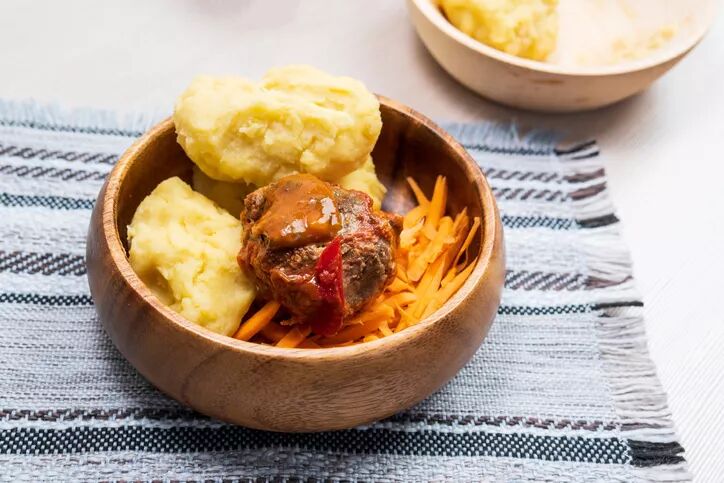
Also known as matoke in neighboring Uganda (where it also enjoys national dish status), igitoki shares its name with the banana cultivar from which it is made. This banana is unique to the African Great Lakes region, and unlike the bananas we’re used to in the northern hemisphere, is typically harvested while still green. The flesh of the raw igitoki is white, but turns yellow when steamed in a pot of water over the fire. Chefs typically use the bananas’ own severed stalks to keep them clear of the boiling water. When soft, the flesh is mashed so that the resulting dish resembles mashed potato—but with a much sweeter flavor. Igitoki is typically served as a side to a larger main meal. Read More...