10 Tips for Amazing Wide-Angle Landscape Photography
-
 Loading...
 - Gautam Parekh
- 19 Jan 2023
- 73 Views
- 0 Like
- 0 Comment
Every landscape photographer needs at least one wide-angle lens. Wide-angle glass offers a wonderfully expansive perspective that’s perfect for capturing grand vistas, emphasizing lines, adding breathtaking three-dimensionality, and so much more.
But creating gorgeous wide-angle landscape photography can be a challenge. Beginners often struggle to come to grips with the wider field of view, and even advanced landscape shooters often fail to access their lens’s full potential.
I’ve been capturing wide-angle landscapes for years, and in this article, I share my best tips for outstanding shots. I discuss composition, angles, and common pitfalls – so if you’re ready to make some gorgeous images, then let’s dive right in!
1. Emphasize a foreground element

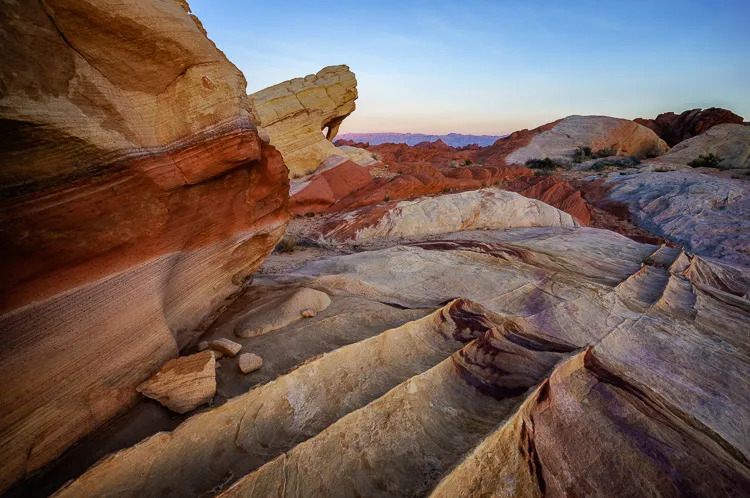
Professional landscape photographers love wide-angle lenses, and they’re always using the wide field of view to emphasize foreground elements while letting the background recede.
You see, wide-angle lenses allow you to get really close to an element in the foreground, which will then loom large in the frame. (A wide-angle lens, thanks to perspective distortion, changes the relative size of the objects in the frame; objects close to the lens look huge, while objects far from the lens appear very small.)
If you include a foreground subject close to the lens, it’ll instantly captivate the viewer. Then, once the viewer has appreciated the foreground, they’ll be drawn toward the smaller background objects (e.g., a sunset, a mountain, or an ocean horizon).

Try getting low and moving as close as you can to your main subject. Don’t be afraid to get just inches from a flower, a rock, a pattern in the ice, etc. Even if you think you might be too close, you’ll often look through the viewfinder only to discover that objects don’t appear quite so close through the lens! Read More…