12 Most Popular Types Of Vietnamese Noodles In 2022

After years of making and eating them, I have gained a lot of information about their characteristics as well as the best way to serve them. And I am about to share it with you here in the shortest yet most comprehensive way.
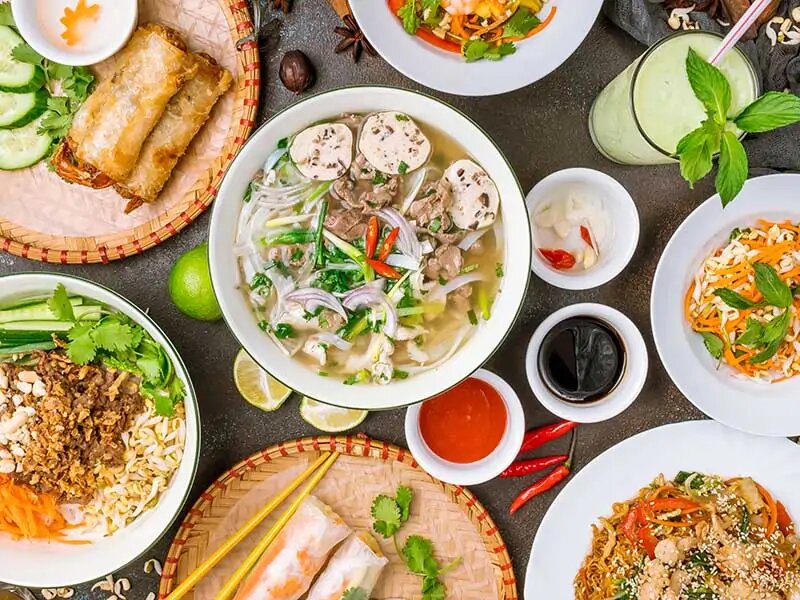
Besides discussing noodles, I will also introduce several famous noodle dishes in Vietnam that received tons of love from many diners. So let’s prepare some notes to list down these Vietnamese signature foods with noodles so you can try them when you come to this country.
It’s Time To Discover Some Worth-Trying Types Of Noodles In Vietnam
When trying Vietnamese noodles, you will be amazed by how diverse and delicate they are. Every type of noodle has distinctive characteristics, but one thing to be sure about is they will stimulate your taste buds and offer you an entirely new culinary experience.
Moreover, Vietnamese dishes are something that you cannot capture their uniqueness in a few tries, especially when it comes to Vietnamese noodles. Now, let’s have a quick look at these noodle varieties with the below table for some brief information.
1. Bún (Rice Vermicelli)
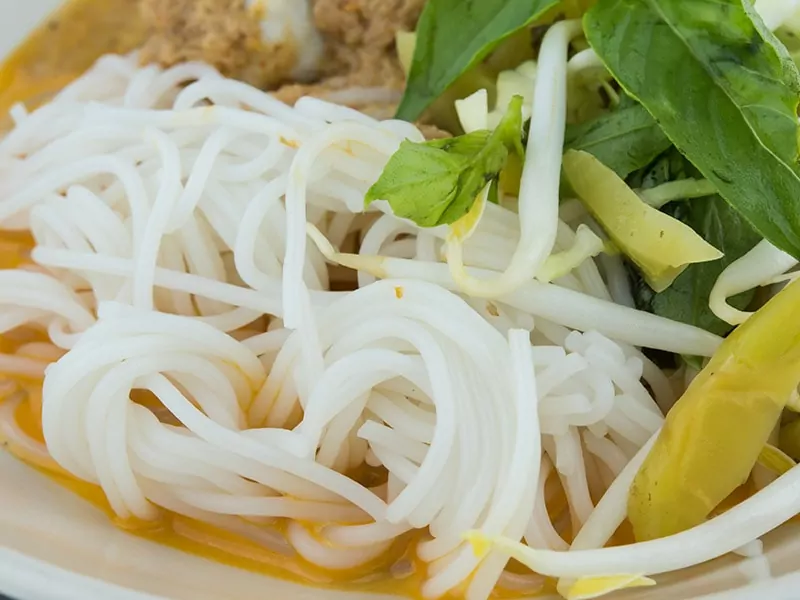
Bún (or rice vermicelli) is the most common Vietnamese noodle type. Its other names are rice sticks or rice noodles to highlight the difference between bún and cellophane noodles, which I will explain below.
This noodle kind features thin or thick round strands with typical white color. The thick version can be as thick as chopsticks. Bún’s ingredients vary, such as rice flour (common), tapioca flour, wheat, etc.
Bún is soft, sticky, and slippery. They are super versatile, making bún the most popular Vietnamese noodle type. Vietnamese normally serve it in hot soup or in dry noodle dishes. Plus, the method of bún preparation varies from region to region and from family to family.
Bún appears in plenty of traditional Vietnamese recipes, such as Bún Riêu (crab noodle soup), Bún Bò Huế (spicy beef noodle soup), Bún Chả (grilled pork and noodle), Gá»i Cuốn ( spring rolls), etc.
Locals also shape bún into square and thick cakes to make Bún Äáºu Mắm Tôm (noodle and tofu with shrimp sauce).
2. Mì (Egg or Wheat Flour Noodle)
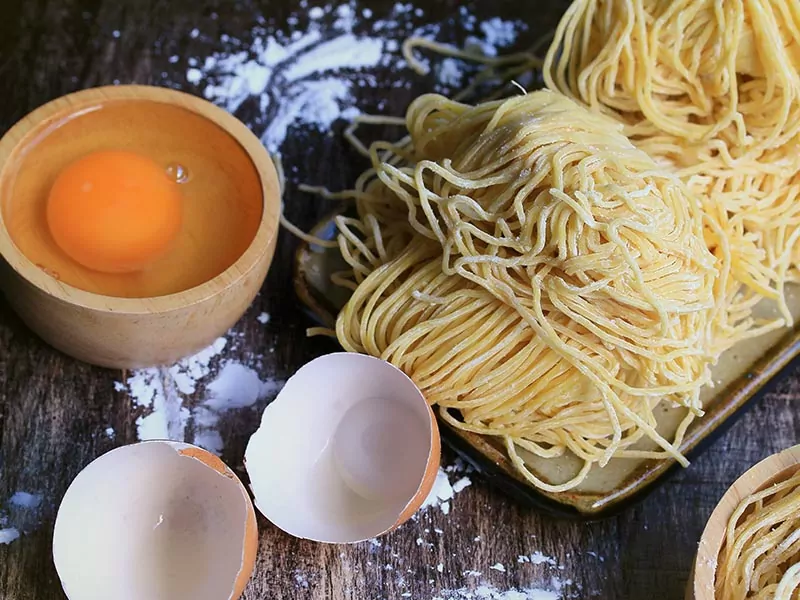
Another widely-used Vietnamese noodle is mì which refers to white or yellow noodles made from egg or wheat flour. They have a springy yet tender texture. If you have tried a special Chinese dish – wonton noodles, you can imagine how Vietnamese egg noodles look.
Therefore, they can be served in soups, especially in Mì Hoành Thánh – a Vietnamese wonton noodle inspired by the Chinese version. Mì is also ideal for enjoying with pork broth and other ingredients.
Other than that, Vietnamese use mì to create a wide array of fried or stir-fried delicacies (usually referred to as dry noodle dishes). In general, mì can pair well with meat, veggies, and many other components.
Common condiments to serve with mì are soy sauce, vinegar, pickled chili, or sa tế – a spicy sauce.
3. Miến (Cellophane Noodle or Glass Noodle)
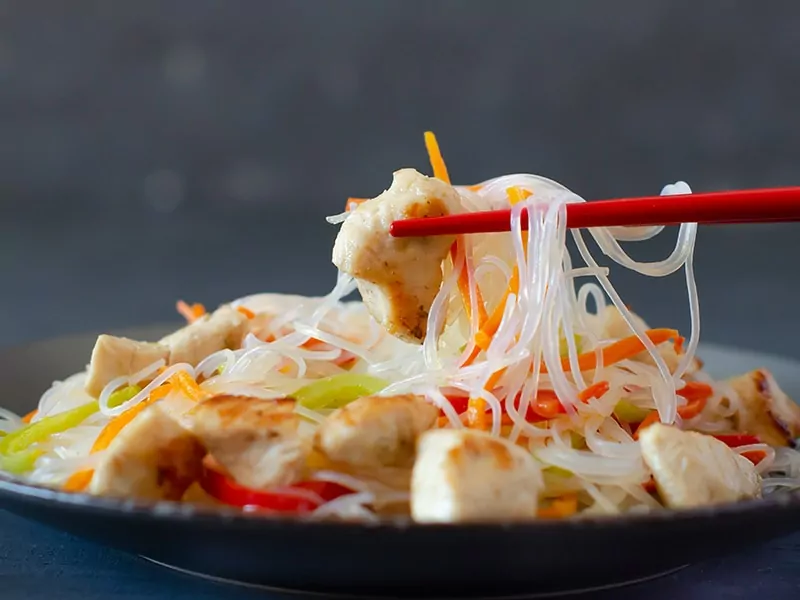
It is easy to understand why many foreigners mistake this miến with bún. Let me tell you how to differentiate them.
First, Vietnamese cellophane noodles have 2 styles. One is a Chinese-inspired noodle kind named bún tàu (made of mung bean flour), and another is miến/miến dong made from canna. Miến (aka glass noodles) is a more common-used ingredient in famous Vietnamese dishes.
Though miến shares the same sticky, chewy texture with round and thin strands as bún, this ingredient is created from water and starch (e.g., mung bean flour, potato/sweet potato flour, canna, or tapioca starch).
If you look at them closer, you can easily recognize miến’s light gray yet transparentness, and they are a bit thinner than white bún. Now you might know why people refer to this type as glass noodles.
Moreover, they are quite slippery, which might be challenging for you to eat with chopsticks. But do not fret; many dishes containing miến are totally worth trying. Miến with chicken soup (Miến Gà) or in fried foods is super tasty.
For more information, miến is normally available in dried form, requiring a quick soak before cooking.
4. Bánh Phở (Rice Stick)
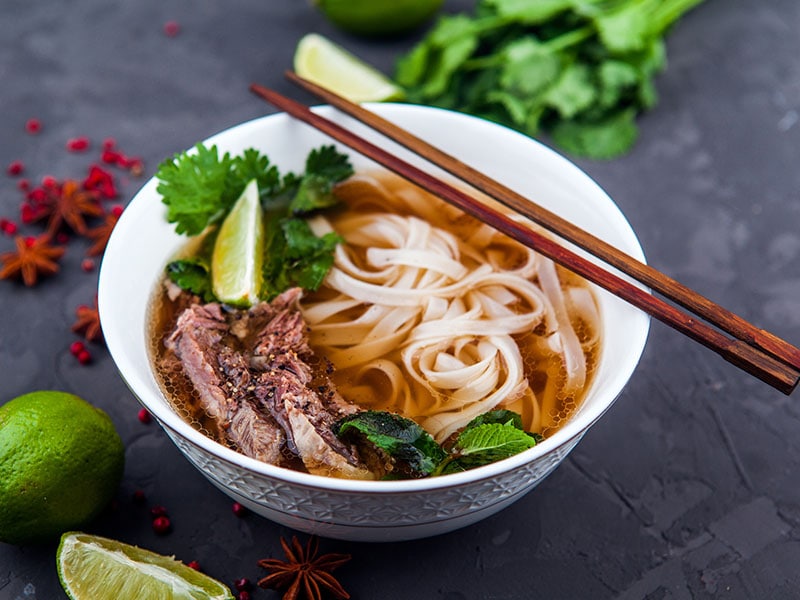
If you like Vietnamese cuisine, you have probably heard or tried Phở (Vietnamese beef noodle soup) before since this is the most famous specialty in this country.
The noodle used in Phở is bánh phở (rice sticks). This noodle mainly consists of rice flour with a typical white color like bún. However, rice sticks have a flat shape, making them different from bún.
This noodle is soft, slippery, and quite chewy. Bánh phở’s widths vary, available in both dried and fresh versions. In addition, rice sticks are not as versatile as rice vermicelli because the Vietnamese primarily use them to make Phở.
These white sheets are also common in a stir-fried dish called Phở Xào (stirred pho), or Phở Cuốn (rolled pho), which is more famous in Northern Vietnamese cuisine.
5. Hủ Tiếu (Clear, Thick, and Chewy Noodles)
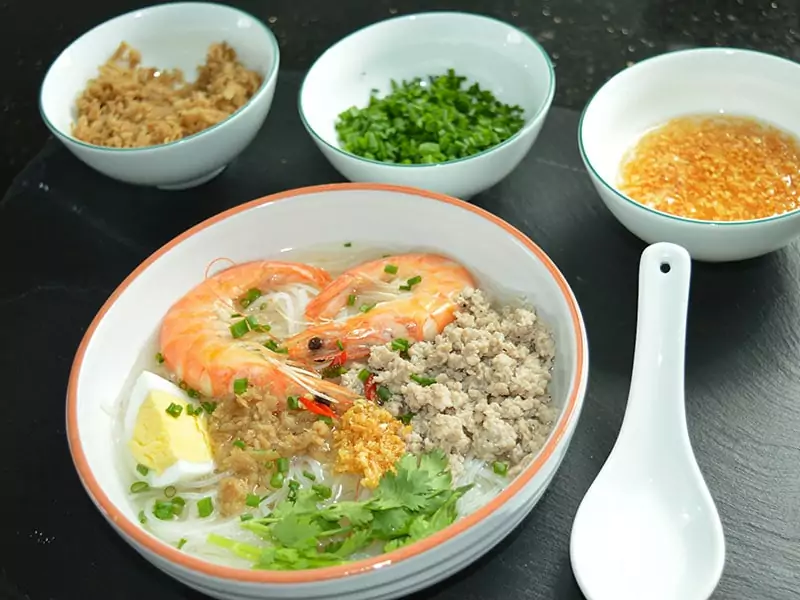
Hủ tiếu is also a very versatile variety of Vietnamese noodles. Overall, it is a very thin noodle, making them the smallest Vietnamese noodle compared to other kinds. Similar to miến (glass noodle), hủ tiếu also has a translucent look with a chewy texture.
However, its color is not as gray as miến. Instead, they are white rice noodles. Hủ tiếu’s root is from Cambodian cuisine and has become more popular thanks to Chinese vendors. In Vietnam, this food itself is also the name of a well-loved delicacy.
Let’s talk a bit about this noodle’s popularity in Vietnam. In fact, hủ tiếu is more prominent in Southern Vietnam, particularly in Sai Gon (Ho Chi Minh city). The folks normally consume hủ tiếu for their breakfasts, but they are also suitable to enjoy at any time of the day.
These clear rice noodles might be served with or without soup. Other widely-used ingredients in hủ tiếu are pork, shrimp, squid, herbs, etc. There are also many hủ tiếu varieties, and the most famous one must be Hủ Tiếu Nam Vang (shrimp and pork chop noodle soup). Read More…