12 Mouthwatering Taiwanese Desserts to Savor On

The diversity in Taiwanese culture and tradition can be seen in their food, including desserts. While some desserts have their roots in Taiwan, a few, such as Ma Lai Go and Mochi bear Japanese and Chinese influences. Overall, Taiwanese sweets are all about jellies, cakes, and pastries of varying textures. Some like Douhua and Ma Lai Go have a creamy texture that quickly melts in the mouth. A few, like FènglísÅ«, Suncake, and Yuebing, appear flaky and crumbly on the outer side but sweet and soft within. As these desserts are not overly sweet, anyone can enjoy them.
1. Bao Bing (Shaved Ice)
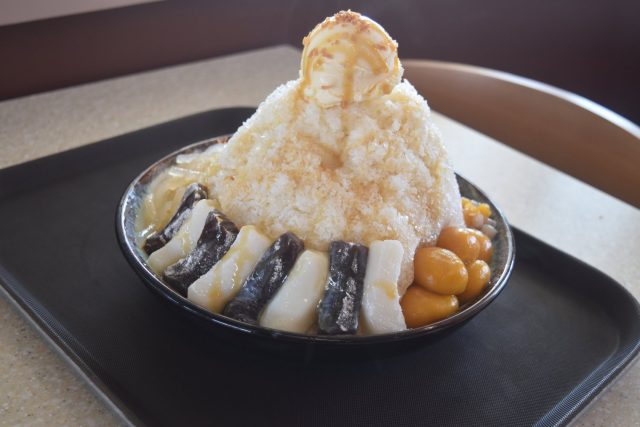
Bao Bing is the Taiwanese variant of shaved ice enjoyed all year round. Though a whole lot of toppings give it its sweetness, the common ones include adzuki beans, mung beans, tapioca balls, condensed milk, and sugar water. Fresh fruits also go into its preparation, varying according to the season. In summer, mango bao bing is quite popular, while strawberry bao bing is common in winter. It is a refreshing dessert with a smooth and creamy texture that immediately melts in your mouth as you relish the sweet and fruity flavors.
2. FènglísÅ«
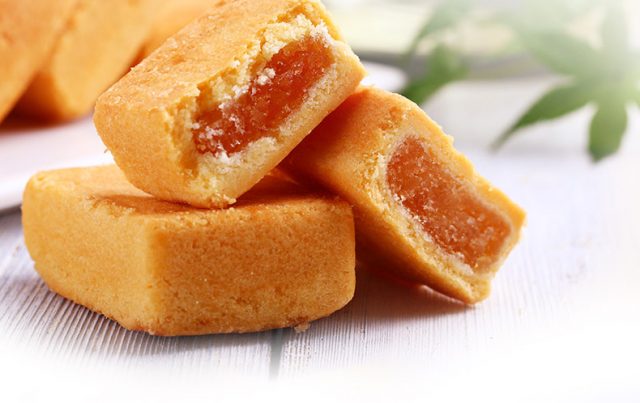
FènglísÅ« are delicious pineapple cakes symbolizing good luck. There goes an interesting story behind its history, dating back to the time of the Three Kingdoms Dynasty. The Shu kingdom’s emperor wished to solemnize nuptial ties with the sister of the emperor of Wu kingdom. So he sent a huge pineapple cake to present his proposal. That was history, cut to the present times, the cake is not as big as it traditionally was.
It consists of a golden-brown, buttery crust with a slightly sweet and tangy pineapple jam filling. Sometimes, winter melon also goes into the filling or is used as a replacement for pineapple. A best-seller in Taiwan, these crumbly snack delights go well with a cup of hot tea.
3. Suncake
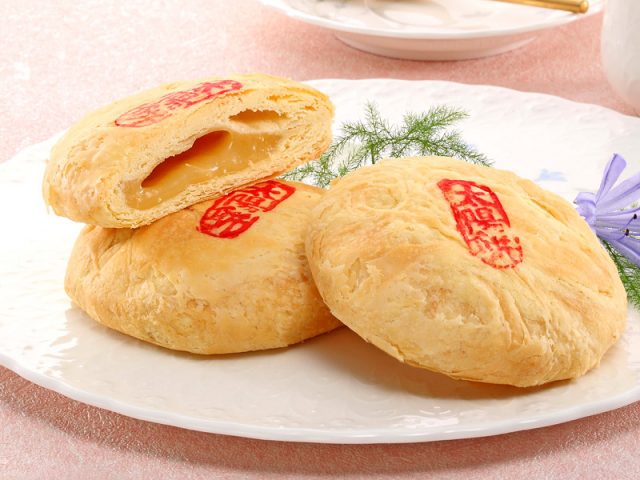
Suncakes are traditional sugary treats, commonly sold as souvenirs in sweet shops, packed in enticing gift boxes. Their origin dates back to the Qing Dynasty period. Typically, they consist of condensed malt sugar, called maltose, as their filling. The outer crust is prepared with phyllo-dough, rolled into paper-thin layers. They are then given the round shape like the sun and baked till golden-brown, which is how they get the name.
Thick and gooey, its filling tastes sweeter than honey and is well-contrasted with flaky, buttery pastry. Many enjoy these with hot tea or milk. Some people also like them as a porridge-like dessert, made simply by dissolving them entirely in hot water.
4. Peanut Powdered Mochi
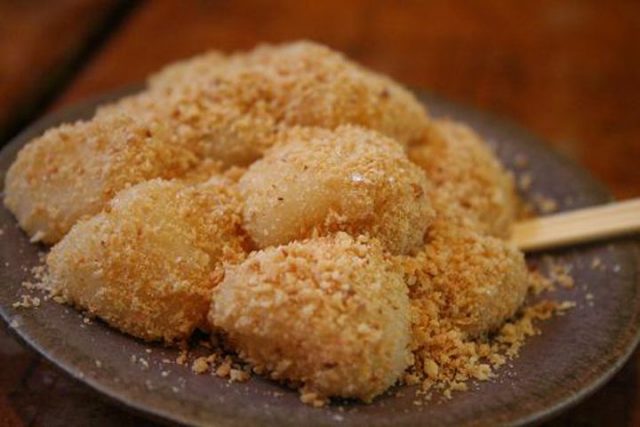
Peanut powdered mochi are tasty bite-sized treats prepared with glutinous rice flour and sugar. They’re shaped into balls and coated with peanut powder. Sometimes sesame powder is also included in the coating. Slightly sweet and chewy, they are immediately served after preparation, with a hot beverage as accompaniment. One could find these tasty treats in most street carts.
5. Bunun Millet Cake
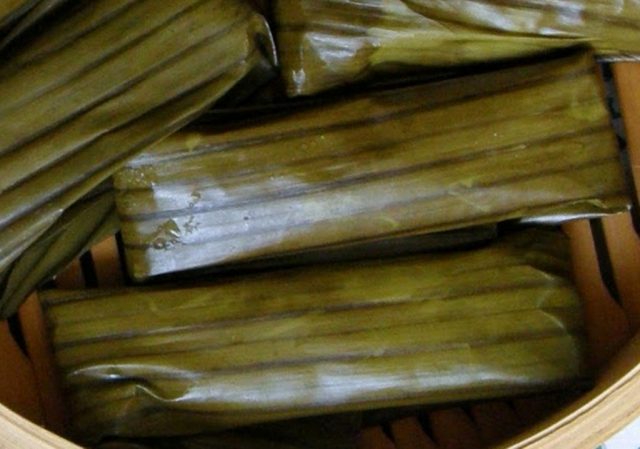
Bunun Millet Cake is a sweet item, also popular as a staple food in many other Asian countries. The indigenous Bunan people traditionally prepared it using millet grits soaked, cooked and pounded into a dough. It is then steamed inside a banana leaf. Topping of honey makes it sweet and tasty.
Sticky and rich in calories, they make an ideal breakfast item that provides energy for the whole day. Its procedure and appearance bear close resemblance with a Philippines traditional food, Suman, made with rice instead of millet.
6. Douhua
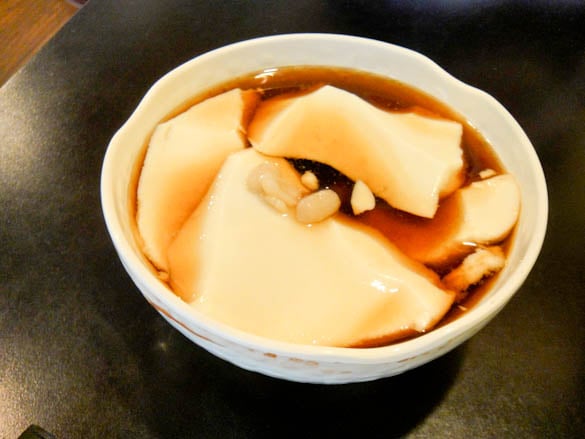
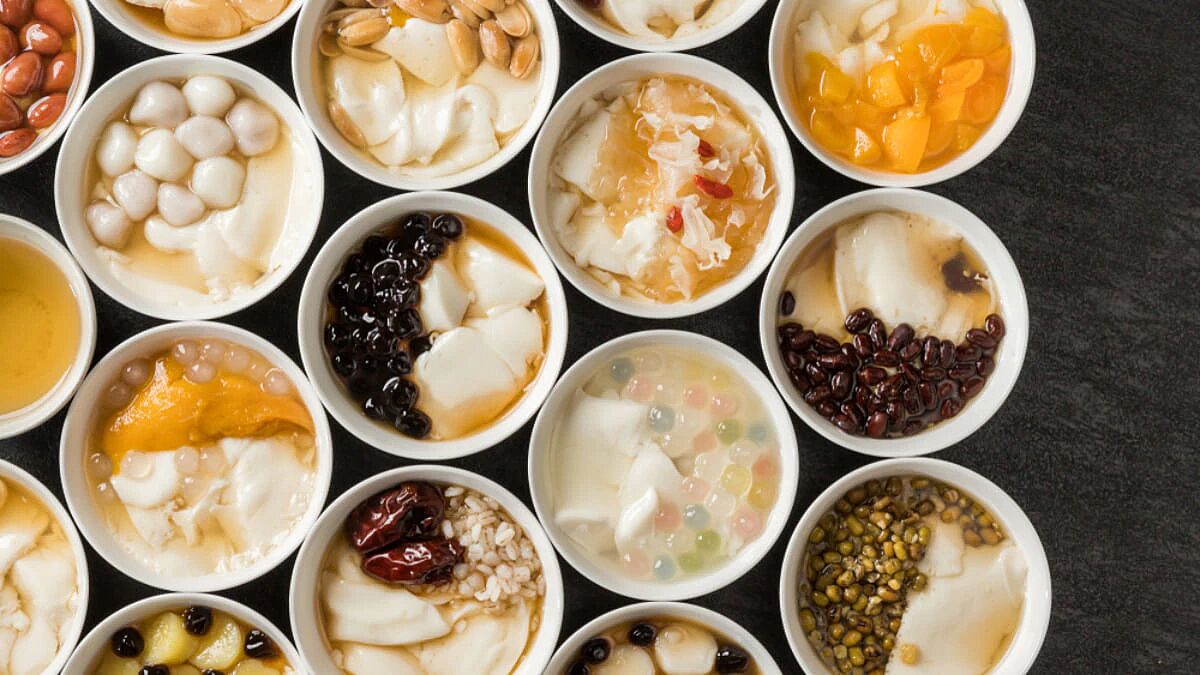
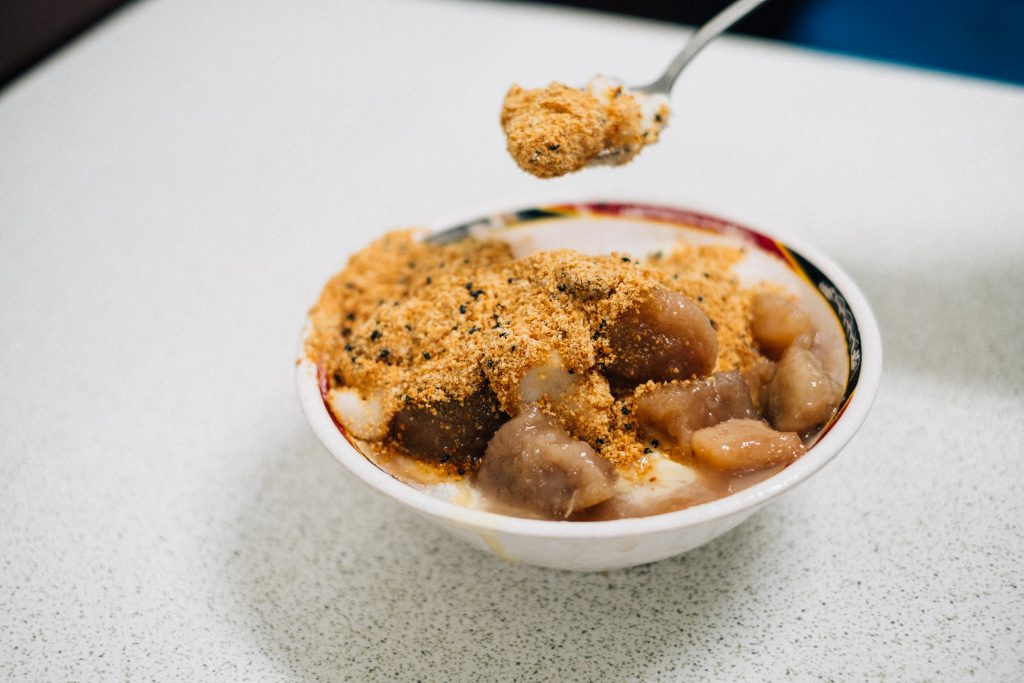
Douhua, or tofu pudding, is a traditional dessert having a soft and incredibly smooth texture. It has soybeans as its main ingredient, alongside water, and a coagulant such as gypsum, agar-agar, or gelatin. It goes as a side dish with sweet gingery syrup or mung beans in Taiwan. Toppings of peanuts and taro balls elevate its taste. In other versions, a savory gravy alongside chili oil and pickles go as accompaniments. Read More…