14 Top-Rated Tourist Attractions in Djerba
-
 Loading...
 - michael mia
- 04 Oct 2022
- 77 Views
- 0 Like
- 0 Comment
Just five kilometers off Tunisia's southern coast, this island idyll's gently sloping, sandy beaches and perfect Mediterranean climate have made it one of the best places to visit in the country for tourists looking for a winter beach break.
Plenty of resorts cater to this crowd, but Djerba also offers other sightseeing attractions, such as timeless villages and watercolor-worthy scenery for those who care to delve deeper into the culture.
It's also a great spot to base yourself if you want to explore the other popular things to do in southern Tunisia on a series of day trips.
If you're heading to the island find out what to do beyond the beach with our list of the top tourist attractions in Djerba.
1. Houmt Souk Old Town
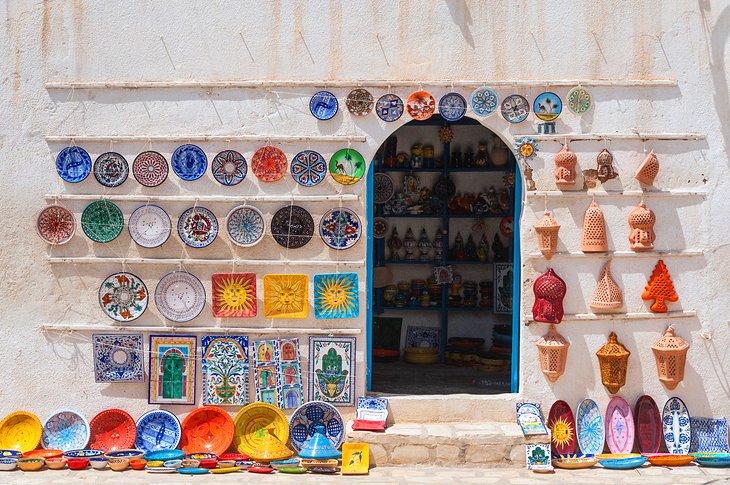
With its quaint maze of alleyways lined by picturesque whitewashed houses and shops selling colorful ceramics, the Old Town district of Houmt Souk (Djerba's main town) was made for strolling.
A number of well-preserved fondouks (caravanserais) can be seen amid Houmt Souk's alleyways.
These merchant inns combined sleeping quarters, animal stabling, and warehouse storage for the many traveling merchants who traversed North Africa, buying up salt, spices, and textiles to take back to Europe. Their typical structure usually took the shape of a series of rooms, several stories high, built around an arcaded courtyard.
Today, many of the fondouks in Houmt Souk now function as boutique hotels or restaurants and have been painstakingly restored.
For many visitors, this is one of the best places to visit for shopping on the island. The displays of traditional handicrafts in the souk streets here include Berber jewelry, textiles, traditional shoes, brass and silverware, leather goods, and piles upon piles of hand-painted pottery. It's a shopaholic's dream that few resist.
A number of well-preserved fondouks (caravanserais) can be seen amid Houmt Souk's alleyways.
These merchant inns combined sleeping quarters, animal stabling, and warehouse storage for the many traveling merchants who traversed North Africa, buying up salt, spices, and textiles to take back to Europe. Their typical structure usually took the shape of a series of rooms, several stories high, built around an arcaded courtyard.
Today, many of the fondouks in Houmt Souk now function as boutique hotels or restaurants and have been painstakingly restored.
For many visitors, this is one of the best places to visit for shopping on the island. The displays of traditional handicrafts in the souk streets here include Berber jewelry, textiles, traditional shoes, brass and silverware, leather goods, and piles upon piles of hand-painted pottery. It's a shopaholic's dream that few resist.
When haggling is done for the day, head to the tiny harbor, complete with pastel-colored boats bobbing on the Mediterranean, to capture a sense of Houmt Souk's fishing village past.
2. Plage Sidi Maharès
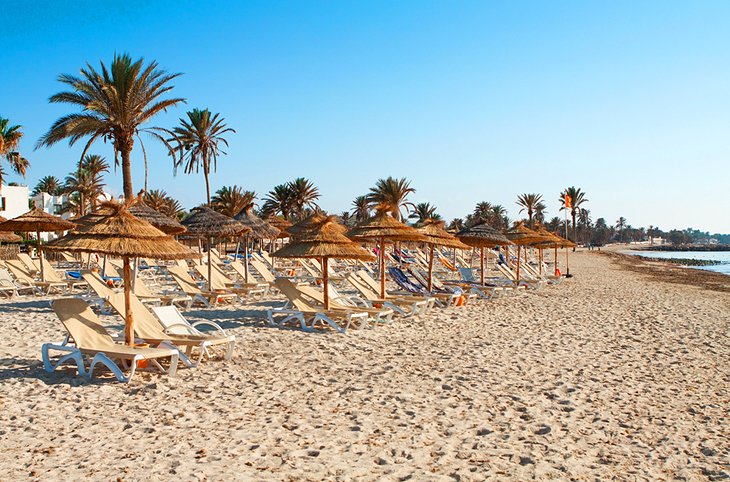
Djerba's most popular beach is Plage Sidi Maharès on the island's northeast coast – the perfect place to relax and catch some sun after all that souk strolling and ceramic shopping.
It's the oldest resort beach on the island and hence the most developed.
The sand is backed by plenty of resorts, most of which have claimed a private patch of the sand. There is a good choice of restaurants and cafés running along its length, and you won't have trouble finding deck chairs, sun loungers, and umbrella shades for rent.
This is a very family-focused stretch of sand with plenty of things to do, from camel and horse rides along the sand to water sports such as kayaking and paddleboarding – great if younger family members want more than just a day of sun, sand, and sea.
The sandy shore extends for approximately 13 kilometers up to the headland of Ras Tourgueness, where there is an old-fashioned lighthouse.
3. Djerba Explore Park
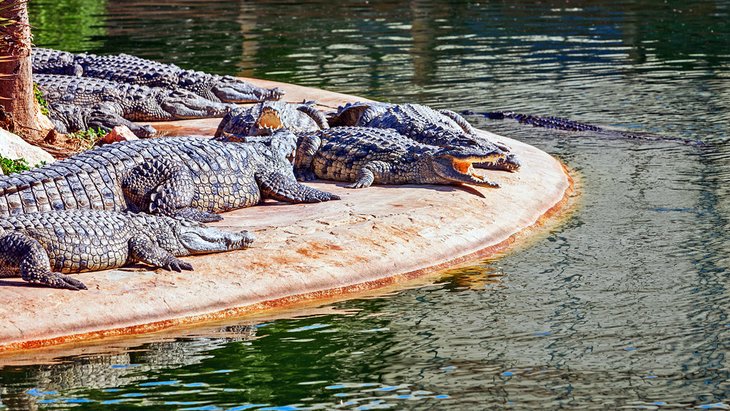
Djerba Explore Park sits on the island's coastal road, 20 kilometers east of Houmt Souk. The complex combines the Lalla Hadria Museum and the Djerba Explore Crocodile Farm.
The purpose-built and contemporary Lalla Hadria Museum is devoted to Islamic cultural heritage and art. It contains an impressive collection of over 1,000 pieces displayed across 15 galleries. Read More…