18 Korean Street Foods You Need to Try

Street food markets are bustling hives of energy, heat, and aroma, and the sheer scope of the sumptuous and mouthwatering foods on display will captivate even the most casual of foodies.
Buckle up for a staggeringly beautiful and sensual adventure through Korean cuisine, as I put the spotlight on 18 dishes you simply have to try from any food market or street vendor in Korea.
Korean Street Food
1 – *김밥/마약김밥 – Mayak Gimbap
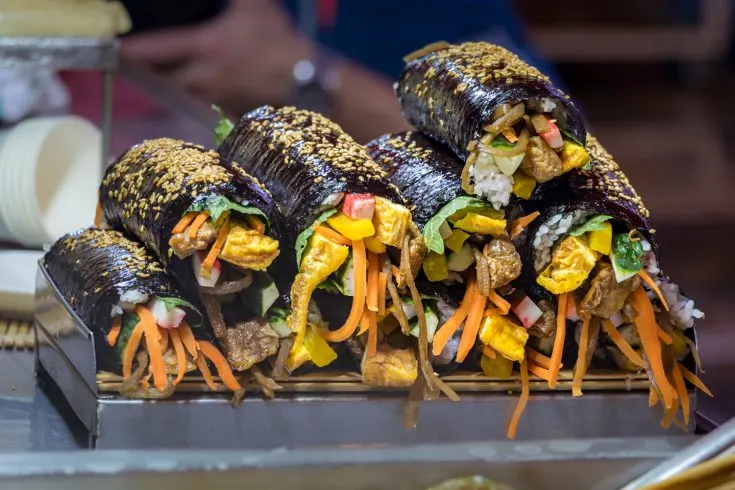
Simply put, Gimbap is a seaweed wrap of rolled rice with various ingredients. There have been many variations of it over the years, including Gimbap with cheese, tuna, and other seafood.
There are also variations in the shape, such as the Triangle Gimbap (the Korean version of the Japanese Onigiri) and the delightful, bite-sized mini Gimbaps.
These mini Gimbaps are named Kkoma Gimbap (꼬마김밥, Kkoma is a cute and informal way to refer to a young child), and are around one-fourth the size of a regular Gimbap.
As Kkoma Gimbaps are much smaller, fewer ingredients are used in the filling, so that the Gimbap can be properly rolled. To compensate for this, Koreans prepare a mustard-soy sauce dip to enjoy the Kkoma Gimbap.
Little did Koreans know how popular and addictive this pairing would become. So much so, it was named Mayak Gimbap, because it makes you “lose your senses and eat uncontrollably!’ Today, it is a beloved staple of traditional Seoul markets.
2 – *어묵 – Eomuk
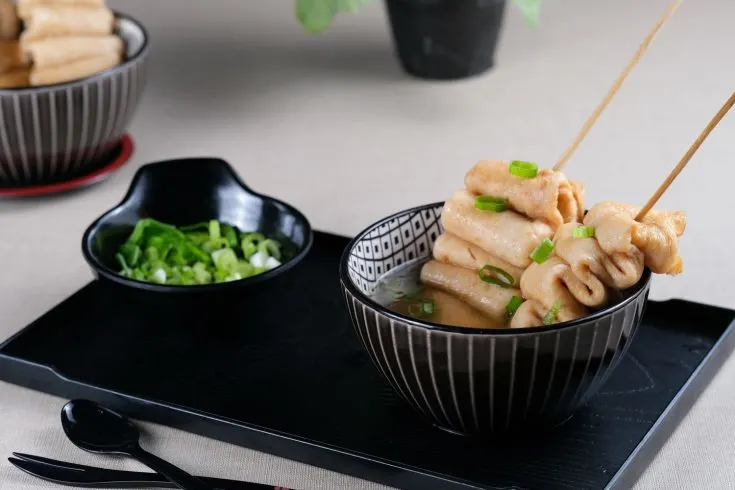
When talking about Korean street food, you simply have to include Eomuk. Eomuk is made from a batter of fish meat mixed with some vegetables and flour. Once prepared, the batter is shaped and then fried.
Eomuk is commonly skewered and dunked in a seafood and vegetable broth before serving. Most street vendors allow you to help yourself to the warm soup as well!
Very much a dish for warming you up during the colder months, you know winter in Korea is around the corner when the street food vendors start adding this Korean favorite to their menus.
3 – *호떡 – Hotteok
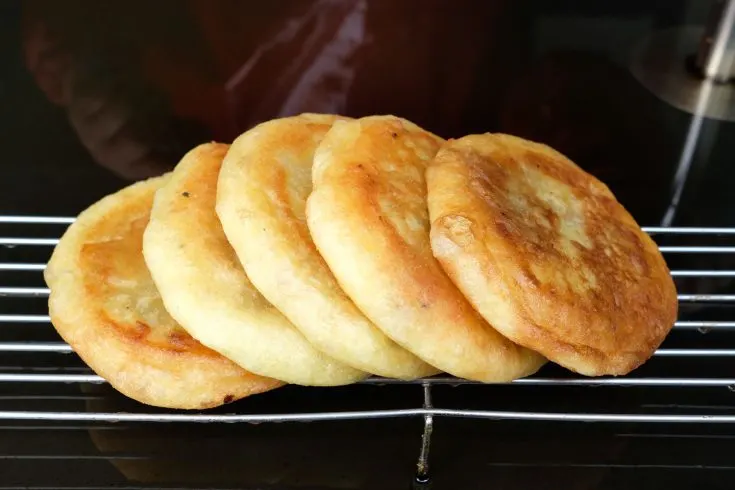
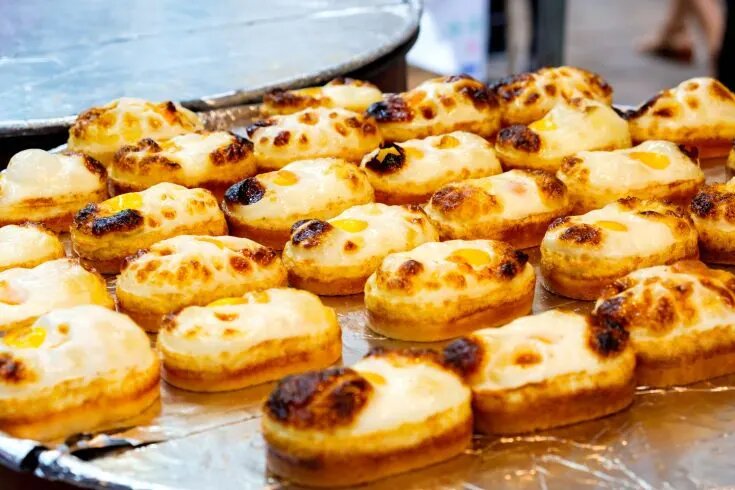
A street food enjoyed hot by a lot of Koreans is Hotteok, this flat pan-fried cake may sound like breakfast food, but it is widely consumed as a wholesome snack for many Koreans.
Hotteok is usually smaller than an average person’s hand and is filled with sugar and various nuts. The batter is pressed flat on an oil-coated griddle, and as the batter cooks, it develops a deliciously crispy exterior, while the sugar inside heats and melts.
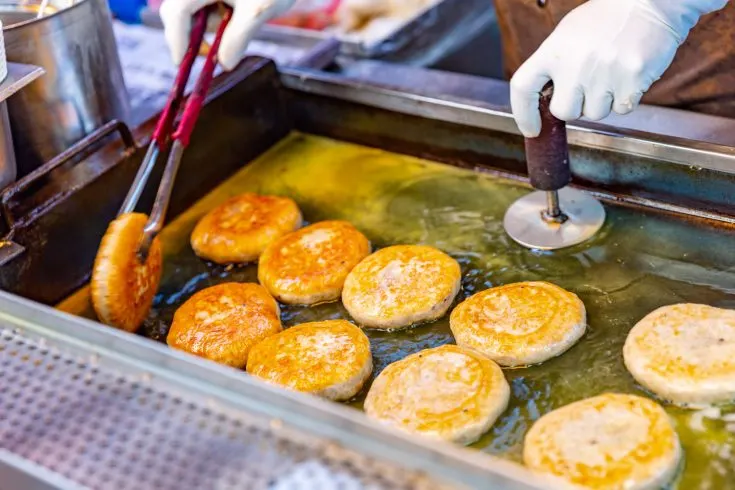
Since it is a hot street snack, its popularity rises during the colder seasons. Hotteok has both a sweet and savory flavor but should be consumed in small mouthfuls, as the batter is piping hot once served.
4 – *ë–¡ë³¶ì´ – Tteokbokki
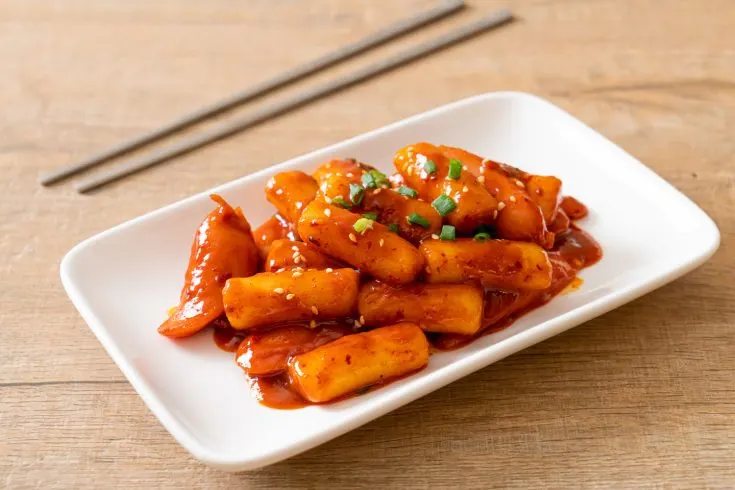
Tteokbokki literally means “stir-fried rice cake”, and this beloved Korean dish is commonly served with gochujang (red chili paste) sauce.
The combination of the spiciness and sweetness from the gochujang sauce, and the sumptuous, chewy texture of the tteok make for a truly mouthwatering bite.
Shops and vendors usually prepare it in bulk on a large, flat pan, and passers-by can pick up and enjoy this delicious street food while out and about, or on their way to and from work.
Some shops even have a cup-Bokki alternative, where the owners give you a cupful of Tteokbokki. As street foods go, Tteokbokki is very much one of the most loved and popular.
5 – 떡꼬치 Tteok-kkochi
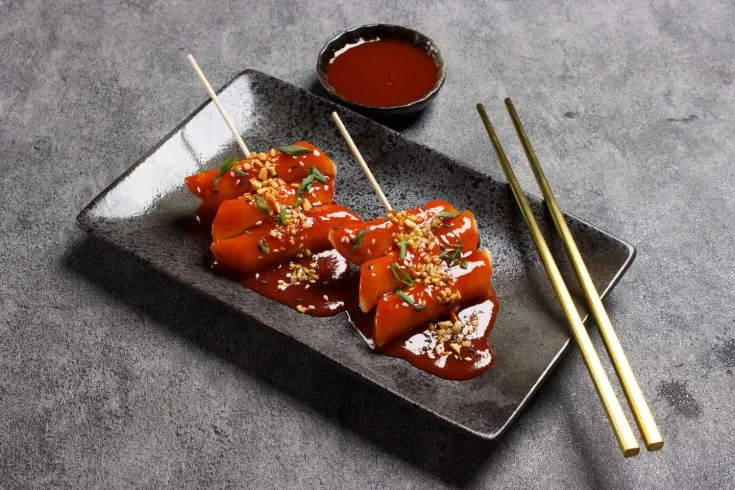
Tteok-kkochi is one of the most popular South Korean street foods out there. Crunchy, salty, sweet, and a tad spicy, Tteok-kkochi is a skewer stacked with deep-fried Korean spicy rice cakes and covered in a sauce made from Korean chili paste (gochujang), honey, soy sauce, brown sugar, minced garlic, and sesame oil.
While Tteok-kkochi is a skewer of rice cakes soaked in spicy sauce, Tteokbokki combines deep-fried rice cakes with a thick sauce full of umami. Korean hot pepper flakes, known as gochugaru, anchovies, scallions, boiled eggs, dried seaweed, and gochujang come together into a flavorful, luscious jus mixed with the fried rice cakes. These two dishes are Korea in just one bite. Read More…