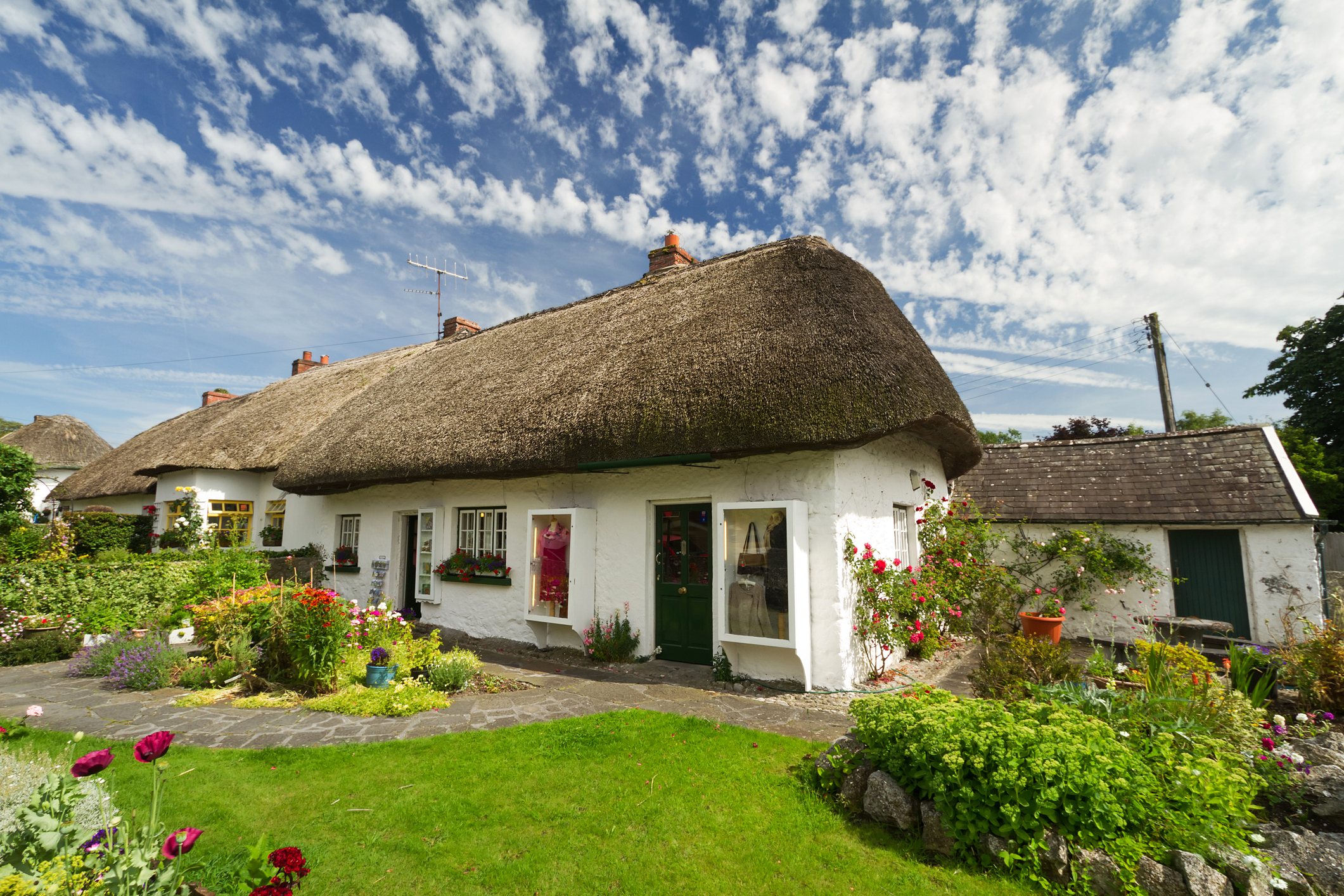
20 Irish Cottage Style Decor Ideas & Features
-
 Loading...
 - Olivia Taylor
- 27 May 2022
- 282 Views
- 0 Like
- 0 Comment
The Irish cottage can have greater appeal when combined with contemporary conveniences. You can recreate this design style in your home decor by adding a few architectural elements, colors, patterns, furniture and other furnishings.
More Than a Thatched Roof
When you hear the phrase Irish cottage, you probably think of a thatched roof home. While this is appropriate, there is more to a quaint Irish cottage than its signature roofline.
The round wattle (sticks) and daub (mud or clay) round huts were replaced with the rectangular thatched roofed cottage. According to Cottageology website, with the advancement of building techniques, the laborers took some of the technology back to their communities and the cottage was born. Stones and rocks were typically used for the cottages. The result was very thick walls.
The cottage designers addressed the often harsh Irish environment by taking advantage of solar gain through siting the cottages facing south. This allowed sunlight to warm the home all day. The stone walls provided a large thermal mass, retaining the heat and releasing it at night.
Architectural Features
There are several architectural features found in an Irish cottage that you can incorporate in your home design.
Whitewashed Stone Walls
Constructed from the ample supply of rocks and stones, the exterior and interior were often white-washed for an even more unique look. You can paint stone or brick walls/fireplace white or use an actual whitewash to give an authentic look to your design. You may prefer to transform a plain wall with a faux whitewashed brick wallpaper to give the illusion of a textured wall.
Traditional Thatched and Stone Roofs
The iconic thatched roof is typically the first thing that comes to mind upon hearing the phrase Irish cottage. Sod was used for insulation on the inside part of the full or half hipped roof set on full gable walls. The roofs were typically thatched although builders in rocky regions took advantage of the slate and stone for sound roofs.
The type of materials used for thatching depended on the region and types of industries. For example, along the coastline where the weather was very harsh, ropes were woven into types of nets to secure the thatch. Locales that had linen manufacturing used rushes, marram grass, heather and flax instead of straws.
You can create a stylized thatched roof or go with a traditional design.
Modern Thatched Roofs
Technology advancements have solved the common issues of expense, maintenance and infestation of bugs, rodents and other animals. An Endureed® Synthetic Thatch offers the authentic look for your Irish cottage with modern solutions to these age-old problems. Opt for a synthetic thatch roof for easier care.
Cottage Window Niches
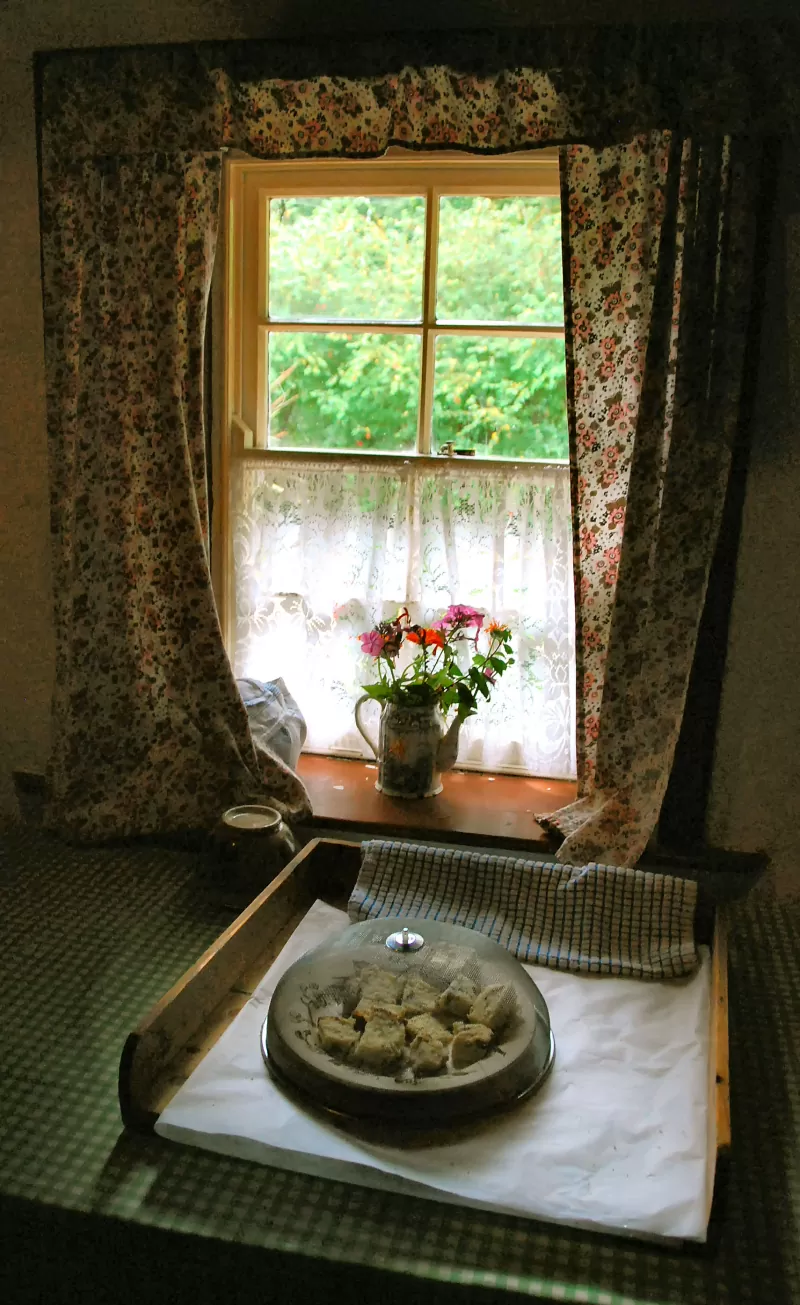
The Irish cottage window can be transformed into a niche with a stained wood windowsill that's ideal for a quaint vase of flowers or to display a couple of collectibles.
- The bottom tier sheer over the pane-window can be framed with a floral print curtain and valance.
- You may decide to use Irish lace for the curtain sheer, adding one more layer to your Irish decor.
The fireplace, complete with an open floor-level hearth, was made from local stones/rocks and was located in the center of the home in the kitchen. All family activities, such as cooking, eating, and relaxing, took place in this space. The fireplace/hearth wall was very thick and extended beyond the roof. This massive masonry structure provided radiant heating for the entire home. A bedroom was usually located directly behind the fireplace wall to take advantage of the heat.
- Build a floor to ceiling stone fireplace with a floor level hearth in one end of your kitchen.
- Add a stone or rough hewed timber mantel.
- Set a dining table and chairs in front of the fireplace or use for a seating area.
Half Door
Some cottages had two exterior doors, one on each side (north and south). The half door was a brilliant solution to allow air circulation inside the home. The top half of the door could be swung open inside the home while keeping the bottom half secured. This type of door is also called a Dutch door or stable door.
The bottom half often had a small shelf that served as a prop when looking out over the farm or simply daydreaming. The half door also served as a barrier to any wandering farm or wild animals as well as corralling the children inside while airing out the home that was often smoky and damp.
Flooring Choices
While many of the cottage floors were nothing more than packed clay or mud, builders often took advantage of the available local flagstone. Alternatively, use slate for the flooring in your cottage. Read More...