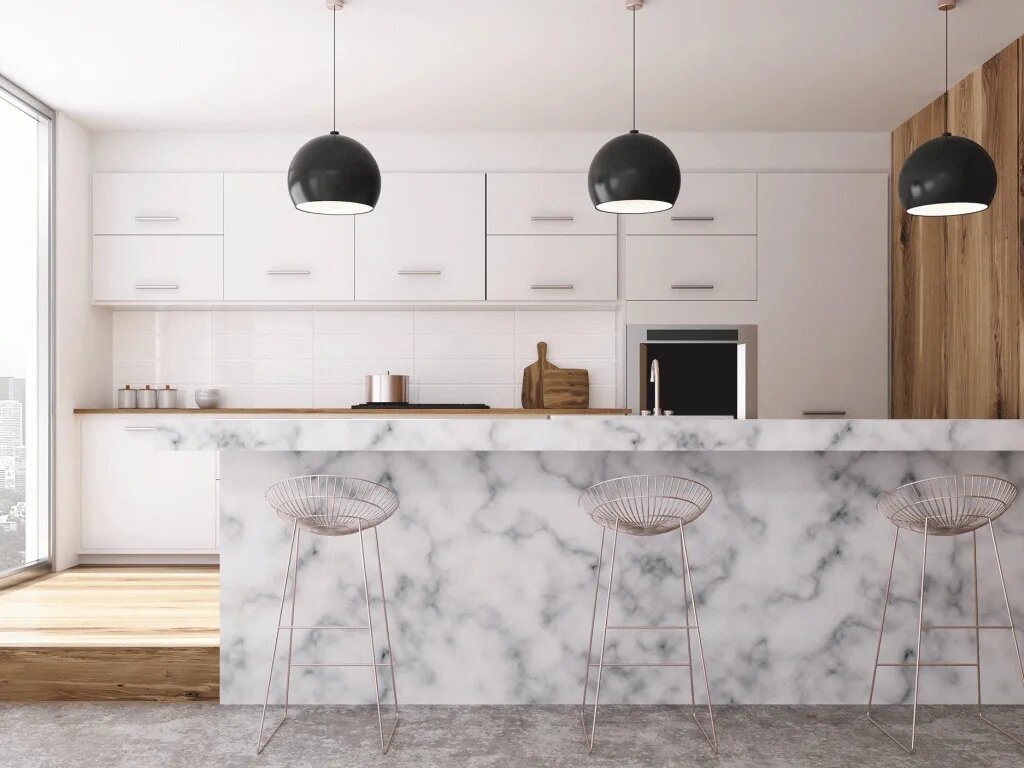
3 Easy Kitchen Segregation Tips For Open-Plan Layouts.
-
 Loading...
 - Manger Bard
- 07 Jun 2023
- 66 Views
- 0 Like
- 0 Comment
The popularity of open-plan layouts in modern homes has skyrocketed in recent years. This design concept creates a sense of spaciousness, enhances natural light, and promotes social interaction. However, the absence of physical barriers can make it challenging to separate different areas, especially in the kitchen. Fortunately, there are simple and effective ways to achieve kitchen segregation within an open-plan layout. In this article, we will explore three practical methods that can help you create a more organized and functional kitchen space while maintaining the benefits of an open-plan design.
1. Use Furniture as Dividers
One of the easiest ways to segregate the kitchen in an open-plan layout is to strategically place furniture to act as dividers. By carefully selecting and positioning furniture pieces, you can create distinct zones within the space.
a. The Power of a Kitchen Island

A kitchen island serves as a versatile and functional centerpiece that can effectively divide your open-plan kitchen. Not only does it provide additional counter space and storage, but it also acts as a natural boundary between the cooking and dining areas.
To maximize the segregation effect, consider using an island with a built-in cooktop or sink. This not only enhances the visual separation but also creates a designated area for food preparation or cleanup.
b. Utilizing Screens and Shelving Units
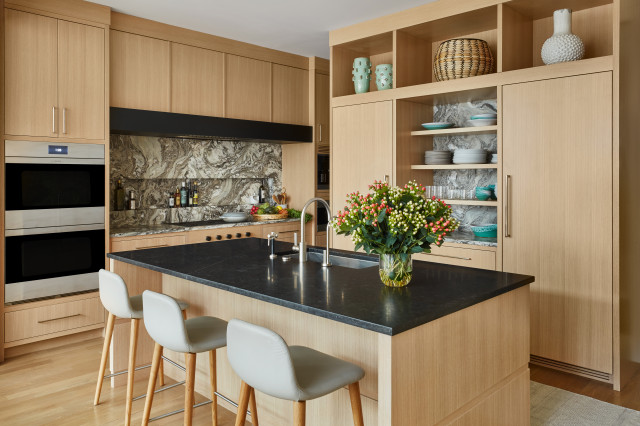
Another way to create a sense of separation in an open-plan kitchen is by incorporating screens or shelving units. These furniture pieces can add depth and visual interest while serving as barriers between different functional zones.
Screens, such as folding room dividers or Japanese shoji screens, can be positioned strategically to shield the kitchen from the living or dining area. They offer a degree of privacy without completely blocking the flow of light and conversation.
On the other hand, open shelving units can serve as decorative partitions while providing storage for cookbooks, dinnerware, or decorative items. By carefully curating the items displayed on the shelves, you can effectively define the kitchen space while adding a personalized touch.
2. Distinct Flooring and Lighting
Creating visual boundaries through flooring and lighting choices is another effective way to segregate the kitchen in an open-plan layout. By using different materials, patterns, or lighting fixtures, you can establish separate zones within the larger space.
a. Flooring Transition and Area Rugs

A change in flooring material or pattern can significantly contribute to the segregation of your kitchen. By selecting a distinct flooring option for the kitchen area, such as tiles or hardwood, you can visually separate it from the surrounding areas with carpet or laminate.
To further enhance the effect, consider placing area rugs in specific zones of the open-plan layout. For example, a rug under the dining table or in front of the cooking area helps define these spaces and adds warmth and texture to the overall design.
b. Lighting Fixtures as Visual Dividers

Clever use of lighting fixtures can create a clear distinction between different areas in an open-plan kitchen. Pendant lights or chandeliers can be strategically hung over the dining table or kitchen island, drawing attention and visually separating these spaces.
Moreover, task lightings, such as under-cabinet lights or recessed spotlights, can be employed to illuminate specific functional areas, like the cooking or food preparation zones. This not only improves visibility but also reinforces the boundaries between different parts of the kitchen.
3. Partial Walls and Sliding Doors
If you desire a more substantial physical separation while maintaining the openness of your kitchen, partial walls or sliding doors are excellent options to consider.
a. Half Walls and Breakfast Bars

A half wall, also known as a pony wall, is a low-height partition that creates a subtle barrier between the kitchen and adjacent areas. It offers a degree of privacy and defines the kitchen space without completely obstructing the view or natural light flow.
To make the most of a half wall, consider incorporating a breakfast bar or counter extension on the side facing away from the kitchen. This provides additional seating and surface area for casual dining or entertaining, making it a functional and visually appealing solution.
b. Sliding Glass Doors

For those seeking a more flexible segregation option, sliding glass doors can be an excellent choice. These doors allow you to open up or close the kitchen as desired, providing the best of both worlds—an open-plan layout when desired and privacy when needed.
Sliding glass doors offer transparency, allowing natural light to penetrate the kitchen while still providing a physical barrier. They also create a seamless transition between indoor and outdoor spaces, making your kitchen feel more expansive.
Frequently Asked Questions
1. Can I segregate my kitchen in an open-plan layout without compromising natural light?
Absolutely! You can utilize the furniture, screens, partial walls, or sliding glass doors to create segregation while preserving the flow of natural light. Choosing transparent or translucent materials for dividers allows light to pass through while defining different areas.
2. Will segregating the kitchen make it feel smaller?
When done correctly, kitchen segregation in an open-plan layout can make the space feel more organized and spacious. By visually separating the kitchen from other areas, you create distinct zones that enhance functionality and give each area its own identity.
3. What are some practical storage solutions for a segregated kitchen?
In a segregated kitchen, it's essential to optimize storage to maintain an organized space. Consider utilizing built-in cabinets, pantry units, or kitchen islands with storage compartments. Open shelving can also be incorporated to showcase decorative items or frequently used cookware.
4. Can I combine multiple methods of segregation in my kitchen design?
Certainly! Feel free to mix and match different techniques based on your preferences and the layout of your open-plan kitchen. Combining furniture dividers with distinct flooring and lighting choices can create a visually appealing and functional segregation.


