5 reasons to visit Japan's Shikoku's Kagawa prefecture

Island hop in the Inland Sea, hike up a Fuji look-alike with locals, search for your doppelgänger among 500 temple statues or try one of Japan’s legendary noodle dishes – Sanuki udon.
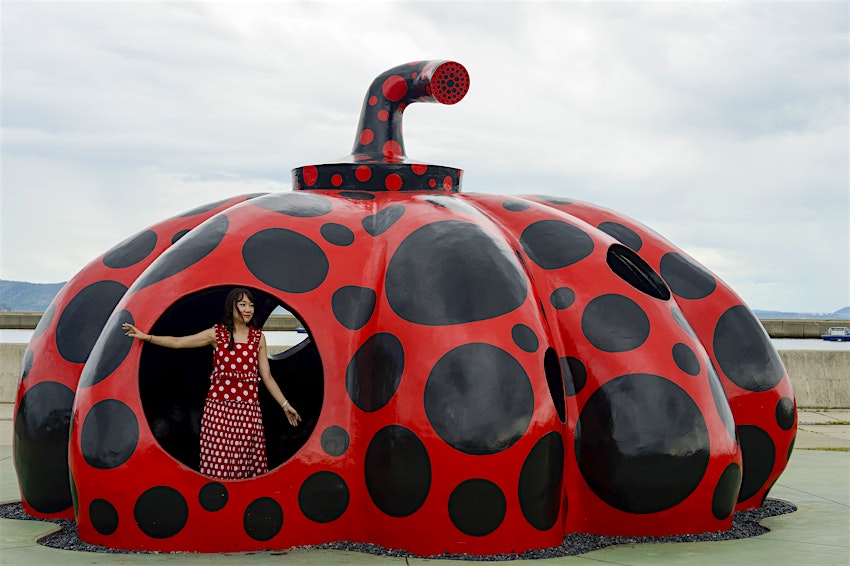
Enjoy the burgeoning arts scene
Fuelling interest in the creative movement is renowned “art island” in the Inland Sea, Naoshima. While Yayoi Kusama’s Yellow Pumpkin has become a symbol of Naoshima, her massive Red Pumpkin at the port invites exploration from the inside.
Formerly rural and remote, with a shrinking population, Naoshima has morphed into a world-class center for contemporary art. Even Japan’s most lauded architects have contributed to the change with museums, a boutique hotel and even a bathhouse.
All have been designed to enhance and complement the island’s natural beauty and existing settlements. Even the population is blossoming thanks to a number of Japanese leaving the big cities and resettling in the area to open cafes and inns.
The artistic magnetism of Naoshima is rubbing off on nearby islands, and for the 2022 Setouchi Triennale festival, a total of 12 islands and two mainland ports are involved in an "arts extravaganza" running through spring, summer and autumn, that will include visual arts, music, drama and dance.
On the Kagawa mainland, a can’t-miss museum is the Takamatsu City Museum of Art, located in the city’s main shopping district in the formerly austere Bank of Japan building. The Isamu Noguchi Garden Museum, east of Takamatsu city, was where the American-Japanese sculptor based himself for many years. The garden is a testament to the hope Noguchi had for art lovers.
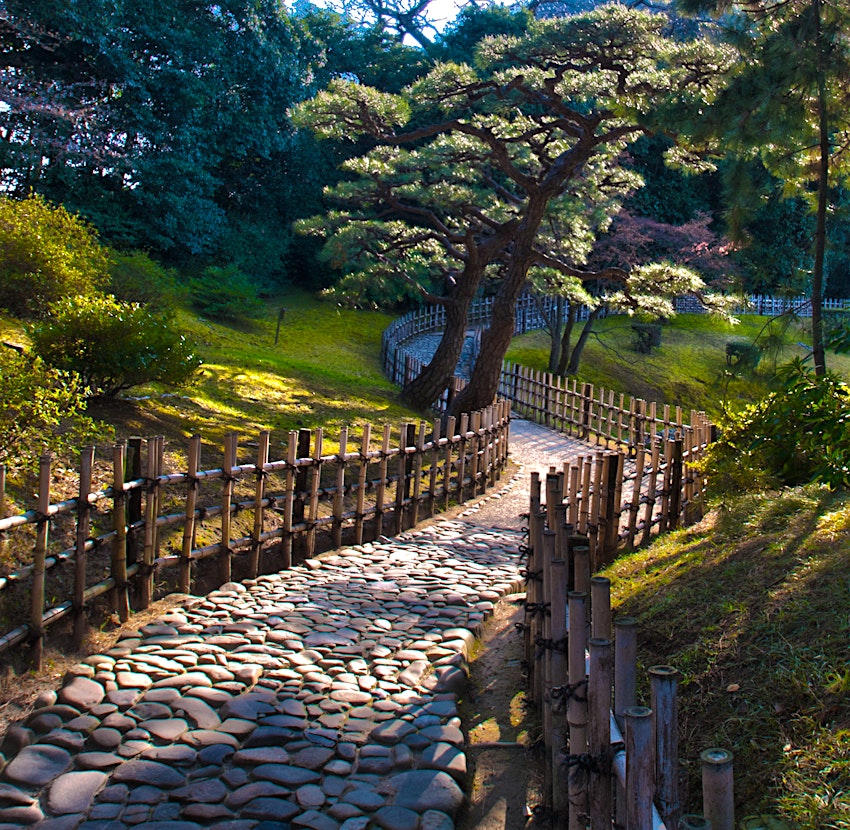
Peek into the Japan of yesteryear
Takamatsu city’s Ritsurin-kÅen, renowned as one of Japan’s most beautiful gardens, was constructed in the mid-1600s as a walking garden for the enjoyment of the daimyÅ (regional lord). Stroll the park trails which wind around a series of ponds, bridges and islands. Drop into the Sanuki Folkcraft Museum or sip matcha (green tea) at teahouses scattered around the gardens.
East of the city, in Yashima, is the “village museum” of Shikoku-mura. There, traditional houses and buildings were relocated from all over Shikoku and neighboring islands to re-create a village from a bygone era. The fine kabuki stage came from ShÅdoshima, famed for its traditional farmers' kabuki performances, is among the top attractions.
Marugame Castle is one of only 12 castles in Japan to have its original wooden donjon intact. The castle dates from 1597 and is known for its exquisite stone walls, moat and 1000 cherry trees that explode with blossoms every spring. It’s an easy ride by bicycle from Marugame Station.
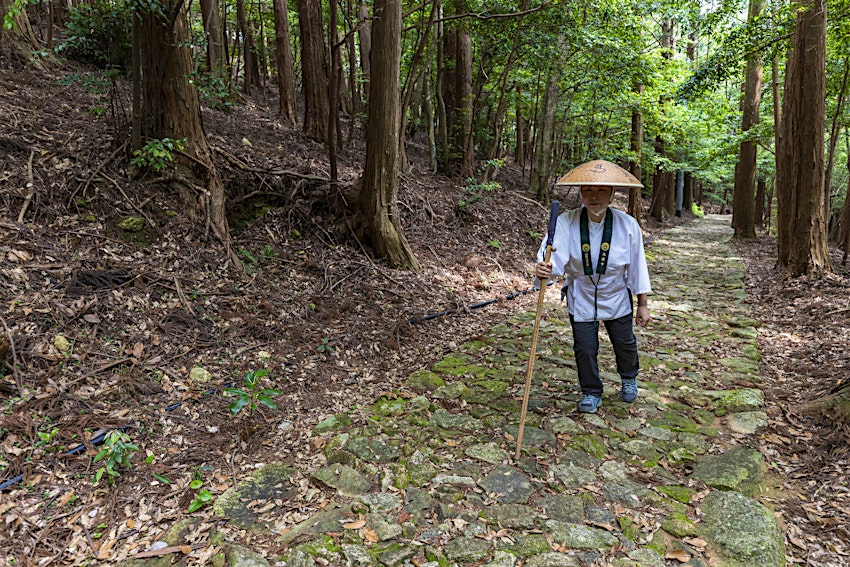
Take part in the 88 Sacred Temples Pilgrimage
In centuries past, most visitors to Shikoku were pilgrims trying to attain enlightenment on the 88 Sacred Temples of Shikoku Pilgrimage. The 1400km (870-mile) pilgrimage circuit has been walked for 1200 years. The last 22 of the 88 temples are in Kagawa.
The great saint of Shingon Buddhism, KÅbÅ Daishi, who established the pilgrimage and attained enlightenment on Shikoku, was born at ZentsÅ«-ji, Temple 75. Trust in Buddha as you venture into the basement of the Mie-dÅ and traverse a lengthy passageway in pitch darkness. By moving carefully along with your hand pressed to the passageway's wall, painted with mandalas, angels and lotus flowers, you're said to be safely following Buddha's way.
Mountain-top Temple 66, Unpen-ji, “the temple in the clouds,” features 500 mesmerizing and life-like Rakan statues and is reached by its own aerial ropeway. It’s said that everyone has a doppelgänger among the 500 and looking for yours is a delight.
Temple 85, Yakuri-ji, accessed by a retro cable car that’s bound to keep kids (both young and old) happy, sits under the high cliffs of Goken-zan, east of Takamatsu.
The last of the 88 temples, ÅŒkubo-ji, is in the mountains in the southeast of Kagawa. But if pilgrims want to do things properly and truly complete the circle of Shikoku, they will have to return to Temple 1 in Tokushima Prefecture, for a circle is like the search for enlightenment, never-ending.
Shikoku’s most-celebrated Shinto shrine is Konpira-san, formally known as Kotohira-gÅ« and dedicated to the guardian of mariners. If you tell a Japanese person you’ve been to Kagawa, they’ll ask if you climbed Konpira-san, famous for its exhausting 785-step climb up to the main shrine and 1368 steps to the inner shrine. Read More…