5G-Connected Nokia Drone Platform Chosen for Nationwide Drone Network in Belgium
-
 Loading...
 - Belle Rolland
- 30 May 2023
- 71 Views
- 0 Like
- 0 Comment
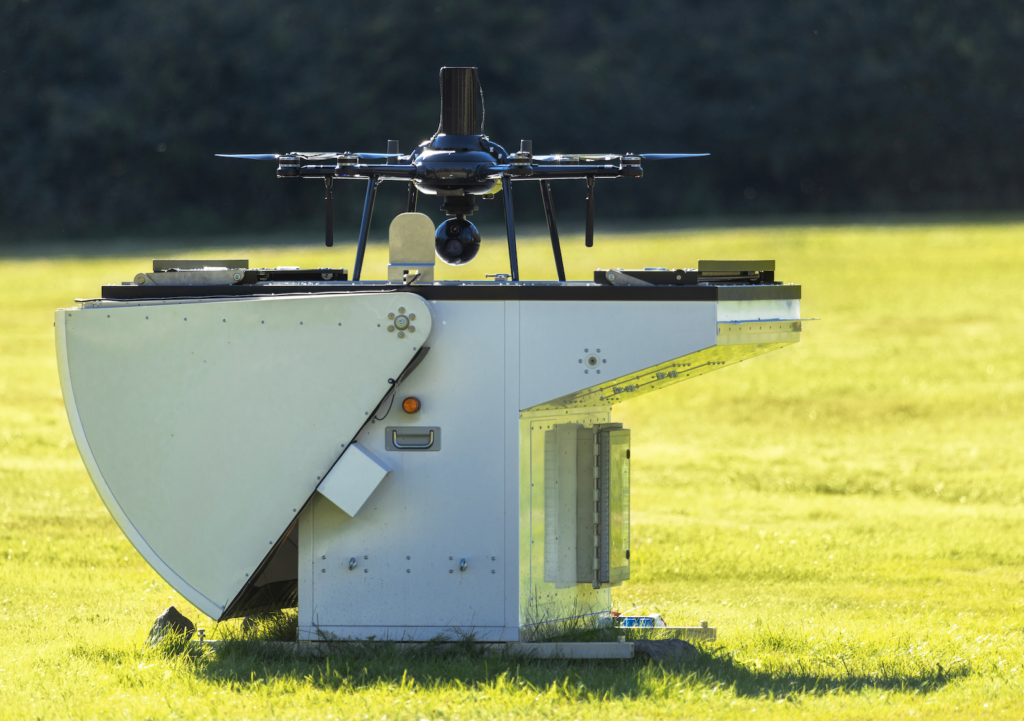
Nokia has recently announced a partnership with Citymesh, a telecommunications operator based in Belgium. The collaboration entails the provision of 70 Drone-in-a-Box (DiaB) units from Nokia to Citymesh's Drone Networks platform. These DiaB units will be strategically placed across Belgium, specifically in 35 different emergency zones, creating a comprehensive 5G automated drone grid. The purpose of this initiative is to expedite resource mobilization round the clock. As soon as emergency services receive a distress call, a drone will be dispatched to gather crucial information about the situation. The DiaBs are equipped with aerial cameras, enabling them to capture footage that can be transmitted to control centers. The timely collection of information within the first 15 minutes of a call is of utmost importance as it allows first responders to better prepare for emergency situations.
In an interview with Avionics, Thomas Eder, the Head of Embedded Wireless Solutions for Nokia, expressed his satisfaction with the long-standing partnership between Nokia and Citymesh in the Private Wireless domain. Eder also highlighted Citymesh's mission, backed by the Belgian government, to revolutionize the public safety sector and extend its impact to other industries through the establishment of a nationwide drone network. He emphasized the significance of strong partnerships in achieving commercial and operational success. The contractual agreement between Nokia and Citymesh encompasses all the necessary components for deploying and maintaining a nationwide network of Drones in a Box, including hardware, software, subscriptions, training, maintenance, and services. Nokia's expertise in implementing nationwide networks through DiaB units positions the company as a reliable technology and service partner for projects like the Belgian drone network.
Eder further explained the factors that influenced Citymesh's decision to choose Nokia's Drone Networks platform. He commended Nokia's comprehensive approach in delivering a turnkey solution that incorporates all the essential hardware and software components, including edge-cloud and network equipment. This feature, coupled with the platform's remote operation capabilities, makes it an ideal choice for Citymesh's intended use case. Additionally, Eder mentioned that the fact that Nokia's hardware is manufactured in their own Finnish factory could be a crucial factor for the public safety sector, which may have specific requirements regarding the origin of the devices.
Highlighting the positive impact of the Nokia Drone Networks platform on emergency response capabilities, Eder emphasized that the platform utilizes drone technology, 4G and 5G connectivity, and secure data analytics to enhance the effectiveness of emergency responders. By providing real-time situational awareness, remote monitoring, and efficient communication, the platform facilitates informed decision-making, improves response times, and ultimately saves lives.
Eder pointed out that the open API framework of the Nokia Drone Networks platform allows for the integration of third-party applications, expanding its capabilities beyond emergency response scenarios. As an example, he described a situation where fire departments can integrate their own incident management systems with the Nokia Drone Networks platform through the open API framework. This integration enables them to swiftly deploy drones, collect real-time video feeds and crucial data, and transmit them directly to the incident management system. Such integration empowers incident commanders to make informed decisions and allocate resources effectively, thereby enhancing their response capabilities. This framework can be replicated for customers in various industries such as agriculture, energy, construction, and utilities, leveraging real-time data collection and analysis to improve situational awareness and decision-making.
The drones deployed in Belgium will be equipped with video and thermal cameras to conduct real-time aerial data collection. These drones will be remotely managed from five centralized operations centers and will be available for deployment at any time. With over two million emergency calls received annually, this capability significantly enhances the ability of emergency services to make informed decisions and optimize their response to crises. It enables faster decisions based on real-time data, reducing the need for personnel to be physically present at the scene.
In addition to the collaboration with Citymesh, Nokia is also working with Yellowscan and Rohde & Schwarz, recognizing the importance of establishing a strong ecosystem and forging partnerships to achieve success. Eder expressed confidence that the platform's data collection capabilities will be further enhanced through partnerships within the application ecosystem.
The implementation of the 70 DiaB units is scheduled to commence this summer. Eder emphasized the importance of strong project management, intelligent geographical deployment decisions, training, and the right partners for successful deployment. He drew parallels between Nokia's network deployment business and the deployment of Drones in a Box with their Edge Cloud platform (Nokia MX Industrial Edge). To ensure scalability and reliability, redundant and distributed components will be deployed within the software architecture. Thorough testing under various scenarios and load conditions will be conducted to identify and address potential bottlenecks or performance issues. Proactive monitoring, maintenance, regular updates, patches, and security measures will also be integral to maintaining system integrity and protecting against vulnerabilities.