6 Appealing Libraries In Budapest Every Book Lover Must Visit
-
 Loading...
 - Alejandro Diaz
- 15 Jun 2022
- 252 Views
- 0 Like
- 0 Comment
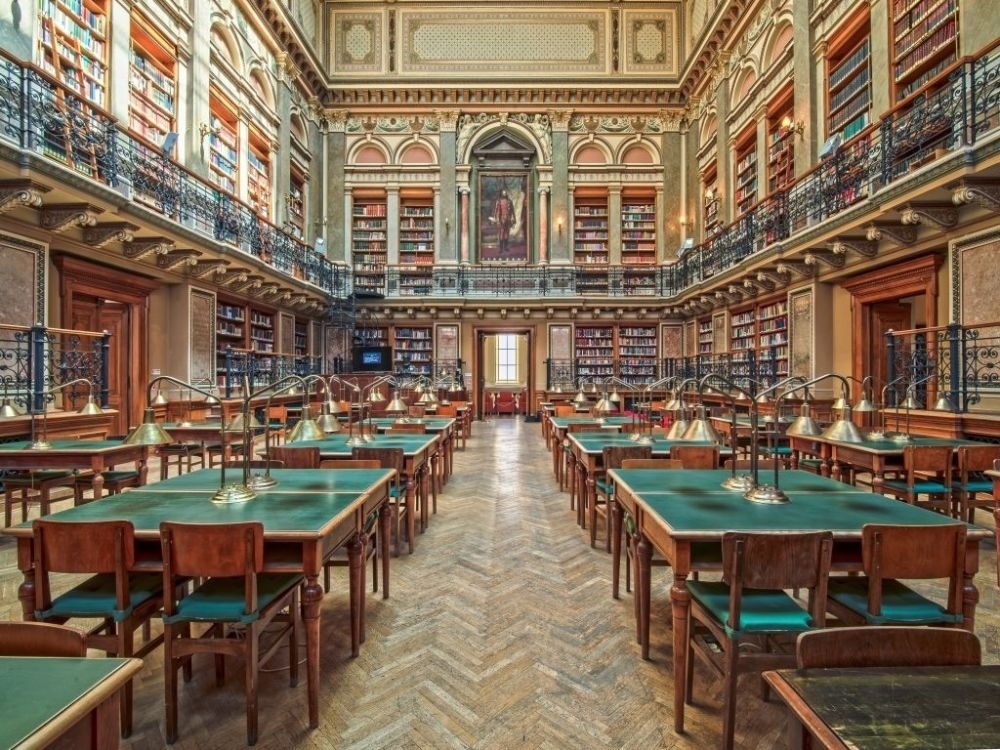
Libraries are some of the calmest places one could imagine. It is the perfect choice for reading, working, studying, educating ourselves, and getting to know more about the world around us. However, oftentimes, these buildings are not only home to immeasurable knowledge but also have architectural value. In this list, we have collected six of the most impressive libraries in Budapest.
- ELTE University Library and Archives (ELTE Egyetemi Könyvtár és Levéltár)

The library of ELTE houses approximately two million documents, making it the third-largest library in the Hungarian capital. The more than 450-year-old institution was founded by Archbishop Miklós Oláh of Esztergom, although originally in Nagyszombat, together with the Jesuit College. Soon afterwards, the library moved to Budapest. As we can learn from Funzine’s article, in the mid-19th century, the library was already visited by 35,000 readers a year.
- Szabó Ervin Library of Budapest (FÅ‘városi Szabó Ervin Könyvtár)

The Szabó Ervin Library is considered the largest public cultural institution in Budapest. Budapest’s first public library started its operations in 1904, known as the Capital City Library (FÅ‘városi Könyvtár) at the time. The huge library has been housed in the Wenckheim Palace on Reviczky Street since 1931. One of the first directors of the institution was Ervin Szabó, who later gave his name to the library
- National Library of Foreign Literature and Music Collection (Országos Idegennyelvű Könyvtár és Zenei Gyűjtemény)

As we can read on their official website, the National Library of Foreign Literature is one of the youngest public research libraries in Hungary. It has been called National Library of Foreign Literature since 1989. It was established in 1956 under the name of “Gorkij State Library” and had originally operated as a Russian language library. Up to this point, an incomparable collection of foreign language materials has been developed nationwide. The institute was qualified as a national resource library in 1978 and later to an academic research centre. Read More…