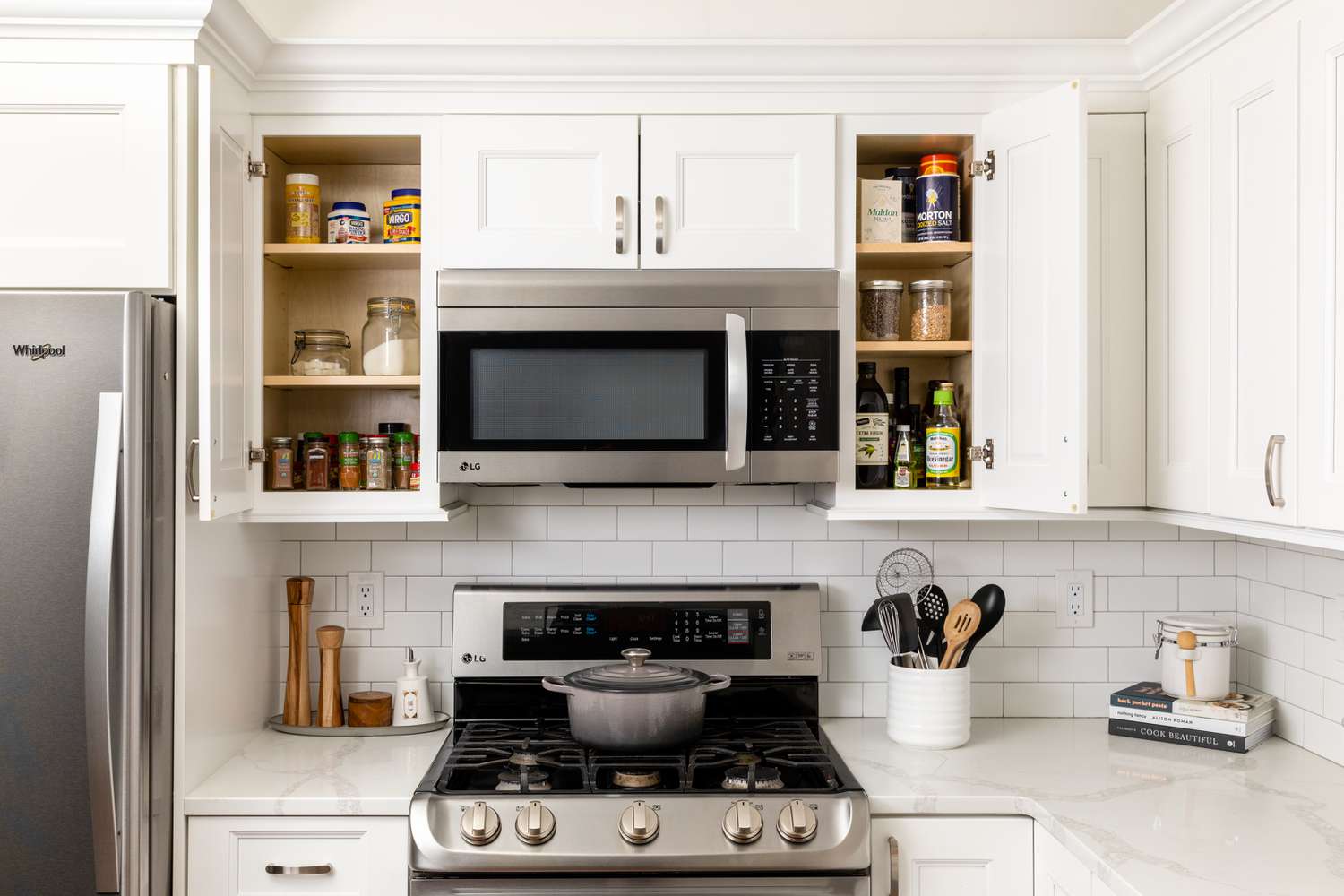
6 Dirtiest Spots of the Kitchen and How to Clean Them

Everyone adopts different methods and steps when cleaning up the house. When it comes to kitchen cleaning, there are tons of detergents and tools available in the market. Actually, the key point for kitchen cleaning is to clean the right places. Let us share 6 easily-ignored cleaning black spots with you today.
1. Range hoods
The range hood is used to remove oily fume during cooking. If it is not cleaned regularly, it can be the oiliest electrical appliance in the kitchen. Therefore, it is recommended to clean the range hood briefly once a week. The following are two different cleaning methods:
Ducted range hoods (with exhaust pipe and oil collector)
1. Turn off the power
2. Mix baking soda with warm water and soak the removable hood into the solution
3. Spread newspaper or plastic tablecloth on the stove
4. Mix baking soda with warm water and pour it into a sprinkling. Spray it on the parts that cannot be removed to dissolve the oil
5. Wipe the parts clean with a sponge or scouring pad
6. Turn on the range hood to let the remaining oil in the fan blades and oil pipe fall into the oil collector
7. Repeat steps 4 to 6 until the water dripping into the oil collector is clean
Recirculating range hoods (without exhaust pipe, with two layers of filters)
1. Turn off the power
2. Pull out the grease trap
3. Put the grease trap down, with the side facing the stove facing up. Place it in the water mixed with baking soda and warm water in a ratio of 1:1
4. Soak for about 20 minutes to separate the grease from the trap (time should not be too long, otherwise the grease will stick back to the grease trap)
Points to note
Do not scrub the range hood vigorously. If the range hood is scratched, oily dirt will be accumulated more easily, which will be more difficult to clean, and it will also affect the oil separation ability.

2. Cooking stove
The stove is another kitchen appliance that is constantly exposed in an oily environment. Food often accidentally falls on the stove. After accumulating for a period of time, it may attract insects.
Induction stove
The induction cooker has a smooth surface and is relatively easy to be cleaned. After turning off the power, wipe it with a cloth sprayed with detergent, but do not use strong acid detergent to avoid damage to the coating of the induction cooker.
Gas stove
Open stove cleaning is divided into three parts. First, remove the drip pan, pan support and burners, put the drip pan and pan support into hot water mixed with edible baking powder with a 1:1 ratio and soak for 20 minutes. Then, use a dry toothbrush with dry hands to brush away the stains on the burners. Never use detergent and water to clean the burners. Finally, put the parts back into the body in the order of “drip pan, burners, pan support”.

3. Brick and countertop stone
Walls and countertops are often overlooked as cleaning locations. With the continuous contact with oily fumes, both places are actually not very clean. The gaps between tiles are particularly difficult to clean. You can try to cover the gaps with detergent, and then it will be easier to be cleaned.
For seamless countertops, some countertops with relatively poor quality are prone to stains such as sauces and tea. If the stains cannot be removed by various methods, consider using water scrubbing paper to gently scrape away the stains. Read More…