7 Just Weird Polish Foods
-
 Loading...
 - Cortez Javier
- 26 May 2023
- 135 Views
- 0 Like
- 0 Comment
Poland boasts a plethora of peculiar culinary delights that have endured for centuries. Many of these recipes trace their origins back to the oldest Polish cookbook, the "Compendium Ferculorum," first published in 1682.
1. Czernina
Czernina, commonly known as 'duck soup,' is a thick broth made from duck blood and clear poultry broth. While it traditionally features duck, it can also be prepared using chicken, rabbit, or pig.
In old Poland, Czernina was served as a symbol of refusal to a marriage proposal, hence its alternative name, "the black soup." A reference to this dish can be found in A. Mickiewicz's renowned epic poem, "Pan Tadeusz."
Although not widely popular today, particularly due to increasing awareness of animal welfare issues (similar to foie gras), my grandparents used to talk about it frequently. I have only encountered it in a traditional restaurant in the Masurian districts.
2. Kaszanka

Another dish with a unique twist, Kaszanka, is a traditional Polish delicacy made from pig's blood and buckwheat (kasza). It is seasoned with onions, salt, pepper, and marjoram, and stuffed into pig intestines.
Kaszanka is typically sliced, fried with onions, and served with a touch of horseradish. It may require an acquired taste, but it remains a staple at Polish traditional events and meals.
A variation of Kaszanka called "kiszka" or "krupniok" is popular in the Silesian district of Poland. It is slightly smaller and filled with groats instead of buckwheat.
3. Smalec

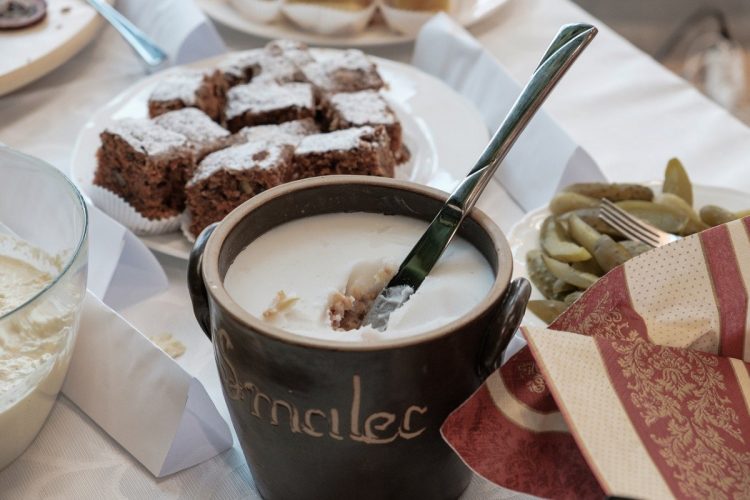
Smalec is a common sight on Polish tables. I recall my mom preparing it when I was a child, and I couldn't fathom consuming it. I recently gave it a try, and it still doesn't appeal to me.
Smalec consists of melted pig fat in a pan with onions and sometimes bacon bits. In English, it is commonly referred to as lard.
Note: If you are a vegetarian or vegan visiting Poland, ensure that smalec is not added to your pierogi or used to cook crepes. Many traditional restaurants garnish their dishes with pork rinds from smalec, so it's best to confirm in advance.
4. Flaki

Flaki, often regarded as a hangover remedy, is a renowned soup in various Eastern European countries. It consists of cow's tripe cooked in broth and is frequently served during Polish weddings for breakfast.
5. Nóżki w Galarecie
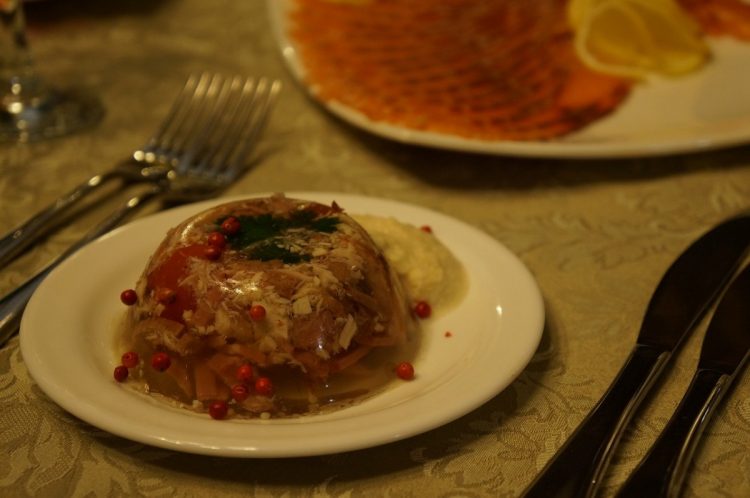
Translated as 'little feet,' Nóżki w Galarecie refers to jellied pig or cow feet. The cooked meat is simmered in a grayish gelatin with herbs, carrots, and peas.
Nóżki w Galarecie is typically accompanied by horseradish.
Another variation of nóżki involves jellied fish, usually carp. While this dish has its origins in Jewish tradition, it has become a common Christmas offering.
6. Fruit Soup

Fruit soup is a warm concoction containing overcooked cherries or strawberries, often blended with a hint of milk and pasta.
7. Zsiadle Mleko
Zsiadle mleko is a love-it-or-hate-it delicacy. It is soured milk obtained through the acidification of fresh cow's milk, rather than the boxed UHT milk found in stores.
To make zsiadle mleko, you leave the milk outside the fridge overnight, resulting in two layers that you mix together the next day—voila!
Zsiadle mleko is closely related to the more well-known product, kefir. Although kefir originated in Turkey (as ayran), it has been embraced by the Polish culture. However, kefir requires specific bacteria for fermentation, making it impossible to prepare at home.