A Beginner's Guide to Kayaking in the Spring of 2022
Is there a better time than now to start thinking about spring plans? Spending long hazy days down by the water, lounging on the beach. What about dipping your toe into the water and learning how to kayak? We might be in winter mode and the lake might just be starting to show signs of defrosting, but right now is the time to plan spring adventures to ensure the warm weather doesn’t pass you by. This beginner’s guide to kayaking is the perfect read to rekindle our favorite outdoor pastime.
Pack It Up, Pack It In
Few things are more relaxing than a day on the water, whether it’s upright on a stand-up paddleboard (SUP) or from inside a canoe or kayak. If you’ve been dying to take up the latter, here’s the low-down on getting started with kayaking.
Prepping for the Water
Gear Up
Whether you’re getting into freediving, snowboarding, or hiking, any new sport requires essential gear to get started. But, first-time kayakers don’t need to — and probably shouldn’t — buy the best, most expensive boats, paddles, and accessories. Figure out your budget and start small with affordable gear. As with all of the sports above, there are plenty of entry-level and mid-range brands that are perfect for beginners. It’s best to talk with a professional, even if you ultimately intend to buy online. At a minimum, you’ll need:
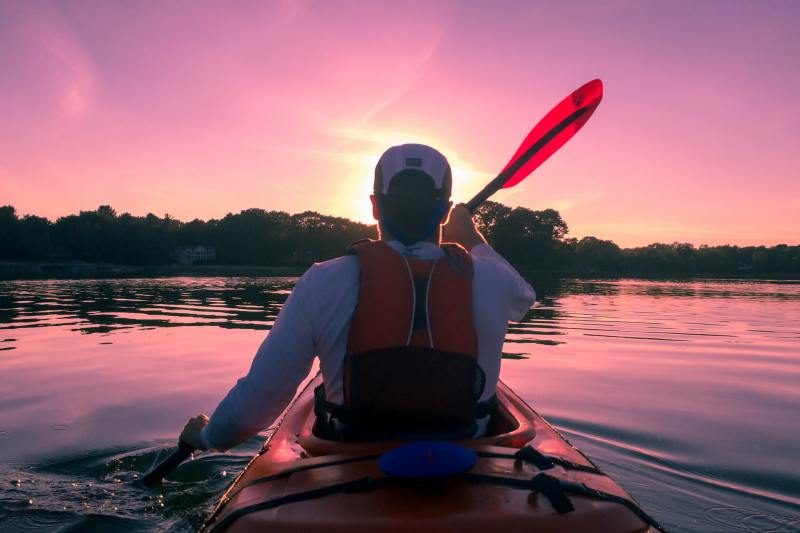
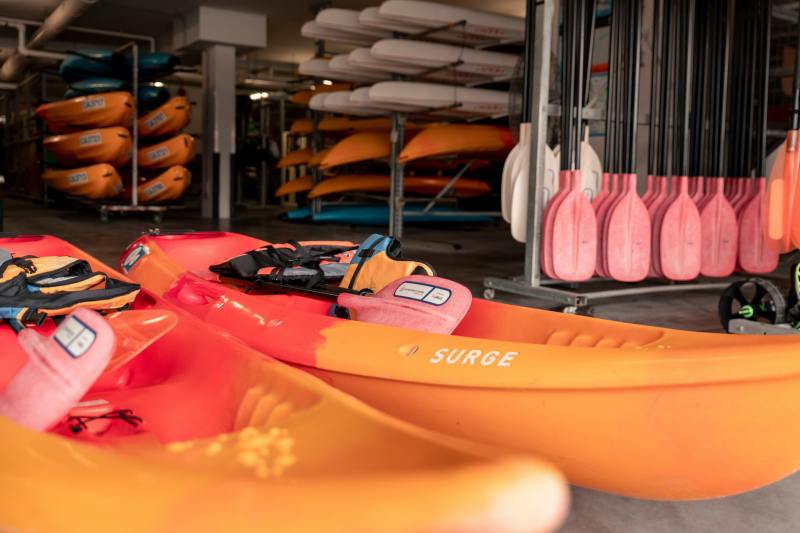
- Kayak (since this is the most significant investment, consider borrowing or renting a few different kayaks to determine the length, style, and features that work for you before buying your own)
- Paddle (be sure to find the right size for you)
- Coast Guard-approved PFD (personal flotation device)
- Bilge pump (optional, but recommended)
- Spray skirt (optional, but recommended for sit-in kayaks)
- Drybag (for keeping your personal effects dry)
Get Dressed
We’ll assume you’re (wisely) planning your first few paddles in calm water and mild weather. Dressing the part for your inaugural kayak outing is fairly straightforward. In fact, it’s not much different than dressing for a day at the beach. You should always be prepared to get wet and have sun protection applied and be ready to reapply. Here are the essentials:
- Swim trunks or board shorts (non-cotton in a relaxed, comfortable fit)
- Rashguard top (for sun and bug protection)
- Waterproof footwear (sport sandals or neoprene slip-ons are best)
- Sun-shielding hat (optional, but recommend, especially for longer paddling days)
- Polarized sport sunglasses
Know Your Limits
Even well-seasoned athletes can find themselves in trouble by biting off more than they can chew. Brush up on any personal weak spots. Work on your core and arm movement and strength before hitting the water. Be realistic about your swimming ability and get a feel for floating in your PFD, to prepare for the inevitable capsizing. For all of these reasons, we also recommend that beginners paddle with a buddy and don’t stray far from the shore. Consider setting a turn-back time for yourself, and limit your first few kayaking adventures to 1-2 hours tops to avoid fatigue leading to mishaps.
Your First Day on the Water
Protect Yourself (and Your Stuff)
The relaxed nature of kayaking (assuming you’re not jumping paddle first into open-ocean kayaking) can lead to a false sense of safety. But exposing your body to the elements for hours or a full day at a time can wreak havoc on your skin, eyes, and more. Take care of your most exposed parts by donning a hat, a lightweight long-sleeve shirt, and plenty of eco-conscious sunscreens. Pack plenty of water — twice what you think you’ll need — in an insulated water bottle. Don’t forget to protect your smartphone, wallet, and other personal effects, too, by stashing them in a waterproof dry bag.
Adjust Your Ride
Fitting your kayak to your body shape, size, and paddling style is key to ensuring a comfortable day on the water. You should feel upright and snug in your kayak, but be able to exit safely if you capsize. With your boat on dry land, start by focusing on your three main points of contact. Start by adjusting the backrest until it is comfortable and supportive. The footpegs should be adjusted so that the ball of your foot rests on the pegs and you have a slight bend in your knees. Your knees or thighs should have contact with the outside of the cockpit, or in the thigh straps, if you are paddling a sit-on-top kayak. These will limit side to side ‘wobble’ as you paddle.
Go for Launch
Your first launch might look intimidating, but there are some easy steps to make sure you get it right. Start on a slightly sloped shoreline in an area clear of rocks or other hard debris. Set the boat down perpendicular to the shoreline in shallow water — deep enough that it’s mostly “in” the water, but shallow enough that you can safely step in and it won’t drift away. Secure your paddle by sliding one of the blades under the deck line in front of the cockpit. Straddle the kayak directly over the cockpit with one foot on either side in the water. Place your hands firmly on either side of the cockpit opening and lower your butt onto the seat. Lastly, slide your legs into the kayak and your feet down toward the footpegs. It’s almost impossible to do this gracefully, so don’t stress that you’re somehow doing it wrong. Use your paddle to propel your kayak away from shore, and attach your spray skirt if you’ll be using one. Read More...