A Painting Attributed to German Painter Caspar David Friedrich Loses its Attribution
-
 Loading...
 - Louis Reinhard
- 27 Aug 2024
- 57 Views
- 0 Like
- 0 Comment
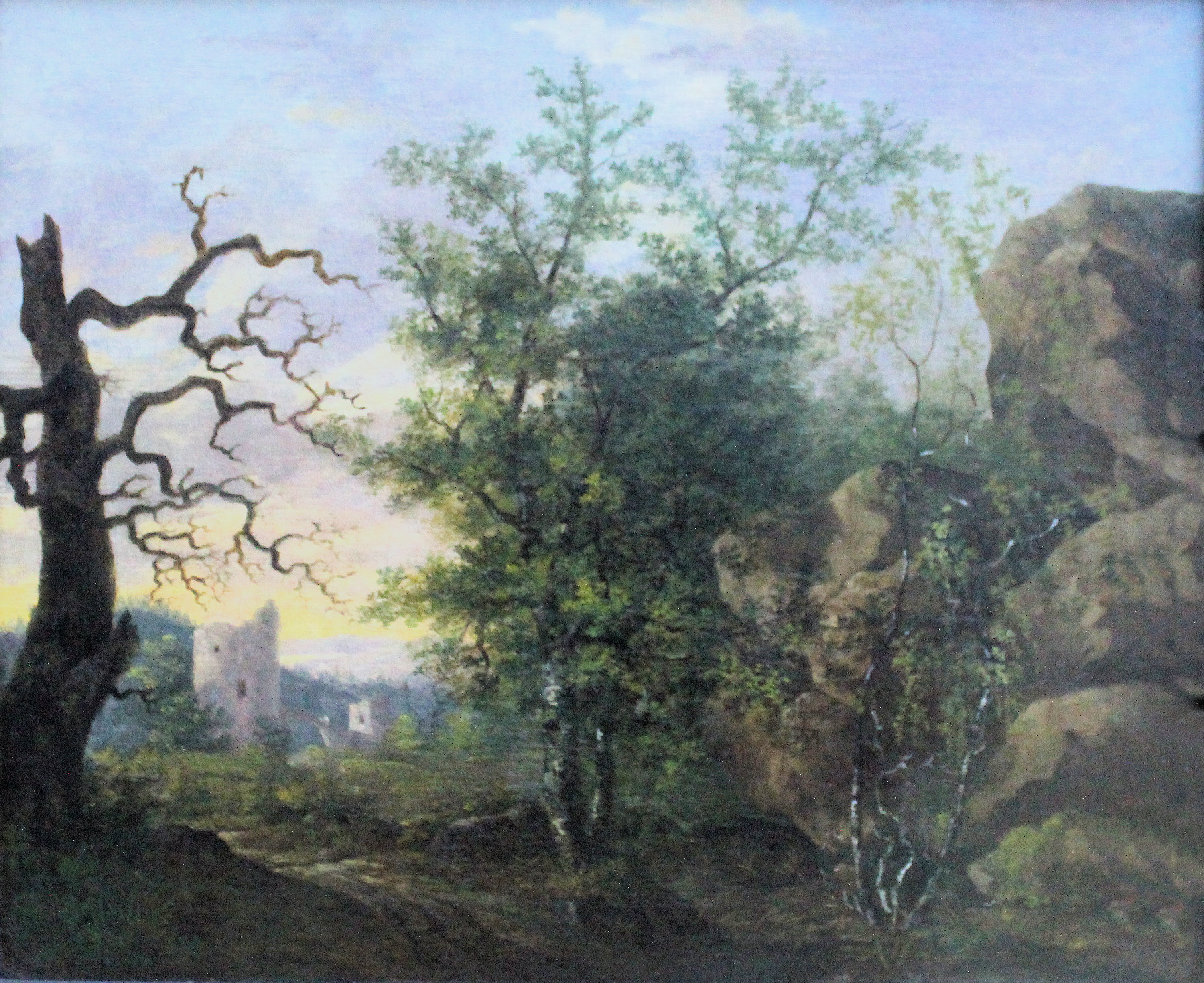
A painting previously attributed to the renowned German Romantic landscape painter Caspar David Friedrich has lost its attribution following a detailed analysis conducted by the Dresden State Art Collections. The work in question, titled Landscape with Bare Tree (1789/1799), was reclassified as "unknown" after further scientific investigation raised doubts about its authenticity as a Friedrich piece.
Caspar David Friedrich, celebrated for his allegorical landscapes such as Wanderer Above the Sea of Fog (1818), is recognized as one of the most significant painters of the German Romantic movement. However, his early works have always posed challenges for art historians, partly because reliable documentation of his painting activities prior to 1807 is scarce.
In preparation for an exhibition marking Friedrich’s 250th birthday, the museum’s scientists carried out an infrared and pigment analysis on several paintings attributed to Friedrich. The investigation revealed that Landscape with Bare Tree contained an underpainting that significantly diverged from Friedrich’s known drawing style. Moreover, the pigments used included yellow and blue hues that only became common in 1810, further questioning the painting's authenticity.
Curator Holger Birkholz explained that the painting was removed from the Friedrich collection because "stylistically it doesn’t fit." The findings were corroborated by an unnamed expert on Friedrich, who concurred with the reattribution based on the new evidence.
This revelation underscores the challenges of assessing Friedrich’s early work, as some pieces historically attributed to him may have been based on assumptions rather than solid evidence. Birkholz noted that the previous reasoning for the painting's attribution was always tenuous, suggesting that it was based more on the assumption that it didn’t look like a typical Friedrich, which was attributed to it being an early work.