A Russian rocket out of control is speeding towards Earth: "It will fall in the next 24 hours, but it is not known where"
-
 Loading...
 - Samuel Johnson
- 06 Jan 2022
- 422 Views
- 0 Like
- 0 Comment
The Angara-A5 rocket was launched on December 27, 2021 from northwestern Russia, in a test to verify a new technology, writes the Russian state agency TASS.
"We can say that the rocket will fall in the next 24 hours, but where it will fall, no one can say, because in the next few hours it will make several revolutionary movements around the globe," a director of the European Space Agency told CNN. , Holger Krag.
According to space experts, the rocket travels at a speed of 7.5 km per second and weighs about 4 tons without fuel.
"The risk is real and cannot be ignored"
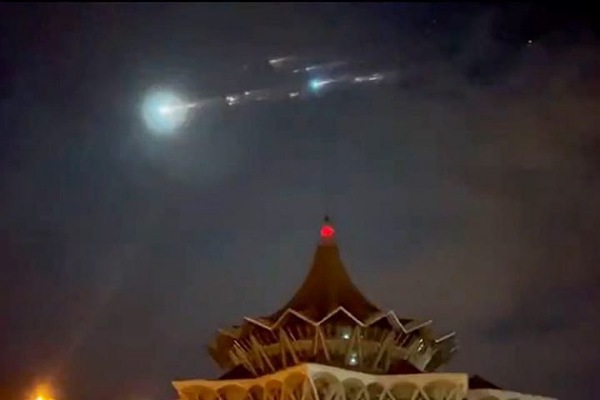
Space debris usually burns when it comes in contact with the planet's atmosphere, but large objects can cause damage if they land in inhabited areas.
Although it is unlikely to injure anyone, "the risk is real and cannot be ignored," the European Space Agency official said.
In May 2021, NASA criticized China for failing to meet standards after debris from a rocket used to launch China's space station plunged into the Indian Ocean.
The part of the Russian missile is considered to be smaller than the Chinese remnants, weighing about 4 tons without fuel, compared to about 20 tons of the Chinese Long March 5B missile, said Krag. Long March was one of the largest objects to hit Earth after falling from orbit.
The Russian rocket was not supposed to re-enter the Earth's atmosphere in this way, Krag added. "It was supposed to reach orbit and stay there for thousands of years, but it failed to start." Read More…