A Simple Technique to Photograph Standing Waves on Water
-
 Loading...
 - Samantha Essal
- 24 Apr 2023
- 60 Views
- 0 Like
- 0 Comment
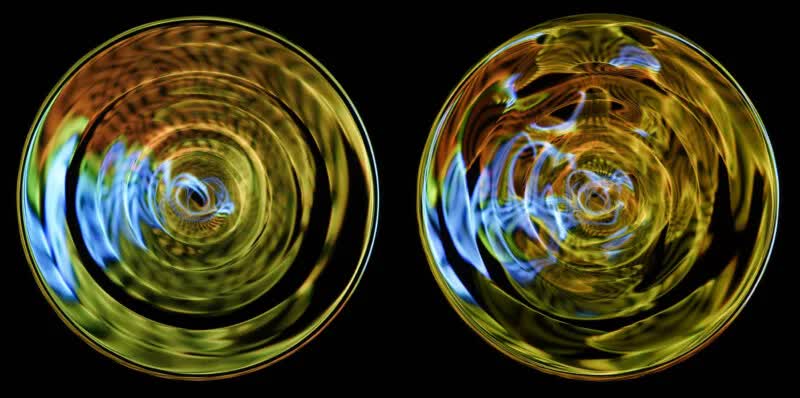
By using a simple mechanical oscillator attached to a plastic cup, a number of unique standing wave patterns can be created. The resulting photographs are similar to geometric mandala patterns and thus are popular subjects for photography students.
Waves created in a shallow dish can form beautiful patterns when the containers achieve resonance. This effect has been studied by many great scientists including Galileo Galilei, Robert Hooke, and physicist Ernst Chladni. However, it was not until the mid-1960s when the eccentric Swiss physician Hans Jenny (1904-1972) coined the name “Cymatics” for the effect.
Jenny developed a theory of pseudoscience linking the patterns to a mythical energy field. In reality, the patterns have long been understood by physicists who can describe the patterns with a mathematical formula that is dependent on the fluid viscosity, mass of the fluid, speed of sound in the fluid, size and shape of the container, and frequency of the vibration.
All the physics aside, the patterns are easy to photograph with a simple setup and are quite beautiful.
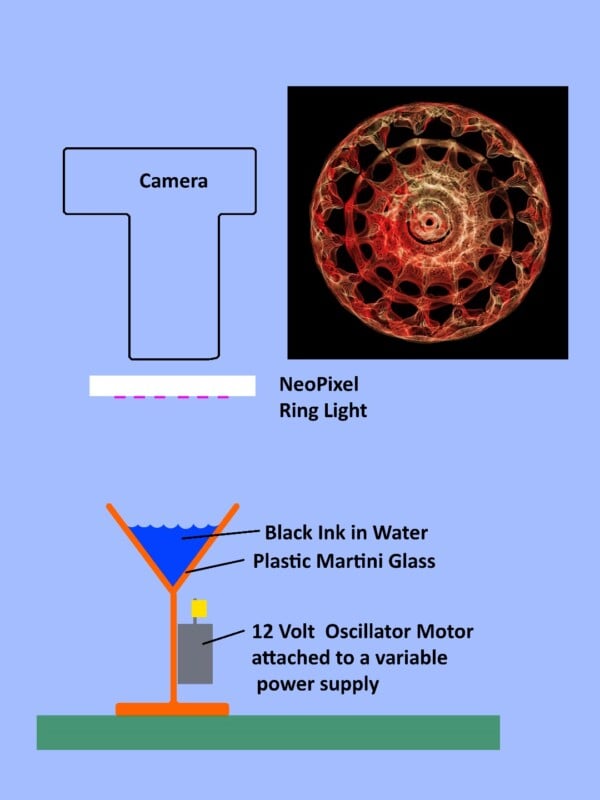
To create these patterns, I use several different photographic setups. The simplest setup uses a surplus mechanical oscillator that runs from 2 volts to over 12 volts. The motor shaft has an off-axis mass on it that causes the motor to vibrate, a process similar to an unbalanced wheel on a car.
I bought several mechanical oscillating motors for a few dollars each from an electronic surplus company called All Electronics, but you can also fasten a bolt to any electrical motor to get the same effect. Many different sizes of oscillators can be purchased surplus, ranging from cell phones to pagers, to motors for vibrating plastic casting. Some of the small cell phone oscillators work quite well with lightweight dishes made from aluminum foil. Read More…