A Spirited Sampling of the Czech Repertoire from Prague Philharmonia
-
 Loading...
 - Baniti Emad
- 30 Oct 2024
- 37 Views
- 0 Like
- 0 Comment
The Year of Czech Music has brought a delightful opportunity to explore lesser-known works from the Czech repertoire, extending well beyond its borders. For its season opener, the Prague Philharmonia presented a captivating program that combined two beloved classics with a journey into Slovakia through Vitězslav Novák's compositions, alongside an intriguing serenade by Karel Husa, who spent much of his career in the United States.
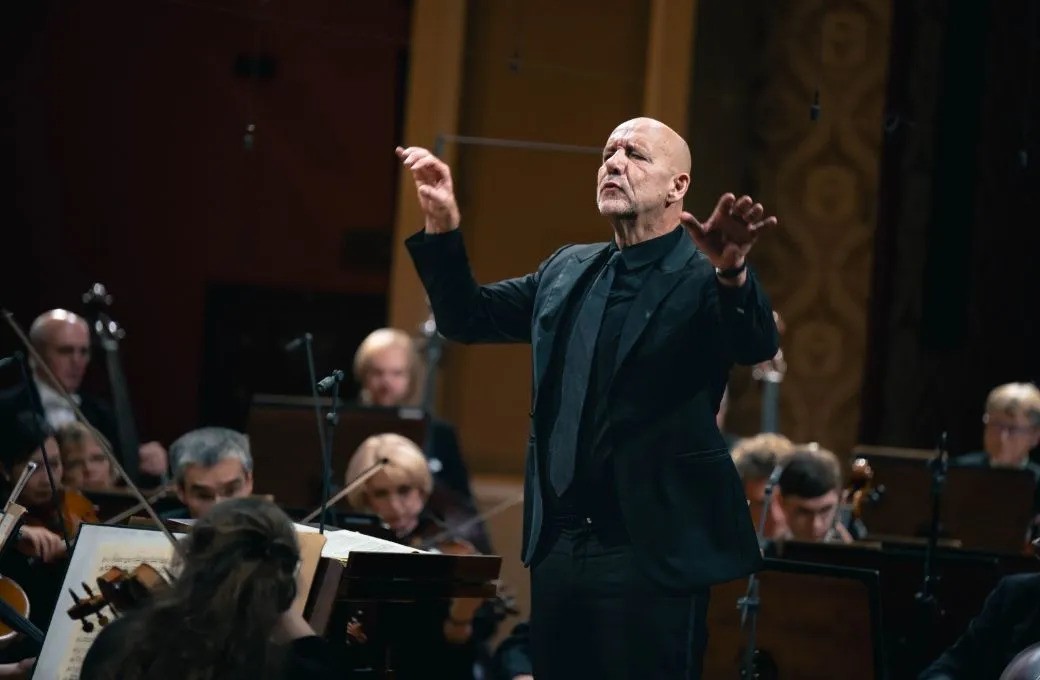
Under the baton of Chief Conductor Emmanuel Villaume, even the familiar pieces took on a fresh, international flair. His interpretation of the overture to Smetana’s opera Tajemství (The Secret) was vibrant and energetic, serving as a sharp, engaging preview of a comedy that rivals the composer’s more famous work, Prodaná nevěsta (The Bartered Bride). Villaume expertly captured the essence of the music, beginning with bold brass that transitioned into smooth strings, culminating in a lively, powerful conclusion.
Novák’s Slovak Suite paints vivid scenes from Slovak villages the composer visited in the early 20th century. While it could easily be dismissed as light-hearted folklore, Villaume approached the suite with great sensitivity, imbuing each of the five scenes with depth and atmosphere. The opening movement, “At Church,” radiated warmth, contrasting beautifully with the bright and playful “Among Children.” “The Lovers” provided a subdued, layered interlude, leading into the energetic “The Ball,” which showcased blistering violin work. The finale, “At Night,” was particularly moving, featuring a sophisticated blend of harp and woodwinds that evoked an impressionistic ambiance.
After a lengthy intermission to prepare the stage for Husa’s Serenade for Wind Quintet, Strings, Xylophone, and Harp, the Belfiato Quintet took center stage, surrounded by the orchestra. The seamless integration of the chamber ensemble and orchestra was no surprise, given that the wind players are members of Czech orchestras, including the Prague Philharmonia. The interplay was impressively tight, with overlapping lines and exchanged phrases that were crisp and clear, while the wind passages dazzled with virtuosic harmonics and sonorities. Villaume skillfully maintained the piece's complexity while ensuring it remained accessible.
Dvořák’s symphonic poem The Golden Spinning Wheel is a staple in Prague, which may explain why this performance felt somewhat disjointed. While individual sections and motifs were brought to life with color and energy, the overall narrative flow was lacking, resulting in a series of short scenes with abrupt transitions. Although Villaume’s grand orchestral approach suited the format, it felt oversized for what is essentially a fairy tale, leading to a cluttered sound in the finale.
Despite this exception, the majority of the evening showcased clean and transparent sound, highlighted by shimmering strings and glowing woodwinds. The concert transcended national boundaries, presenting Romantic pieces that stand proudly alongside other works of the era, as well as 20th-century contributions that convincingly demonstrated the limitless creativity and appeal of Czech music.