A travel guide to South Korea

South Korea has become one of the top destinations for travelers to Asia in the last decade or so. It’s not as expensive as, say, Japan, but it’s also not somewhere you can live on a few pennies each day. It’s great for solo travelers and its size means you can see a lot in a relatively short stay.
There are four distinct seasons as well, so when you go means very different experiences. Spring (March — May) is vibrant and blooming, with pink cherry blossom all around. Summer (June — August) is good for hiking in the high mountains, but hot and humid lower down, and fall (September — November) is warm enough to explore away from the chaos of the cities. Winter is very cold indeed, with skiing in the hills, but it also means there’s not much else going on away from the cities.
With all that in mind, let’s get going!
Seoul

Seoul is everything South Korea: manic and confusing at first, with customs and habits that seem designed to befuddle, but by being open, honest and friendly, you’ll find that Koreans are the same. Don’t expect English to be spoken everywhere you go, but be amicable and you’ll receive help in return, regardless of the language barrier.
It’s having its pop culture moment right now, attracting more visitors than ever, and Seoul is as exciting and lively as any other major city, but has the unusual advantage of seamlessly threading the 21st century through the fabric of its past. For every neon billboard, there are traditional craft stalls and airy art galleries; for every incongruous Irish bar, there’s a peaceful garden temple.
Step back in time

You’ll almost certainly be drawn to Gyeongbokgung Palace, dating from 1395 and the largest of the Five Grand Palaces built by the Joseon dynasty. Its 7,700 rooms were restored in the 19th century, and the palace is one of the country’s most beloved cultural treasures.
To see how the normal people lived around that time, you can visit Namsangol Hanok Village, a living museum that allows you to see how various strata of society lived and worked, from commoners to royalty. Each dwelling, from humble one-room shack to stately home, is decorated as it would have been during the classical Joseon era, and its scenic surroundings and peaceful atmosphere make this a wonderful trip back in time. It’s closed on Tuesdays, but otherwise, the village is free to enter.
Eating and singing: two of a Korean’s great pleasures

If you are traveling alone, once you’ve spent the day exploring, the best way to meet new people (and make a slight fool of yourself in a good-natured way) is karaoke. Koreans love a bit of karaoke, and when the sun goes down, the neon-drenched streets of the Hongdae neighborhood host all-night sessions known as noraebang. Get some fried chicken and a couple of beers down you, and join the fun!
For other tasty treats, you’ll almost certainly encounter bibimbap (a rice pot with meat, vegetables and egg), bulgogi (marinated barbecue beef), and the ubiquitous kimchi (spicy, pickled vegetable, almost always cabbage). Bear in mind, that vegetarian dishes can be hard to come by; although vegetables, noodles and rice make up a large part of Korean cuisine, there will generally be meat included. You might want to brush up on your chopstick skills for plucking out what you don’t want!
Further afield
South Korea’s fantastic transport network, coupled with its relatively small size, means there’s absolutely no excuse not to cast your net wider. The train journey from Seoul to Busan (the northwest to the southeast), for example, takes just under three hours, and there’s a lot to explore in this rich and fascinating nation.
Busan
Busan itself is the second-largest city and the country’s largest port. Densely built in narrow valleys between mountain ridges and two rivers, the city runs down to the ocean, and spreads out along the coast and into the forest. It’s also the country’s main summer destination, with the city being home to six beaches, including Haeundae, backed with a curved boardwalk, and Gwangalli, bustling with cafes, bars and restaurants. The mountains that surround the city are great for hiking, with miles of trails through the woods, and local conservation efforts are also important: see the Daejeo Ecological Park and its bird sanctuary and river restoration project, for example.
Daegu

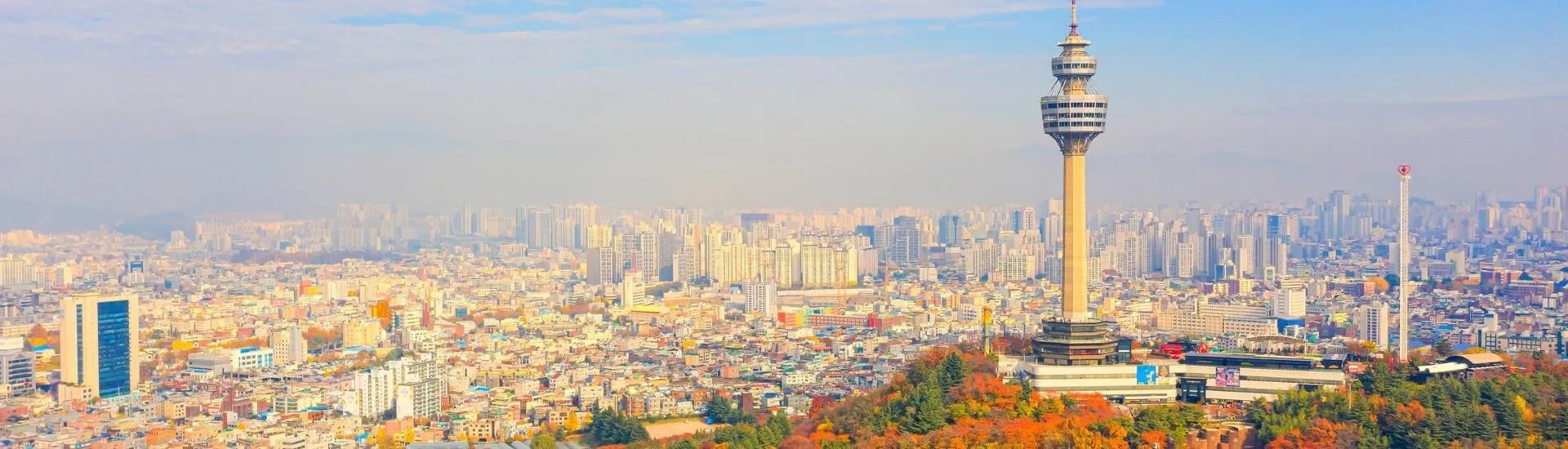
The train that got you to Busan will probably have gone via Daegu, home to around 2.5 million people and one of the powerhouses of 20th century Korea. Today, an interesting combination of cutting-edge technology and fashion industries, coupled with strong Buddhist beliefs, make Daegu a bit of a magnet for foreign students, English teachers, cultural investigators, and other people looking for a fun, vibrant city that’s maybe not as obvious as Seoul. Read More…