Ai Can Now Detect Pancreatic Cancer Better Than Radiologists
-
 Loading...
 - Bingwen Zhang
- 11 Oct 2022
- 66 Views
- 0 Like
- 0 Comment
In recent years, AI has infiltrated hospitals: We now have everything from digital nursing assistants to robotic surgeries. For their next feat, computers are taking on cancer detection.
Scientists have developed a new AI system that can spot signs of pancreatic cancer missed by even the best radiologists, according to a new study published in the journal Radiology.
This novel tech, which will likely roll out in Taiwan in the near future, adds to the argument that AI can help improve health care and give doctors and hospital specialists more time with patients.
“I think AI can do two things: the first is to help doctors do what they can, but with less time and energy,” says Wei-Chi Liao, professor of internal medicine at the National Taiwan University and one of the lead study authors. “And the second is to help doctors do what they cannot always do; for example, in our study, detect cancers that are not very visible to humans.”
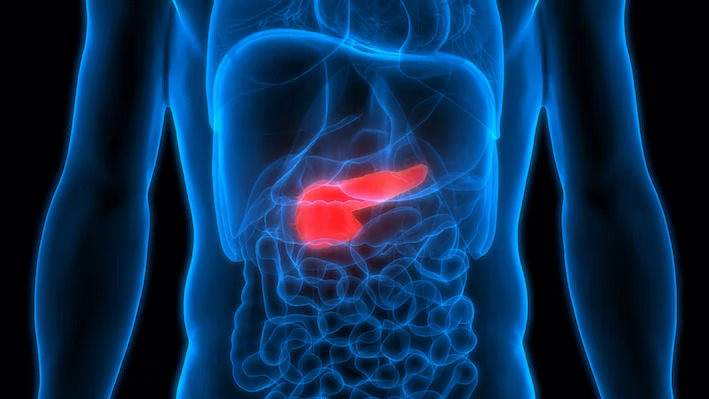
HERE’S THE BACKGROUND — Pancreatic cancer is one of the most deadly types of the disease (after lung and colorectal cancers). It will kill over 49,000 people in 2022, according to the American Cancer Society, and only about 20 percent of patients survive a year post-diagnosis.
That’s because the chances of recovery plummet once the tumor grows larger than 2 centimeters, at which point it spreads rapidly and aggressively to other organs.
And while early diagnosis is crucial, it’s hard for doctors to spot a pancreatic tumor before it reaches that length. Typically, the nascent stages don’t cause symptoms in patients.
The tricky-to-catch tumor often doesn’t have clear borders with the surrounding tissue, Liao says, and the current imaging techniques using CT scans miss approximately 40 percent of tumors smaller than this size. So patients often miss their only opportunity of treating their condition before it’s too late.
WHAT’S NEW — But that could change with the National Taiwan University team's new technology, which has outperformed experienced radiologists in testing. It’s essentially a combination of five deep-learning models.
“So it's just like saying we have five experienced radiologists to look at the same case and they seek for their consensus,” says Weichung Wang, director of National Taiwan University’s MeDA Lab and a lead study author.
By feeding the system over hundreds of examples of tumors, the researchers taught the AI to recognize pancreatic cancer with 91 percent accuracy. Read More…