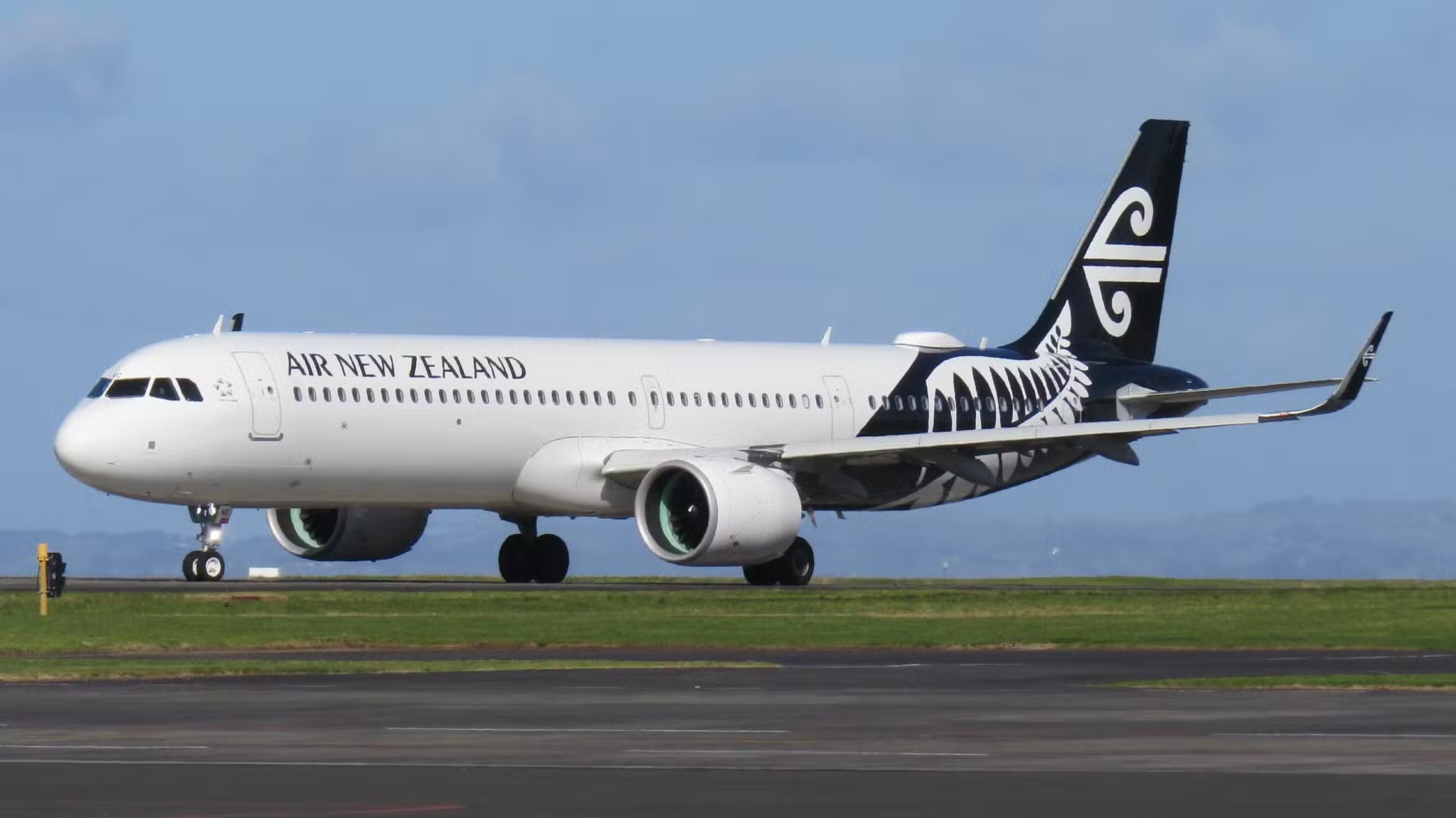
Air New Zealand Airbus A321neo Aborts Take-Off After Bird Strike
-
 Loading...
 - Alejandro Diaz
- 06 Jan 2025
- 109 Views
- 0 Like
- 0 Comment
Air New Zealand is facing a challenging week as it deals with multiple incidents, including an aborted take-off due to a bird strike involving an Airbus A321neo at Christchurch International Airport. The incident occurred on Monday morning when flight NZ207, scheduled to fly from Christchurch to Brisbane, was struck by an unknown number of birds shortly before lift-off, prompting the pilots to reject the take-off and safely halt the aircraft on the runway.
Following the incident, David Morgan, Chief Operational Integrity and Safety Officer at Air New Zealand, issued a statement confirming the bird strike. He stated, “Earlier this morning, flight NZ207 from Christchurch to Brisbane experienced a suspected bird strike and aborted its take-off. As is standard procedure when a bird strike is suspected, our engineering teams are required to complete a full aircraft inspection before the aircraft can return to service. While frustrating, bird strikes are not uncommon. Aircraft are designed with this in mind, and our pilots are fully trained for a bird strike scenario.”
As a result of the incident, both flight NZ207 and another flight, NZ272 from Brisbane to Wellington, were canceled. Most affected customers were expected to be accommodated on alternative services, and the airline thanked them for their patience and understanding.
Flight NZ207 was scheduled to depart at 06:10 on Monday morning. The aircraft involved was a 2019 Airbus A321neo, registered as ZK-NND. This aircraft is part of the A321-271NX variant, equipped with Pratt & Whitney PW1133G-JM geared turbofan engines and configured in a one-class layout with 214 seats.
Passenger Ben Anderson recounted the experience, noting that everything seemed normal as the plane accelerated. However, he heard a loud bang when the aircraft was approximately 30 knots from lift-off. He described the sudden application of brakes and the use of reverse thrust as the plane came to a stop, with one wheel skidding slightly. Passengers were later informed that birds had struck both engines.
Air New Zealand operates a fleet of 112 aircraft, including 12 Airbus A321neos. The airline has faced ongoing durability issues with the Pratt & Whitney GTF engines, leading to maintenance needs that have grounded some aircraft. With reports indicating that both engines were struck during the incident, any resulting damage could further complicate the airline's engine availability challenges.
Additionally, Air New Zealand has been grappling with durability problems related to the Rolls-Royce Trent engines on its Boeing 787-9 Dreamliners. Despite the fleet's relatively young average age of less than nine years, four out of fourteen 787-9s are currently out of service due to engine issues. The airline has opted for GEnx engines for its eight new Dreamliners on order, indicating a shift in strategy to address these challenges.
The successful handling of the bird strike incident by the pilots of flight NZ207 highlights the importance of having highly trained and experienced personnel in the cockpit. Their quick and professional response ensured the safety of all passengers on board, serving as a reminder of the critical role pilots play during unexpected situations. As Air New Zealand navigates these operational challenges, the focus will remain on ensuring safety and maintaining service reliability for its customers.