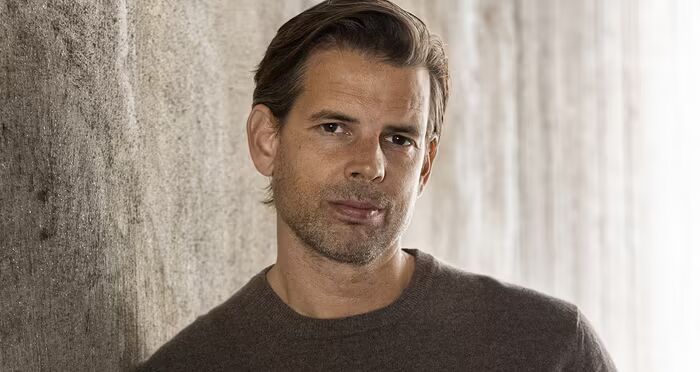
Alex Schulman leaves too little room for the reader
-
 Loading...
 - Albert Bradley
- 09 Sep 2022
- 76 Views
- 0 Like
- 0 Comment
There is a short story, by the Danish writer Peter Seeberg , which follows the young maid Dagmar during a working day, a dance evening and finally a visit to her parents' home. They make small talk. A neighbor has hanged himself. Dagmar is mostly quiet. When she goes to bed, in the very last lines of the short story, she can hear her parents talking about her. “But no one could hear her thinking. She could think what she wanted.”

I will think of Dagmar when I read Alex Schulman 's new novel Malma station because the same scenario appears there: Harriet lies in her bed and hears her parents talking outside in the kitchen. The reader understands that they are to divorce, and the two sisters are separated. But neither parent wants Harriet. What does that realization do to a person?
These are the kind of heavy questions Malma station revolves around. The novel's 28 chapters all have a name as a heading: "Harriet", "Oskar" or "Yana". Oskar is Harriet's husband, Yana is their daughter. The perspectives thus change, as do the time horizons. Sometimes we find ourselves in Harriet's childhood, sometimes in Yana's, and sometimes in Oskar and Harriet's love relationship. In this way, the novel puts together a puzzle, where a picture of two, three generations of parenthood and suffering slowly emerges. It's elegant, and quite exciting, if not particularly original.
Then I am not only thinking about the plot or the motif (the inner conflicts of the contemporary bourgeois family), but above all about the form. Because hasn't this become the most conventional way of telling these stories: via the individual perspectives, more kaleidoscopically than chronologically? The model is Julio Cortazar 's Hoppa hage, rather than Thomas Mann's Buddenbrooks . Why? What are all these jumps back and forth in time, and between people, really good for?
The critical answer: because all cliffhangers are a way to make the content a little more interesting. The benevolent answer: because the novel says something important through its broken form. Like we sit together across generational boundaries. That personal faults and shortcomings are inherited, and therefore not so personal after all. Or that the passage of time is somehow illusory. A chronological narrative would hide this, and it would also be forced to decide which of the figures was most important. Schulman gives equal weight to all three. Read More…