Algerian Director Merzak Allouache on His Latest Film ‘Front Row’ and Challenges Faced by Filmmakers

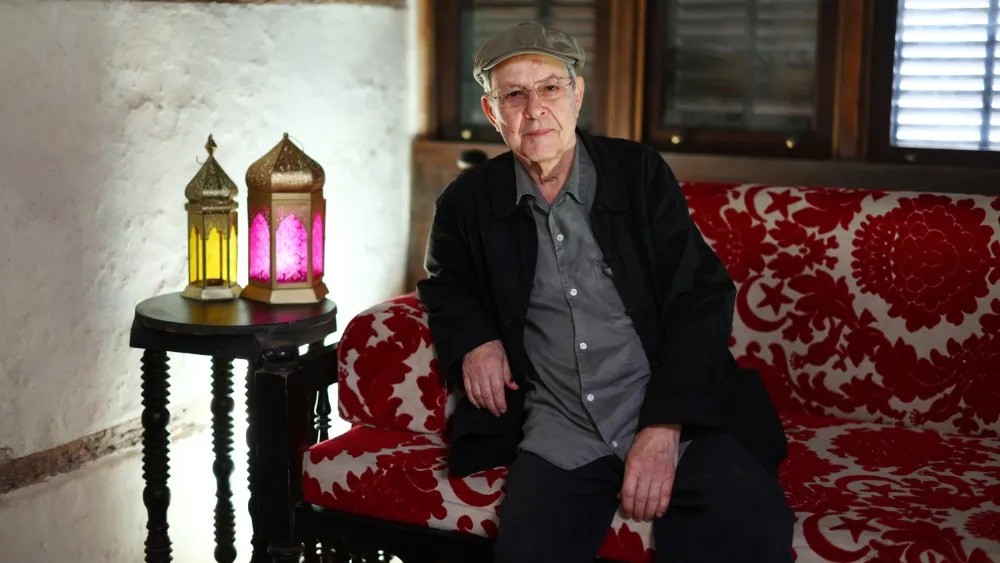
Algerian director Merzak Allouache recently received the Variety International Vanguard Director Award at the Red Sea Film Festival, coinciding with the premiere of his latest social comedy, “Front Row.” The film explores a humorous feud between matriarchs vying for the best spot at the beach, showcasing Allouache's unique blend of social commentary and comedy.
With a career spanning six decades and around 40 feature films, Allouache is Algeria’s most renowned director, having made his debut with “Omar Gatlato” in 1976. His work has garnered critical acclaim, including recognition for films like “The Repentant,” which premiered at Cannes in 2012, “The Rooftops” at Venice in 2013, and “Divine Wind” in 2018. In a conversation with Variety’s Nick Vivarelli at the Variety Lounge presented by Film AlUla, Allouache reflected on his career, which has been shaped by the legacy of local filmmakers who documented Algeria's independence in the 1960s. Now at 80 years old, he continues to mentor young talent, aiming to capture how the youth are adapting to the evolving landscape of Algerian society.
Allouache noted that he has created many dramatic films during periods of domestic tension in Algeria, particularly during times of terrorism and violence, when making comedies felt impossible. However, he has also directed several comedies, including “Front Row.” He reminisced about his debut film, “Omar Gatlato,” which was produced during a time when Algeria was under a single political party, and all directors were state employees. He co-produced projects with Italian and French filmmakers, presenting a small comedy about young Algerians shortly after the country’s liberation.
Despite his international success, Allouache expressed concern over the current state of Algerian cinema, lamenting the scarcity of cinemas in the country. He pointed out that Algerian media has historically been state-controlled, focusing on promoting a sanitized image of the nation. This has often led to his work being overlooked by local media, prompting him to concentrate on creating films that reflect real societal issues. He stated, “They want to show an Algeria that is clean, that has no problems, that is serene, where young people are living a very normal life. But when they see my films, they’re actually shocked because I’m telling stories about what’s actually happening.”
The inspiration for “Front Row” came from observing behaviors on Algerian beaches and social media discussions about the challenges of finding a good spot to enjoy the sea. Allouache noted that the film addresses a societal issue, highlighting how beachgoers have changed their habits, particularly after Ramadan, when families gather at the beach with pots and pans for meals. He believed this conflict would provide a rich foundation for comedy.
Allouache also highlighted the significant challenges Algerian filmmakers face in securing financing for their projects. He was able to complete “Front Row” thanks to funding from the Red Sea festival. He remarked that very few Algerian films make it to international festivals, contrasting this with the burgeoning film industries in other Arab countries like Egypt, Lebanon, Tunisia, Morocco, Saudi Arabia, Jordan, and Kuwait, where a new generation of filmmakers is emerging.
In conclusion, Allouache emphasized the need for Algeria to address its production challenges to support young filmmakers. He stated, “It’s a great shame that Algeria, which is such a big country, is not going through the same situation. So I think we must ask ourselves the right questions and solve the production difficulties for our young filmmakers.”