Algerian government shuts down leading pro-reform group
-
 Loading...
 - Aadya Rana
- 08 Aug 2022
- 87 Views
- 0 Like
- 0 Comment
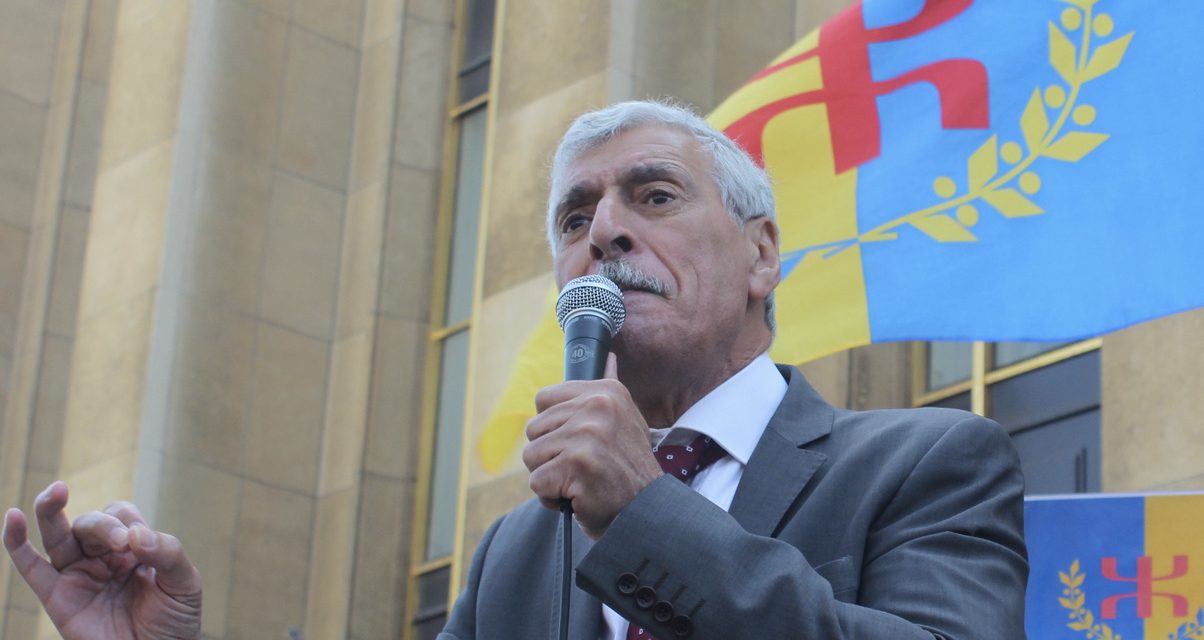
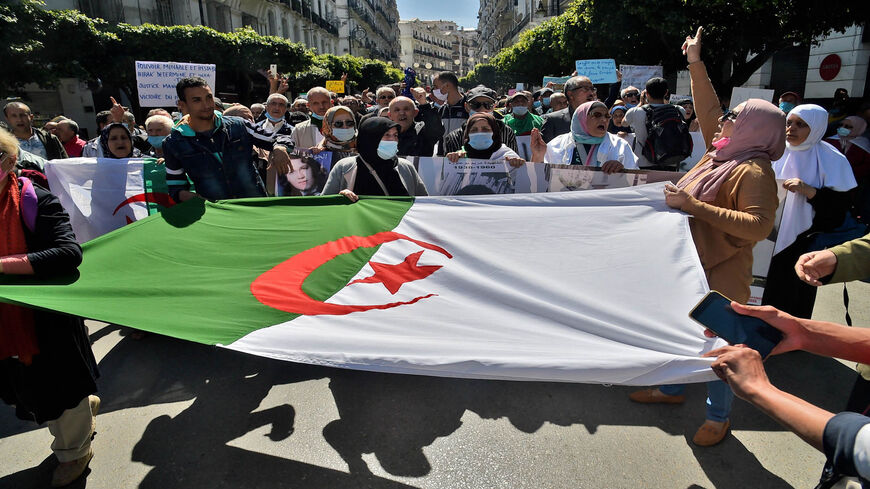
A year ago, Algerian authorities shut down the popular pro-democracy reform movement known as Hirak, whose massive weekly Friday protests called for former President Abdelaziz Bouteflika to step aside and allow free and fair elections.
Following the 2019 elections, the Hirakists continued to campaign to change the system from the military one-party state installed by Houari Boumediene after the post-independence coup d’etat in1965. However, demonstrations were brought to an end in a crackdown last year resulting in the arrests of thousands of activists and over 300 held in pre-trial detention for up to a year, many under allegations of terrorism.
In protest against their imprisonment, some 40 detainees held in El-Harrach prison in Algiers began a hunger strike Jan. 28 ahead of the anniversary of the start of the Hirak movement on Feb. 16, 2019. Around 330 people were held in custody as of Feb. 5, according to the Algerian League for the Defense of Human Rights, one of the human rights groups that have criticized the use of lengthy pretrial detentions as a tool of repression by the Algerian government.
Algerian society was shaken when activist Hakim Debbazi died in pre-trial detention April 24 in Kolea prison in the capital Algiers, after his arrest Feb. 22 for Facebook posts deemed critical of Tebboune’s regime. Amnesty’s Amna Guellali said, “It is quite shocking but it is not the first death in custody of someone detained solely for exercising his freedom of speech.”
She noted, "[Despite calls for investigations into these deaths] the authorities do not take their obligation to bring in independent investigators to investigate these deaths seriously.”
Eric Goldstein, deputy director of the Middle East and North Africa division at Human Rights Watch, told Al-Monitor, “There has been an escalation of repression." He said that the government is changing legislation to give security services more scope for suppression of the rebellion.
“They amended Article 87 bis of the Penal Code broadening the definition of terrorism, which they have used to target activists and political figures as well as other parts of the Penal Code — such as the amendment to criminalize the spreading of fake news, which they amended to make the legislation even more repressive.”
It is not just laws that have been changed to help tighten the state to crack down on dissent, Guellali told Al-Monitor. “They have added repressive tools in their efforts to crush the Hirak movement, including the blocking of WhatsApp.”
Human rights reporting is increasingly difficult in Algeria, whose government is known for secrecy on sensitive and security matters. International nongovernmental organizations (NGOs) rely on a decreasing number of local partner organizations and individuals to record infractions.
Goldstein noted, “It is not always safe for them to talk to foreign NGOs. They can be afraid of retaliation by the authorities. It is also becoming more difficult for these Algerian organizations to report on the human rights situation because of the crackdowns.”
He added, “In the last months, the Algerian League for the Defense of Human Rights has seen three members put in jail, three are on bail awaiting trial and two have been charged awaiting trial." Read More...