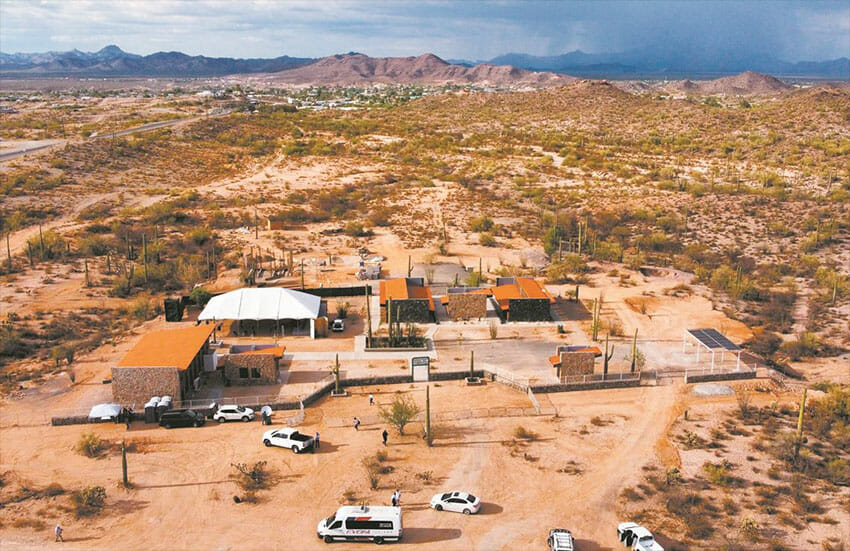
AMLO's universities entail big expenditures but attract few students
-
 Loading...
 - Cheryl Gilbert
- 10 Jan 2022
- 420 Views
- 0 Like
- 0 Comment
The 140 “well-being” universities opened by the current federal government have struggled to attract students, but despite their low enrollments their funding will be nearly 1.1 billion pesos — close to US $54 million — in 2022.
President López Obrador signed a decree in 2019 to create new public higher learning institutes across the country.
The institutes, most of which are located in towns where there are no other tertiary education options, are collectively called the Benito Juárez García Universities for Well-Being (UBBJ).
Official UBBJ data cited by the newspaper El Universal shows that 28,087 students were enrolled at the universities in the first quarter of 2021 for an average of just 200 students per school. However, 50 of the universities have fewer than 100 students and some have fewer than 20.
In the latter category are the well-being university in Yuahualica, Hidalgo, which had just 13 students early last year, and that in Las Margaritas, Chiapas, which had 20.

The government hoped that student numbers would grow over time, but they have in fact declined. The total enrollment in the first quarter of 2021 was 28.3% lower than that in late 2019. In terms of student numbers, the reduction in just over a year was more than 11,000, although the government’s claim that more than 39,000 students were enrolled in 2019 has been called into doubt.
The government set a goal of reaching an enrollment of 256,000 students by the end of its six-year term in 2024, but appears to have no chance of achieving it.
Despite the decline in student numbers, funding for the schools is trending upwards. They received 987.4 million pesos last year and have a combined budget of almost 1.1 billion pesos this year, an increase of about 10%.
The government will transfer hundreds of millions of additional pesos to UBBJ students, each of whom receives a monthly scholarship of 2,600 pesos (about US $125). A total of 36 programs are taught across the 140 universities, including degrees in law, engineering, medicine and community health, tourism, social studies, forestry, food processes, sustainable development and accounting. However, each university only offers one degree program.
The quality of the education on offer was called into question in a 2020 report published by Mexicans Against Corruption and Impunity (MCCI), a civil society organization. In its report Universities in Limbo, MCCI said that none of the 30 UBBJ it visited in 14 states was able to award degrees to students because they were not certified by the Ministry of Public Education to do so. Read More...