Analysis: Netanyahu's balancing act got harder after post-summit violence
-
 Loading...
 - Jose Gonzalez
- 28 Feb 2023
- 65 Views
- 0 Like
- 0 Comment
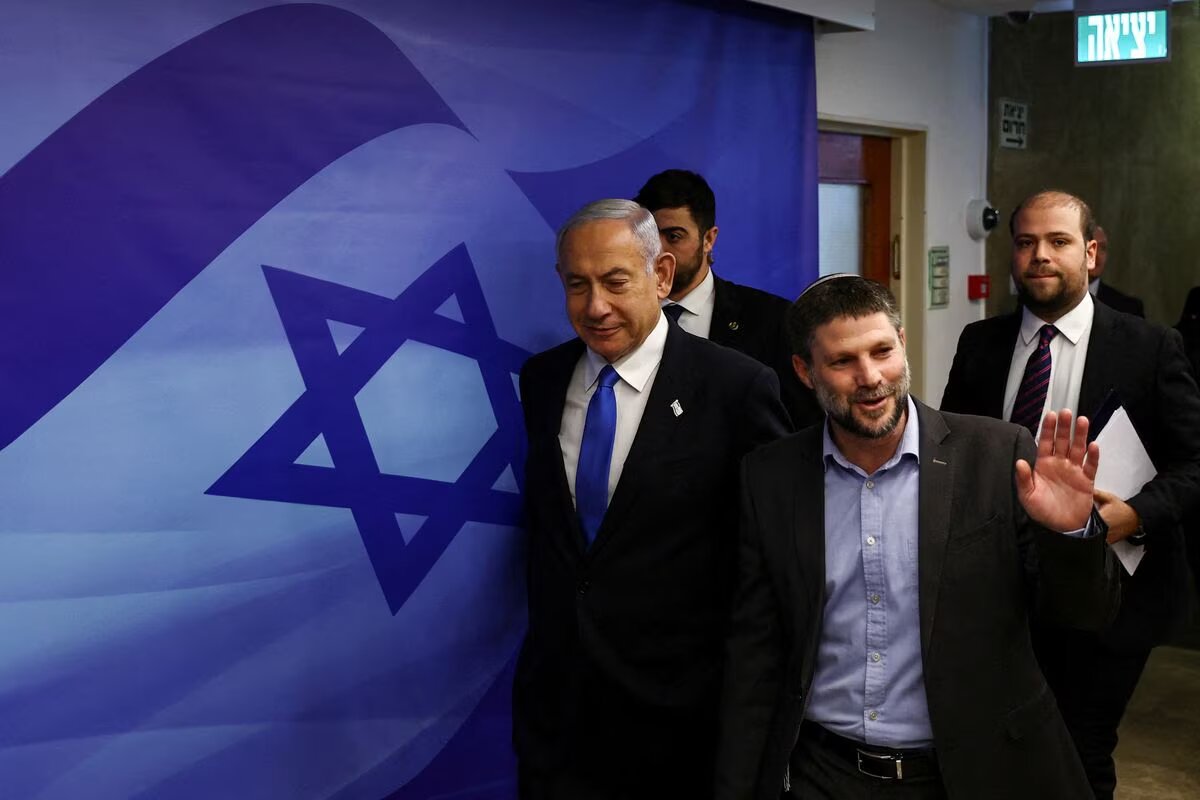
Israeli Prime Minister Benjamin Netanyahu and Finance Minister Bezalel Smotrich arrive to attend a cabinet meeting at the Prime Minister's office in Jerusalem, February 23, 2023.
JERUSALEM, Feb 27 (Reuters) - A U.S.-brokered summit had barely ended with pledges to calm violence and slow Israeli settlement in the occupied West Bank when Palestinian homes were set ablaze by Jewish settlers in retaliation for a deadly Palestinian gun ambush.
Hopes for a calming effect of the meeting hosted by Jordan in the Red Sea port of Aqaba and attended by high-level Israeli and Palestinian security officials, faded further when Prime Minister Benjamin Netanyahu disavowed any notion of a halt to settlement-building.
"The Aqaba agreement was born dead," read a headline in the largest Palestinian daily, Al-Quds, after footage on social media showed young settlers praying while they watched fires in nearby Palestinian village Hawara, just hours after two brothers were shot dead in a car at their nearby settlement.
One Palestinian was killed and more than 100 people were wounded in the settler rampage that followed.
On Monday, an Israeli motorist was killed in another suspected Palestinian shooting attack in the West Bank.
The events cast doubt on Netanyahu's ability to walk a diplomatic tightrope between Washington - pushing for a lasting compromise - and his own cabinet that includes hard-line settlers demanding tough action against Palestinian attacks.
Less than a month ago, U.S. Secretary of State Antony Blinken was in Jerusalem reaffirming U.S. support for a two-state solution: independence for the Palestinians in East Jerusalem, Gaza and the West Bank, which they say would be incompatible with Israeli settlements. Read More…