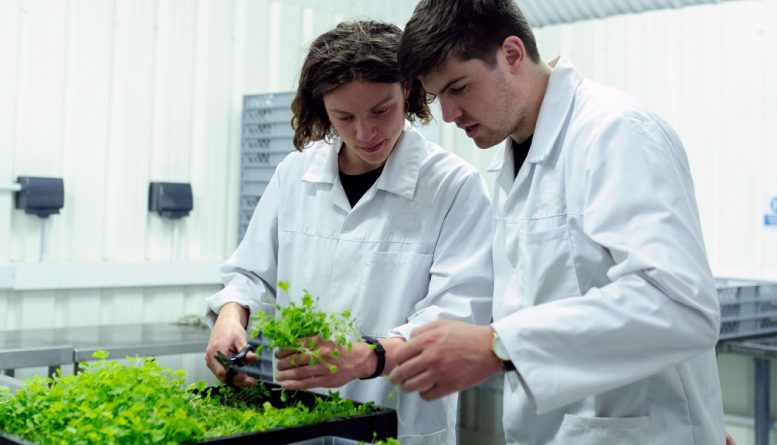
Analyzing microorganisms that would contribute to the nutrition and health of native plants such as beans, pallar and quinoa
-
 Loading...
 - Cade Atkinson
- 30 Aug 2022
- 56 Views
- 0 Like
- 0 Comment
Farmers and professionals dedicated to the study of the biodiversity of microorganisms associated with native crops would benefit from the project "Genomic Taxonomy Applied to the Study of the Diversity of Microorganisms Associated with Native Crops of Peru", which analyzes a group of microorganisms that would contribute to the nutrition and health of native plants of our country. The study was carried out by the Universidad Nacional Agraria La Molina and financed by ProCiencia , executing unit of Concytec .
An infinity of microorganisms live in the soil and the roots of plants. A group of them, called PGPR, are capable of promoting plant growth either by providing nutrients or by inducing resistance to stress and disease. These microorganisms have great potential for biotechnological use, either as biofertilizers, biostimulants, biofungicides, bionematicides, among others, contributing to ecological and sustainable agriculture.
In this context, the initiative of this project aimed to study the diversity of PGPR microorganisms associated with some native crops of Peru and classify them properly. It was chosen to work with cultivated plants such as beans, pallar and quinoa as well as a wild plant in danger of extinction called Clitoria brachystegia. In the process of implementing the project, modern methodologies for the analysis of molecular markers and analysis of whole genome sequences were used in a genomic classification framework.
:quality(75)/cloudfront-us-east-1.images.arcpublishing.com/elcomercio/BQDGQNDDEFFGVGG4VXXRQHQOEE.jpeg)
With these tools it was determined that there is a great richness and abundance of species of useful microorganisms that are associated with the mentioned plants. Even several of the bacteria found can be considered as new species for science. The knowledge generated about the PGPR microorganisms associated with plants in Peru will allow a more efficient and extended use of the microbial wealth of our country. Read More…