Ancient Amazonian Rock Art Reveals Complex Relationship Between Humans and Animals
-
 Loading...
 - Emma Maclean
- 09 Sep 2024
- 45 Views
- 0 Like
- 0 Comment
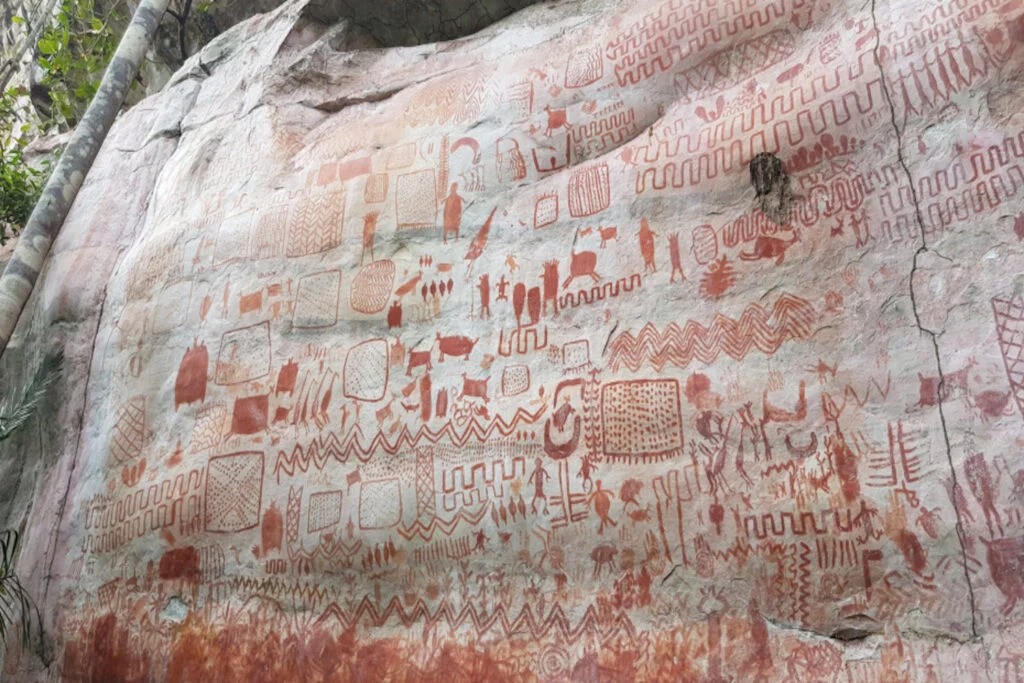
Recently discovered prehistoric rock paintings in Colombia's Amazon region depict a variety of animals and supernatural figures, offering new insights into early human life and beliefs in the area. These drawings, made with red ochre on the rock walls of Cerro Azul, date back to as early as 10,500 BC. The vivid illustrations include deer, birds, lizards, turtles, and tapirs, reflecting the animals that were integral to the daily lives of these early inhabitants. Notably, fish and large cats, such as jaguars, which held spiritual significance for later indigenous groups, are rarely depicted.
Some of the artwork shows animal-human hybrids, suggesting the people of that time may have viewed certain animals as supernatural beings. Researchers believe the art provides a glimpse into the complex cosmology and spiritual beliefs of these early societies, emphasizing the intertwined relationship between humans and nature. These findings highlight that these ancient communities didn’t merely rely on animals for sustenance, but also saw them as powerful, mystical entities.
Political instability in Colombia had prevented archaeological research in this region for decades. However, following a peace agreement in 2016, scientists have been able to explore the area more thoroughly, leading to the discovery of these significant rock art sites in 2017.
The artwork offers an invaluable understanding of how early Amazonian societies viewed their environment, with animals playing both practical and symbolic roles in their lives. Researchers warn against imposing modern interpretations on this ancient art, stressing the importance of appreciating the sophisticated spiritual perspectives of the indigenous communities that created it.
This discovery underscores the complexity of early human life in the Amazon, where the connection to nature was deeply spiritual and intertwined with everyday survival.