Archaeologists in northern Mexico shed new light on ancient Huastec burial and construction practices
-
 Loading...
 - boogman tess
- 17 Feb 2023
- 55 Views
- 0 Like
- 0 Comment
Recent excavations at a site in the state of Tamaulipas included analysis of large earthen mounds that were used for burials and everyday activities
Archaeologists in the northeastern state of Tamaulipas, Mexico, have identified remnants of a human settlement active more than a millennium ago that shed light on the pre-Columbian Huastec civilisation.
The foundations of four large earthen mounds were found at the archaeological site known as El Naranjo, and served not only as burial grounds but also places for daily activities, according to an announcement last week by the National Institute of Anthropology and History (INAH). Researchers say it is one of the most important findings in the region in recent decades due to the volume of recovered material.
“Without a doubt, they were dynamic spaces,” archaeologist Esteban Ávalos says. “In addition to what is related to human burials, we propose that there were daily activities. This is based on the discovery of hearths, not very stylised ceramics, grinding stones and projectile points.”
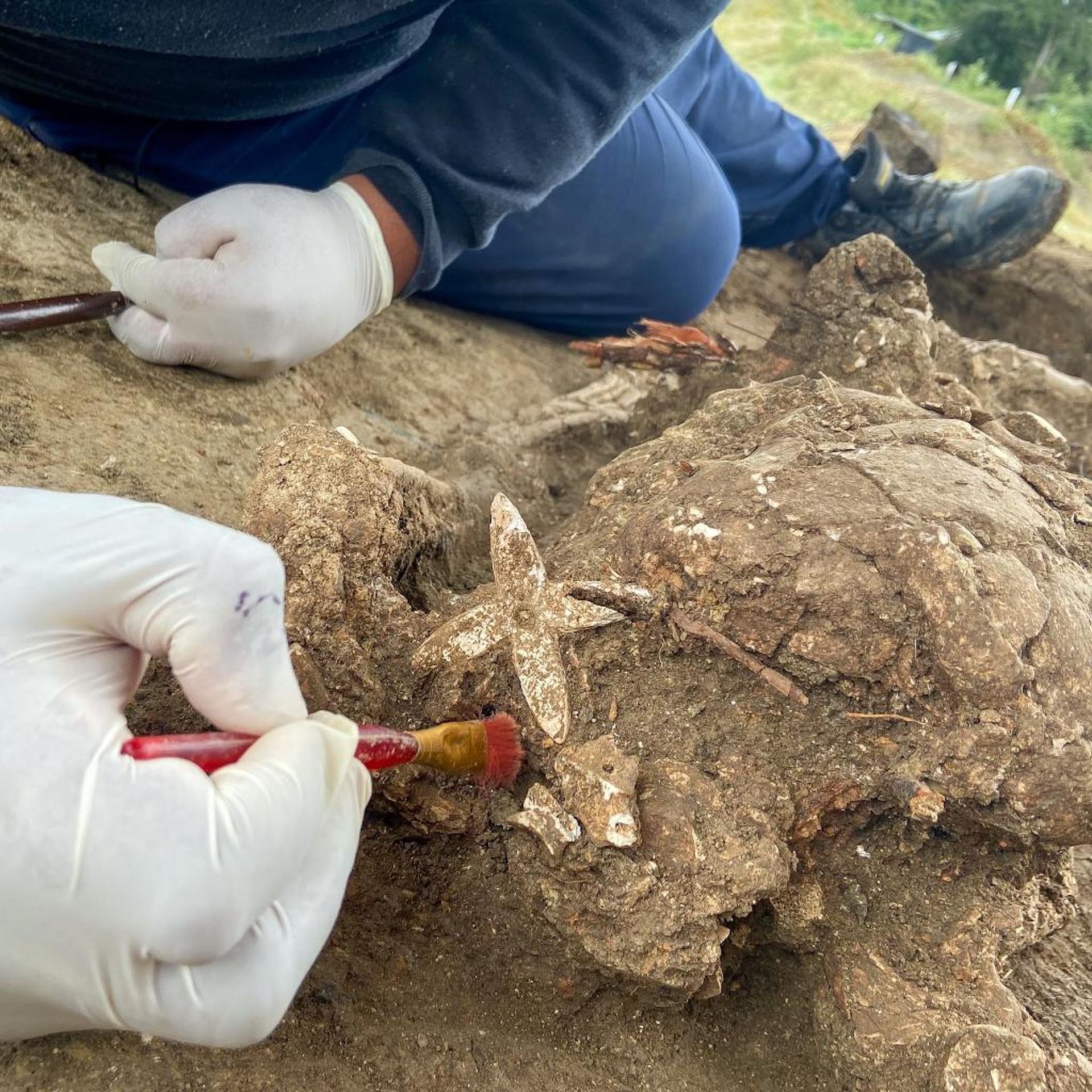
An earring of carved shell found inside a mound at the El Naranjo siteCourtesy National Institute of Anthropology and History
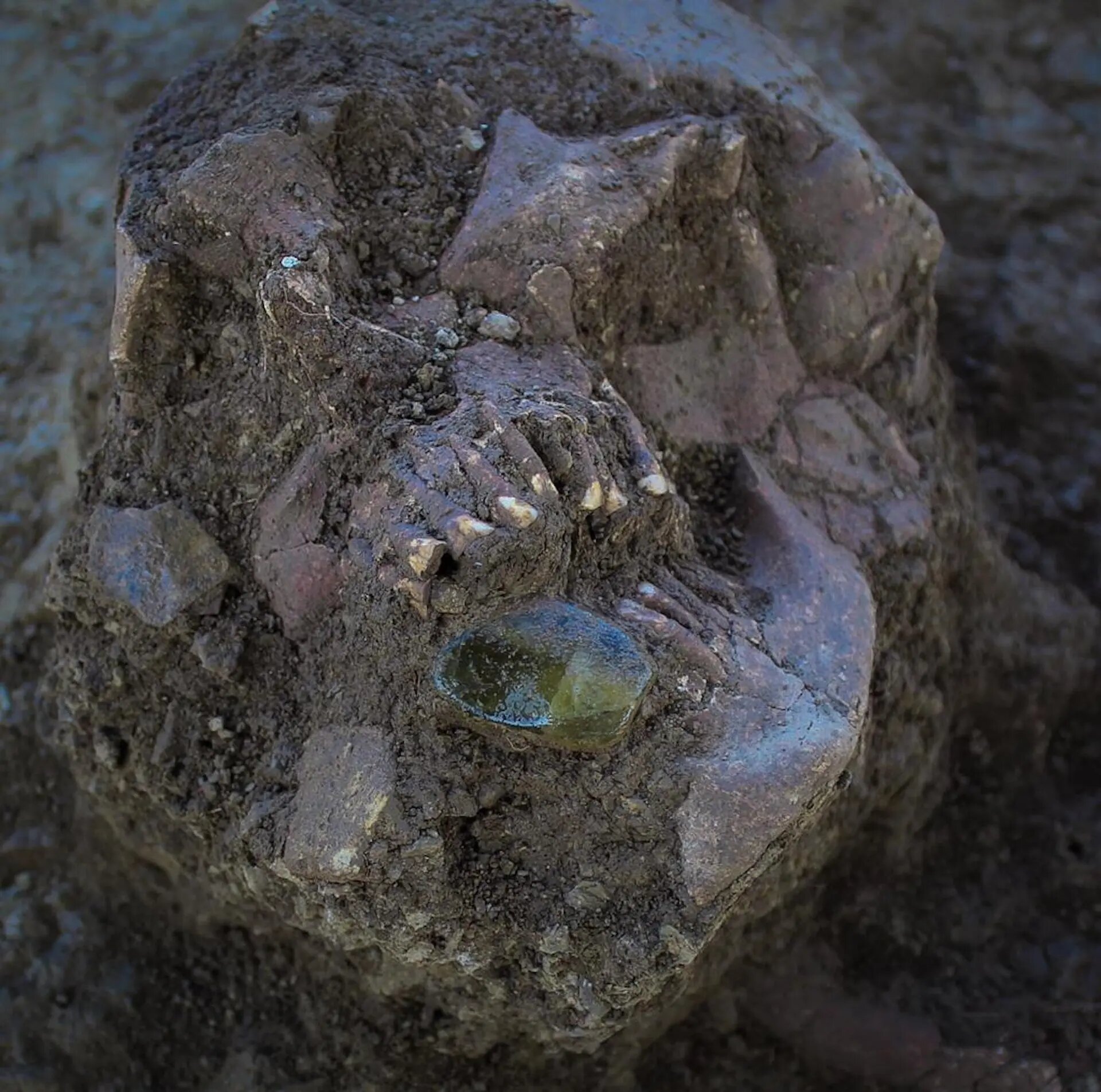
The ancient Huastec civilisation occupied land stretching across what is now six Mexican states and constructed substructure mounds for activity that have been identified at archaeological sites including Vista Hermosa and Platanito. At El Naranjo, archaeologists have so far excavated two of the four mounds, which held a dozen human interments. The smaller, measuring 20 metres in diameter and named Mound 4, revealed multiple burials of adults adorned with earrings made of green quartz and shells, some carved in the shape of flowers. At the larger mound, measuring 30 metres in diameter and named Mound 1, researchers identified several other burials in addition to the discrete grave of one adult within a limestone structure.
“We can see that they practised both single-individual and multiple-type burials, and that they were buried in different positions—some more frequent than others, such as the dorsal flexed position or the flexed decubitus position,” Ávalos says. “Also that the objects that accompanied them are rare materials in the region, and that they were worked with great care and detail.” Read More…