Home Upload Photo Upload Videos Write a Blog Analytics Messaging Streaming Create Adverts Creators Program
Bebuzee Afghanistan Bebuzee Albania Bebuzee Algeria Bebuzee Andorra Bebuzee Angola Bebuzee Antigua and Barbuda Bebuzee Argentina Bebuzee Armenia Bebuzee Australia Bebuzee Austria Bebuzee Azerbaijan Bebuzee Bahamas Bebuzee Bahrain Bebuzee Bangladesh Bebuzee Barbados Bebuzee Belarus Bebuzee Belgium Bebuzee Belize Bebuzee Benin Bebuzee Bhutan Bebuzee Bolivia Bebuzee Bosnia and Herzegovina Bebuzee Botswana Bebuzee Brazil Bebuzee Brunei Bebuzee Bulgaria Bebuzee Burkina Faso Bebuzee Burundi Bebuzee Cabo Verde Bebuzee Cambodia Bebuzee Cameroon Bebuzee Canada Bebuzee Central African Republic Bebuzee Chad Bebuzee Chile Bebuzee China Bebuzee Colombia Bebuzee Comoros Bebuzee Costa Rica Bebuzee Côte d'Ivoire Bebuzee Croatia Bebuzee Cuba Bebuzee Cyprus Bebuzee Czech Republic Bebuzee Democratic Republic of the Congo Bebuzee Denmark Bebuzee Djibouti Bebuzee Dominica Bebuzee Dominican Republic Bebuzee Ecuador Bebuzee Egypt Bebuzee El Salvador Bebuzee Equatorial Guinea Bebuzee Eritrea Bebuzee Estonia Bebuzee Eswatini Bebuzee Ethiopia Bebuzee Fiji Bebuzee Finland Bebuzee France Bebuzee Gabon Bebuzee Gambia Bebuzee Georgia Bebuzee Germany Bebuzee Ghana Bebuzee Greece Bebuzee Grenada Bebuzee Guatemala Bebuzee Guinea Bebuzee Guinea-Bissau Bebuzee Guyana Bebuzee Haiti Bebuzee Honduras Bebuzee Hong Kong Bebuzee Hungary Bebuzee Iceland Bebuzee India Bebuzee Indonesia Bebuzee Iran Bebuzee Iraq Bebuzee Ireland Bebuzee Israel Bebuzee Italy Bebuzee Jamaica Bebuzee Japan Bebuzee Jordan Bebuzee Kazakhstan Bebuzee Kenya Bebuzee Kiribati Bebuzee Kuwait Bebuzee Kyrgyzstan Bebuzee Laos Bebuzee Latvia Bebuzee Lebanon Bebuzee Lesotho Bebuzee Liberia Bebuzee Libya Bebuzee Liechtenstein Bebuzee Lithuania Bebuzee Luxembourg Bebuzee Madagascar Bebuzee Malawi Bebuzee Malaysia Bebuzee Maldives Bebuzee Mali Bebuzee Malta Bebuzee Marshall Islands Bebuzee Mauritania Bebuzee Mauritius Bebuzee Mexico Bebuzee Micronesia Bebuzee Moldova Bebuzee Monaco Bebuzee Mongolia Bebuzee Montenegro Bebuzee Morocco Bebuzee Mozambique Bebuzee Myanmar Bebuzee Namibia Bebuzee Nauru Bebuzee Nepal Bebuzee Netherlands Bebuzee New Zealand Bebuzee Nicaragua Bebuzee Niger Bebuzee Nigeria Bebuzee North Korea Bebuzee North Macedonia Bebuzee Norway Bebuzee Oman Bebuzee Pakistan Bebuzee Palau Bebuzee Panama Bebuzee Papua New Guinea Bebuzee Paraguay Bebuzee Peru Bebuzee Philippines Bebuzee Poland Bebuzee Portugal Bebuzee Qatar Bebuzee Republic of the Congo Bebuzee Romania Bebuzee Russia Bebuzee Rwanda Bebuzee Saint Kitts and Nevis Bebuzee Saint Lucia Bebuzee Saint Vincent and the Grenadines Bebuzee Samoa Bebuzee San Marino Bebuzee São Tomé and Príncipe Bebuzee Saudi Arabia Bebuzee Senegal Bebuzee Serbia Bebuzee Seychelles Bebuzee Sierra Leone Bebuzee Singapore Bebuzee Slovakia Bebuzee Slovenia Bebuzee Solomon Islands Bebuzee Somalia Bebuzee South Africa Bebuzee South Korea Bebuzee South Sudan Bebuzee Spain Bebuzee Sri Lanka Bebuzee Sudan Bebuzee Suriname Bebuzee Sweden Bebuzee Switzerland Bebuzee Syria Bebuzee Taiwan Bebuzee Tajikistan Bebuzee Tanzania Bebuzee Thailand Bebuzee Timor-Leste Bebuzee Togo Bebuzee Tonga Bebuzee Trinidad and Tobago Bebuzee Tunisia Bebuzee Turkey Bebuzee Turkmenistan Bebuzee Tuvalu Bebuzee Uganda Bebuzee Ukraine Bebuzee United Arab Emirates Bebuzee United Kingdom Bebuzee Uruguay Bebuzee Uzbekistan Bebuzee Vanuatu Bebuzee Venezuela Bebuzee Vietnam Bebuzee World Wide Bebuzee Yemen Bebuzee Zambia Bebuzee Zimbabwe
Blog Image

Arctic greening thaws permafrost, boosts runoff

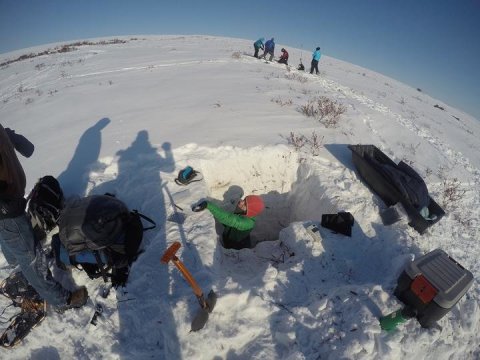
NGEE-Arctic researchers from Los Alamos, University of Alaska Fairbanks and Oak Ridge National Laboratory dig deep snow pits in tall shrub patches to understand the warming effect of snow-shrub interactions on underlying permafrost. Credit: Los Alamos Nat

A new collaborative study has investigated Arctic shrub-snow interactions to obtain a better understanding of the far north's tundra and vast permafrost system. Incorporating extensive in situ observations, Los Alamos National Laboratory scientists tested their theories with a novel 3D computer model and confirmed that shrubs can lead to significant degradation of the permafrost layer that has remained frozen for tens of thousands of years. These interactions are driving increases in discharges of fresh water into rivers, lakes and oceans.

"The Arctic is actively greening, and shrubs are flourishing across the tundra. As insulating snow accumulates atop tall shrubs, it boosts significant ground warming," said Cathy Wilson, Los Alamos scientist on the project. "If the trend of increasing vegetation across the Arctic continues, we're likely to see a strong increase in permafrost degradation."

The team investigated interactions among shrubs, permafrost, and subsurface areas called taliks. Taliks are unfrozen ground near permafrost caused by a thermal or hydrological anomaly. Some tunnel-like taliks called "through taliks" extend over thick permafrost layers.

Results of the Los Alamos study published in Environmental Research Letters this week revealed that through taliks developed where snow was trapped, warmed the ground and created a pathway for water to flow through deep permafrost, significantly driving thawing and likely increasing water and dissolved carbon flow to rivers, lakes and the ocean. Computer simulations also demonstrated that the thawed active layer was abnormally deeper near these through taliks, and that increased shrub growth exacerbates these impacts. Notably, the team subtracted warming trends from the weather data used to drive simulations, thereby confirming that the shrub-snow interactions were causing degradation even in the absence of warming.

The Los Alamos team and collaborators from the Department of Energy (DOE) Office of Science's Next-Generation Ecosystem Experiments Arctic program, which funds this project, used a new Los Alamos-developed fine-scale model, the Advanced Terrestrial Simulator (ATS). It incorporates soil physics and captures permafrost dynamics. The team repeatedly tested results against experimental data from Alaska's Seward Peninsula.

"These simulations of through talik formation provide clues as to why we're seeing an increase in winter discharge in the Arctic," said Los Alamos postdoctoral research associate Elchin Jafarov, first author on the paper.

This model is the first to show how snow and vegetation interact to impact permafrost hydrology with through talik formation on a slope -- prevalent across Alaskan terrain. The team, including collaborators from Oak Ridge National Laboratory and the University of Alaska, investigated how quickly through taliks developed at different permafrost depths, their impact on hydrology and how they interrupted and altered continuous permafrost.

Previous Post

Antarctic ice shelf 'sings' as winds whip across its surface

Next Post

Working lands play a key role in protecting biodiversity

Comments