Art Festival in Norway Embraces the Sounds of the Arctic Circle
-
 Loading...
 - Mandy Kappel
- 18 Oct 2024
- 39 Views
- 0 Like
- 0 Comment
The Lofoten International Art Festival (Liaf), the longest-running contemporary art biennial in Scandinavia, is currently taking place in the breathtaking Norwegian archipelago of Lofoten, located just above the Arctic Circle. This year marks its 18th edition, running until October 20, under the curatorial direction of Kjersti Solbakken, who recently became the director of Bergen Kunsthall. The festival is centered in Svolvær, the region's administrative capital, and features satellite projects extending as far as New York City. Each edition of Liaf utilizes various available buildings and outdoor spaces across Lofoten, creating a migratory biennial that reflects the area's rich history and culture.
Lofoten is renowned for its dramatic landscape, characterized by fjords, jagged mountains, and vibrant fishing villages. The local identity is deeply intertwined with cod fishing, particularly the skrei, which has been a staple of the community for over a millennium. The fish is dried on large racks to produce stockfish, a significant export since the Middle Ages. The region's history of communication, particularly in telegraphy, has also shaped its development, with the Lofoten line established in the 19th century to improve connectivity across the islands.
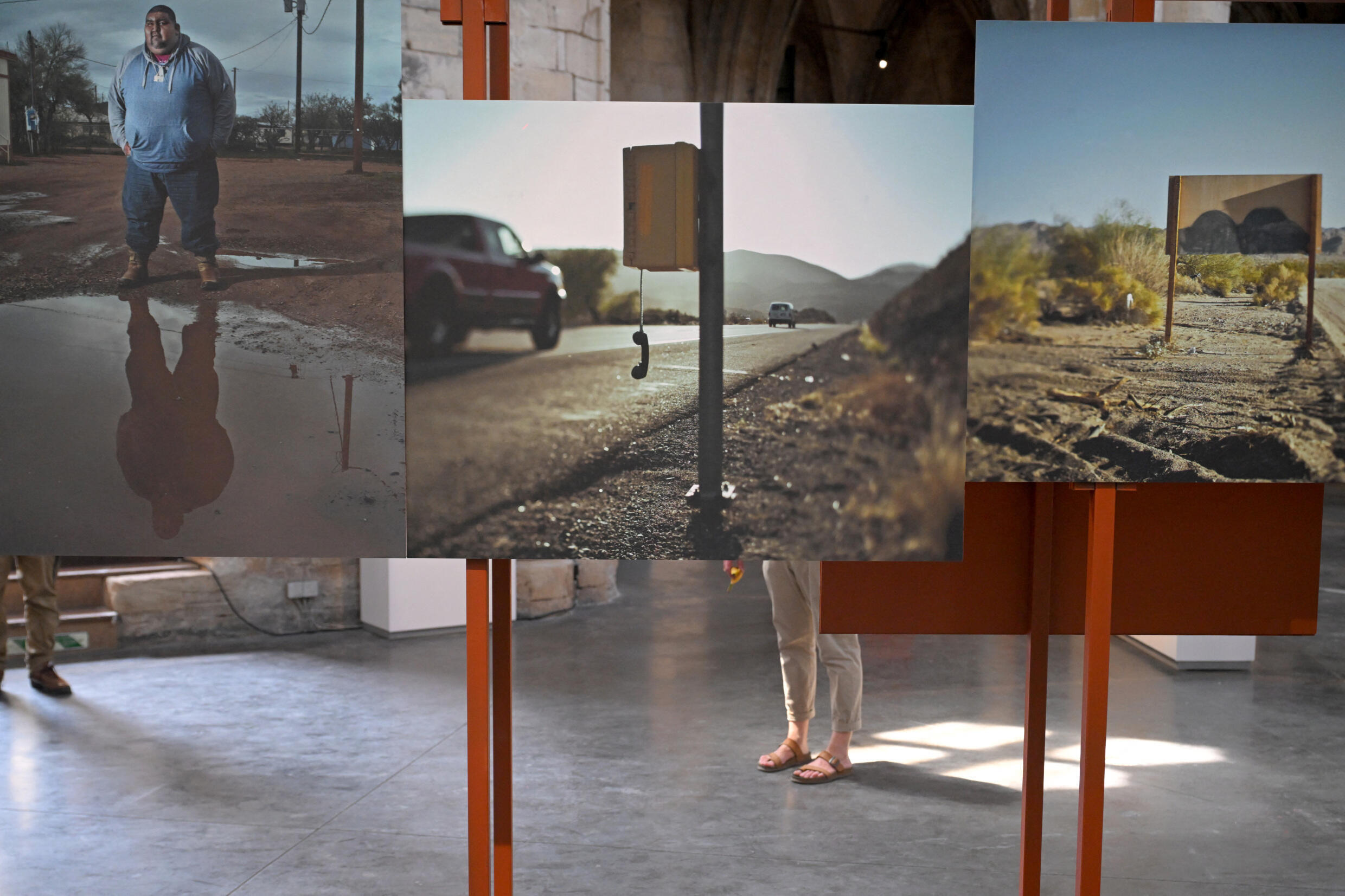
For Liaf 2024, Solbakken has chosen not to create a theme-based exhibition but instead to explore Lofoten's telegraphy history as a framework for an international exhibition. This approach highlights the region's long-standing communication practices, both human and natural, as well as the sounds that permeate the landscape. The festival's opening weekend, held from September 20 to 22, featured a vibrant parade led by local children, setting the tone for a celebration of art and community.
Among the notable projects at Liaf 2024 is the work of New York artists Eileen Myles and Kameelah Janan Rasheed, who brought poetry and site-specific installations to the festival. The Livingstone Office for Contemporary Art from Zambia explored the "sonic corridors" between Lofoten and their home country, while Sámi artists showcased their cultural heritage through traditional music and art.
Kraftholmen, a former fishing-industry workshop, serves as one of the largest venues for the festival, hosting artist talks, workshops, and film screenings. Noteworthy films include Astrid Ardagh’s documentary "On Air," which captures the experiences of retirees communicating over ham radio, and Elisabeth Brun’s "Big Tech Blues," which examines the impact of SpaceX's Starlink ground station on her hometown.
Musical performances were integral to the festival, with Elise Macmillan presenting a unique production in Svolvær’s Old Methodist Church, blending traditional sounds with innovative instruments. The festival also featured the ambitious project "Island Eye Island Ear" (IEIE), originally conceived by experimental musician David Tudor. This project transformed the island of Svinøya into a musical instrument, incorporating field recordings and visual elements to create an immersive experience.
As the opening weekend concluded, attendees gathered for a communal dinner and a spontaneous performance of traditional Sámi music, all set against the backdrop of Lofoten's stunning landscape. Although the northern lights were obscured by clouds, the atmosphere was charged with the sounds of nature and the creative expressions of the artists, echoing the festival's theme of communication and connection in this remote yet vibrant part of the world.