Back to School: A Better Future for 5,000 Children in Cameroon
-
 Loading...
 - Nina Quansah
- 23 Dec 2024
- 76 Views
- 0 Like
- 0 Comment
In Maroua, the capital of the Far North region of Cameroon, a lack of alternative emergency education and bridge exams has made it challenging for children to reintegrate into formal schooling. School closures, exacerbated by ongoing conflicts, have left thousands of pupils without access to education. Families are often hesitant to send their children to the few operational schools due to financial constraints, a shortage of qualified teachers, and inadequate learning environments. As a result, many families prioritize early marriage for girls and sending boys to work in the fields.
According to the 2024 Humanitarian Needs Overview for Cameroon, approximately 625,737 children in the Far North region are out of school, including 248,461 who are internally displaced. The conflict has led to the destruction or closure of 119 schools, further complicating the situation for children seeking to resume their education.
In response to these challenges, the Norwegian Refugee Council (NRC) and its partners have introduced innovative teaching and learning methods, launching a program of catch-up and remedial classes. While many children are still missing school during the 2024–2025 academic year, around 5,000 have regained hope and enthusiasm through the classes implemented in the Far North region.
In collaboration with Cameroon’s Ministry of Basic Education (MINEDUB), the NRC initiated a catch-up program in summer 2024, benefiting 2,536 girls and 2,464 boys across the districts of Mora, Kolofata, Bogo, and Mokolo, including the Minawao refugee camp. This program not only aims to reintegrate children into formal education but also addresses their psychosocial support needs, helping them cope with trauma from conflict and displacement.
Adaptive Teaching Methods for Out-of-School Children
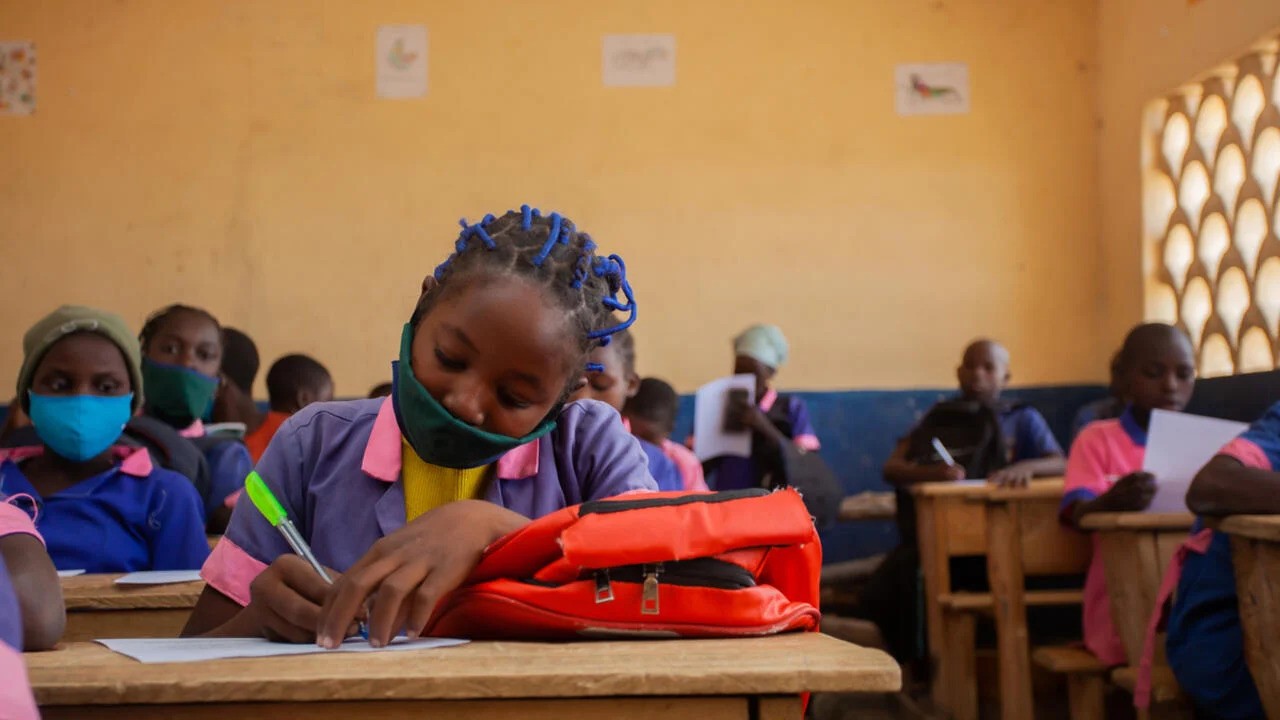
During the catch-up program, children participated in four weeks of classes led by trained teachers, tailored to their learning levels and covering essential subjects such as mathematics, reading, and writing. At the end of the program, each student received a reintegration kit containing school supplies like bags, notebooks, pens, and pencils to alleviate the financial burden on their families and encourage their return to school.
Fatoumata, a 10-year-old who had not attended school since 2022, expressed her excitement about the program: “I had forgotten how to do maths and conjugation, but with the lessons we were given, I remembered, and it was very easy. I can’t wait to go back to school next year.”
Through door-to-door visits, NRC engaged with families to identify children eager to return to school. These discussions raised awareness about the program and highlighted the challenges families face. Djeneba, a parent, shared her concerns: “It’s hard enough to feed myself and my family. We are seven in the house – how am I going to send them to school when they can't even eat?”
The catch-up program has not only benefited the children but has also increased community awareness of the importance of education. Families are beginning to support their children’s schooling, and local initiatives are emerging to promote access to education.
Psychosocial Support for Children
Recognizing that some children may struggle to return to school due to trauma, the NRC offers the Better Learning Programme (BLP). This initiative combines psychosocial and educational approaches to help children cope with stress from trauma and equips teachers with the skills to support traumatized students. The BLP serves as an alternative form of education tailored to the needs of children affected by displacement.
The Vital Role of Rebuilding Schools
Access to education is contingent upon having suitable learning environments. In the Minawao refugee camp, essential construction work has been undertaken to facilitate continuous learning, create safer environments, and improve access to water and sanitation facilities for children. Rehabilitating schools is a priority in early recovery efforts, as education plays a crucial role in fostering resilience and rebuilding children’s dreams.
In addition to improving access, the NRC has focused on increasing awareness of menstrual hygiene management for girls, addressing widespread myths and misconceptions that impact their health and well-being.
Education is not solely about academic achievement; it encompasses personal and emotional development. It provides children with opportunities to build positive relationships, develop social skills, and acquire essential life skills such as teamwork and leadership. The way children learn and grow influences their behavior and resilience in the face of challenges.