Bangladesh Bank to weaken taka in phases
-
 Loading...
 - Bijoy Pillai
- 11 Jan 2022
- 438 Views
- 0 Like
- 0 Comment
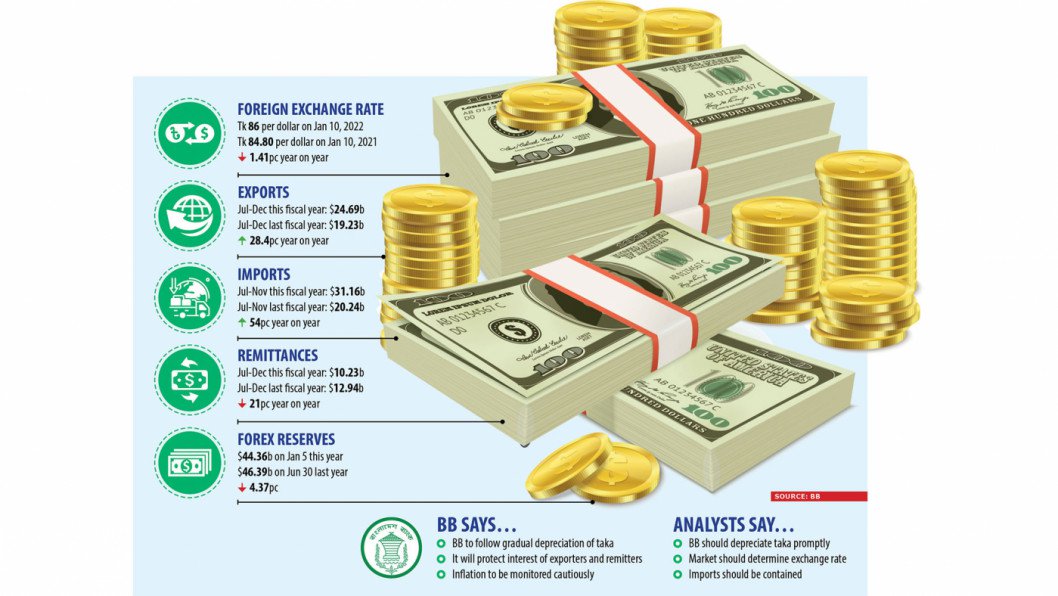
The Bangladesh Bank is considering to follow the path of a gradual depreciation of the taka against the US dollar in order to protect the interests of exporters and remitters.
The move, however, may stoke the inflationary pressure, which is building up owing to the kinks in the global supply chain, rising imports and shipping costs, and a slowdown in remittances.
The central bank devalued the interbank exchange rate on Sunday, allowing the local currency to rise to Tk 86 against USD for the first time.
"The BB is considering a gradual appreciation of the dollar against the taka to give a boost to both exporters and remitters," Md Habibur Rahman, acting chief economist of the central bank, told The Daily Star.
The country's import payments have escalated due to the global supply chain disruption and the rising domestic demand from the industrial sector soon after the economy reopened.

The central bank has little scope to address the disruption, said Rahman.
"Although it is good for the economy if the market determines the exchange rate, the central bank will not expect an uncontrolled state in the foreign exchange regime," said Rahman, also an executive director of the BB.
"We are monitoring the inflationary pressure cautiously, which is why the central bank is thinking of a gradual depreciation of the local currency."
Another central bank official, on condition of anonymity, says that the BB has planned to depreciate the local currency closed to Tk 87 per dollar step by step this year given the state of the economy.
But Ahsan H Mansur, executive director of the Policy Research Institute of Bangladesh, a think-tank, called for immediate devaluation.
"If it does not take the move promptly, the country's foreign exchange reserves will diminish."
The former official of the International Monetary Fund recommended the depreciation of the local currency to at least Tk 88 per dollar without further delay.
"This will help remitters send their hard-earned money through banking channel."
The central bank has been injecting dollars into the market on a regular basis since the inception of the current fiscal year to stop any steep fall of the local currency. Read More…