Banh Mi Types: A Complete Guide to the Vietnamese Sandwich
-
 Loading...
 - Junjie Zoeng
- 21 Feb 2023
- 64 Views
- 0 Like
- 0 Comment
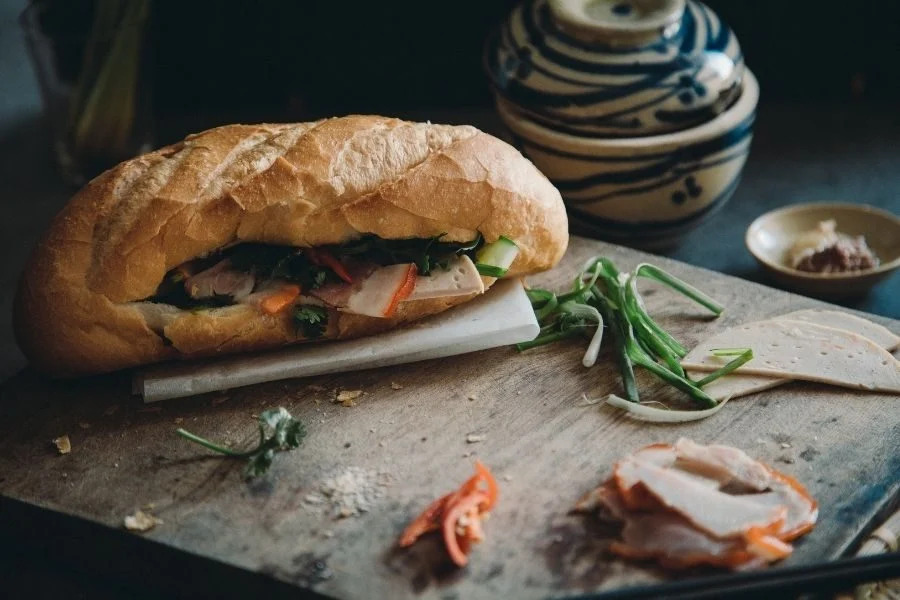
No one comes to Vietnam without trying the infamously flavourful Banh Mi Sandwich. The taste is beyond that of any sandwich you’d eat in any Western Nation. And we have the ultimate guide.
Be prepared for a little rumble in your stomach and eye-watering images of Vietnam’s most delicious cultural export.
What is a Banh Mi?
Essentially it is a crusty baguette with fillings. The fillings can be anything from pickled local vegetables and roast pork to chunks of meatballs in a tomato sauce. Rather than have a defined set of Banh Mi rules, the Vietnamese have experimented and perfected a number of different varieties. With each local Banh Mi street chef a master of their own recipe.
So, where does the Banh Mi come from? What are the classic Banh Mi sandwich types? And why do people love eating Banh Mi?

A brief history of the Banh Mi
The banh mi is a style of bread originating from France mixed with Asian fillings. When the French invaded Vietnam and the Indochina region in 1887, the French couldn’t cope without their favourite snack: the banquette.
So flour was imported by the shipload in the mid-nineteenth century. Ham or pork was locally cured to French tastes. Cold cuts were developed to satisfy the European palette. The cheese was imported, then eventually produced in farms around the South of Vietnam.
Local pate chaud was also produced, along with European style jams. The flavors became a part of French Indochina and it’s culture. The Banh, or Pain, is the Vietnamese name for bread. They called it Banh Tay, or foreign bread. It was considered a delicacy and an expensive one.
Though initially brought in by the French to satisfy their community, it was crafted by various ethnic and geographical communities across Vietnam, eventually becoming claimed by the Vietnamese as a cuisine of national pride.
The Banh Mi sandwich has had quite the culinary journey through Vietnam during the 20th and 21st Centuries. Read More…