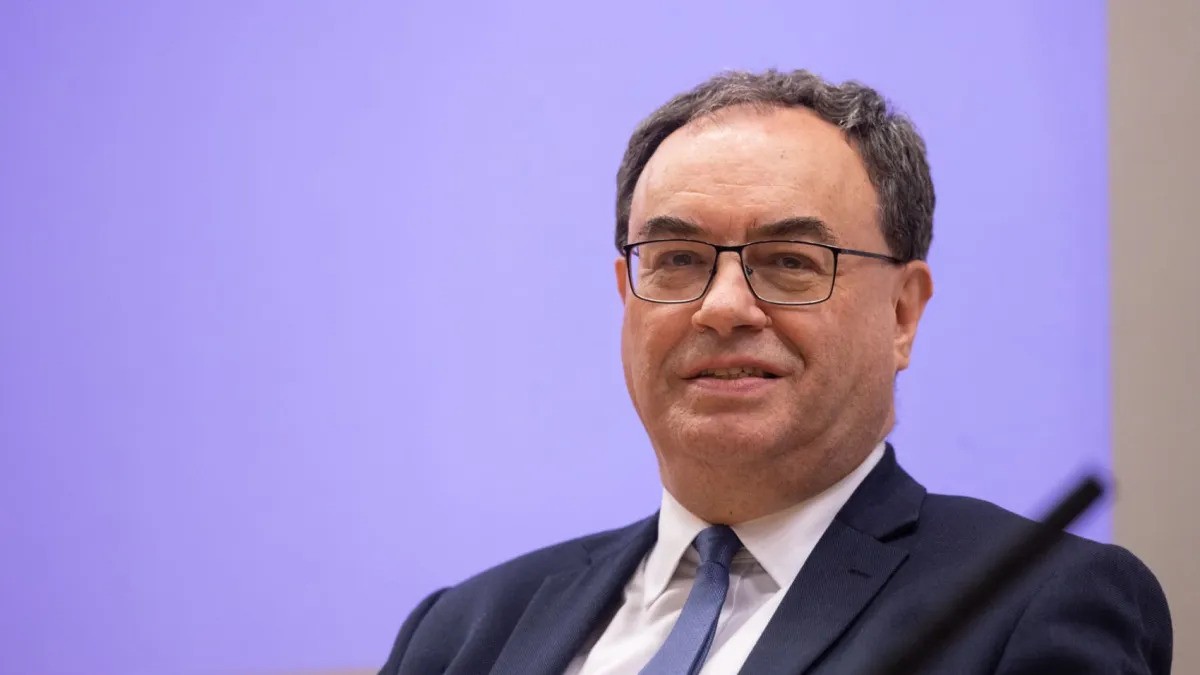
Bank of England Governor Andrew Bailey: Restrictive Policy May Be Needed Due to Labor Market Shocks
-
 Loading...
 - Dendera Abdo
- 26 Aug 2024
- 228 Views
- 0 Like
- 0 Comment
Bank of England Governor Andrew Bailey will deliver a speech at the U.S. Federal Reserve's central bank symposium in Jackson Hole, Wyoming, where he will discuss the progress made in reducing inflation in the UK and the potential need for continued restrictive monetary policy due to labor market shocks.
Bailey will highlight that headline inflation has fallen sharply, thanks to the decline in energy and food price shocks. Additionally, higher interest rates have helped to tackle second-round effects such as wage growth and price-setting. Headline inflation in the UK has reached the Bank of England's 2% target for two months this year, before rising to 2.2% in July.
While Bailey believes that risks to persistent inflation are lower than they were a year ago, he will caution that two less "benign" scenarios remain possible, which would require the Bank of England to maintain restriction for longer. These scenarios suggest that structural changes in product and labor markets are occurring, causing a lasting legacy of the major shocks experienced.
Bailey will express concerns over the rate of UK wage growth and tightness in the jobs market. Inflation in services, the UK's dominant sector, remains above 5%. The Bank of England has previously flagged these concerns, and they will continue to influence monetary policy decisions.
The Bank of England cut interest rates by 25 basis points in August, its first cut in the current cycle. Markets have almost fully priced in another 50 basis points in cuts this year. Bailey's comments will be closely watched for any hints on future interest rate decisions.
Bailey will also discuss the economic costs of bringing down persistent inflation, stating that they could be less than in the past. This is consistent with a process of disinflation that is steady and more in keeping with a soft landing than a recession-induced process. The UK economy has returned to growth this year, with GDP expanding by 0.7% and 0.6% in the first and second quarters, respectively.
Bailey's comments will be compared to those of Federal Reserve Chair Jerome Powell, who indicated on Friday that interest rate cuts lie ahead for the world's biggest central bank. The Bank of England's approach to monetary policy will be closely watched, particularly in light of the differing economic conditions and inflation pressures in the UK and US.