Bank of Finland calls for more measures to curb household indebtedness.
-
 Loading...
 - Declan Buckley
- 05 May 2022
- 306 Views
- 0 Like
- 0 Comment
The bank of Finland has called for additional measures to curb household indebtedness.
The Bank of Finland on Wednesday stated that household indebtedness poses a growing threat to the stability of the financial system, having surged to a record-high level as a result of new housing loans being bigger than before and often having longer re-payment periods than the standard of 25 years.
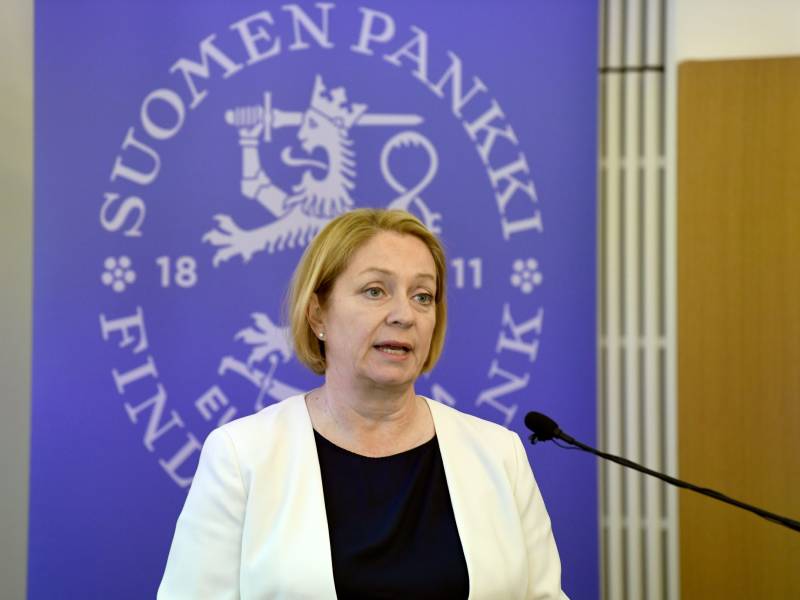
“Households should assess their debt servicing ability to make sure it can withstand an increase in interest rates, increase in everyday costs and potential uncertainty in the labour market,” advised Marja Nykänen, the deputy governor at the Bank of Finland.
The European Central Bank is likely to raise its reference rate no later than this autumn. The market expectation in recent weeks, though, has been that the tightening of monetary policy will begin this summer due to the acceleration of inflation.
In Finland, interest rates on housing loans typically fluctuate in accordance with reference rates.
Nykänen pointed out that there are signs that products that protect against increases in interest rates have become more popular among borrowers. “Interest rate protections reduce the risks associated with interest rate rises particularly in situations where interests rose more than expected,” she commented in a press conference in Helsinki on Wednesday.
The Finnish government has presented a proposal to rein in household indebtedness with macro-prudential instruments such as maximum re-payment periods for housing loans and housing company loans, and a cap and re-payment obligation for housing company loans. While the proposed reforms are necessary, they alone will not succeed in curbing the rise in household indebtedness, according to the Bank of Finland.
The government, it said, should also implement a ceiling on debt or debt servicing costs relative to the income of the borrower.
“I’m not going to go into the percentages because the debt ratio of households is growing constantly. It’d be fair to talk about a moving target,” stated Nykänen.
Finnish households have an average debt burden equivalent to 130 per cent of their annual disposable income, according to YLE.
The Bank of Finland said the Finnish financial system remains stable despite the growing threats arising from the eroding economic outlook, higher energy prices, looming interest-rate hikes and difficulties in securing financing. Measures are therefore required to enhance resilience not only among borrowers, but also among banks and payment systems.
Vulnerabilities in the banking sector do not rise exclusively from household indebtedness, it reminded. They are exacerbated also by the centralised nature and substantial size of the sector, as well as possible external events such as the pandemic and war in Ukraine.
“Vulnerabilities require banks to have good resilience in all circumstances. Authorities should be better equipped to ensure banks have adequate buffers for a rainy day. It should be possible to consolidate the capital buffers of banks in more varied ways than currently,” said Nykänen.
The prevalent uncertainty also brings other significant threats, such as cyberattacks and disruptions in payments, settlements and other vital societal functions. Read More...