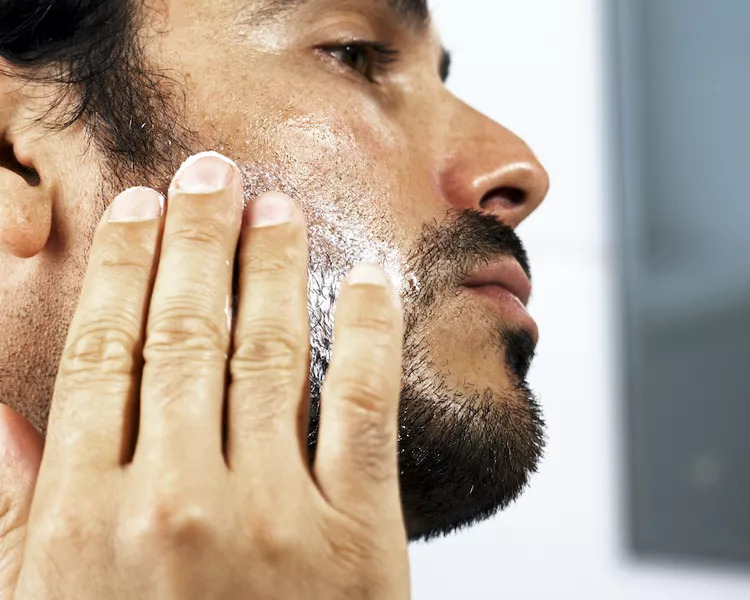
Beard Balms Will Upgrade Your Grooming Regimen
-
 Loading...
 - Mustafa Mansouri
- 04 Aug 2022
- 108 Views
- 0 Like
- 0 Comment
The beard may be a powerful centerpiece to your look, but keeping it looking good, feeling good, and all around up to the task can be a time-consuming affair. Skincare brands are very aware of the work that goes into maintaining facial hair, and many are capitalizing on the beard-growing trend with a dizzying arrangement of products set to boost the confidence of all those who want to invest in their grooming.
While variety is a great thing to have, we understand any confusion if you're newer to the world of beards or aren't ready to add another step to your grooming routine. But by briefly setting aside the multitude of brands at play, we can break down this category into three main types of beard grooming products available. The most common, in order of thickness, are beard oil, beard butter, and beard balm. At Byrdie, we love all three for different reasons, but this post is all about beard balm. Like the other two, beard balm moisturizes and softens facial hair, but beyond that, there are a few subtle but important differences.
Ahead, we consult our medical experts to help us understand distinctive properties of beard balms, how they differ from other options, and the benefits of adding one to your grooming routine. Keep reading to learn all about beard balms and see five great options to try now.
What Is a Beard Balm?
According to Dr. Charles Puza, MD, “beard balms may vary by formulation and company, but you can think of beard balm as a leave-in conditioner or moisturizer for your beard.” While there's plenty of variation, we have found that most are quite thick—they're often almost solid in consistency, and are usually made with waxes, essential oils, and butters. “Beard balms are designed to both condition and help style full beards,” Dr. Michelle Henry, MD, adds. “Compared to an oil, they're much thicker because they often contain butters like shea butter, mango butter or coconut butter.” Because of their thickness, most balms also work for styling, smoothing down any pieces that stick up and/or helping to direct hair downwards for a sleek and polished look.
Beard butter generally has a thinner consistency than a balm and is less often suitable for styling, although there are exceptions. And what about beard oils, which are plentiful and easy to apply? “Beard oil is using a lightweight oil that is purely for moisturizing,” Puza explains. “Beard balms have harder oils/waxes. These function to both hydrate and allow a styling effect. I tend to prefer balms over oils, as I don't personally like an oily feeling. However, some may choose a beard oil for ease of application.”
Who Should Use Beard Balm
“If you're washing your beard/face daily—as you should—you likely have to add back in some moisture,” Dr. Puza tells us. “A beard balm is a great way to do this. The balms help to soften beard hair, promote uniform growth, and to a certain extent, protect the underlying skin from ingrown hairs.”
Dr. Henry is a bit more prescriptive around who can benefit most from this product. “I would recommend beard balm to men with fuller beards that may have flyaways or strays that they want to comb down and get a sleek look,” she says.
Our experts agree that a beard balm is not for everyone. “If you have sensitive skin, it is important to be careful with new products, including beard balms,” Dr. Puza explains. “Always do a test spot with a product. In other words, don't start out day one with applying the beard balm to the entire beard. Instead, only apply it to one small patch for a few days and see how your skin reacts.” If you're looking for options suitable for sensitive skin, Dr. Puza tells us that petroleum jelly (Vaseline) and shea butter “are two great, affordable options. Beyond that, it is really hard to find a fragrance-free, sensitive skin-friendly balm.” Dr. Henry adds that beard balms may not be appropriate for men “with very fine beards or with sparse beards, who might find a beard balm too heavy or occlusive.”
Key Ingredients
“When looking for a beard balm, moisturizing agents matter,” Dr. Puza tells us. “Look for shea butter and coconut oil. Those two ingredients are some of my favorite moisturizers. If you wanted to be a purist, you could even just use those two on their own.”
Worried about fragrance? Dr. Puza suggests it's fine as long as your skin tolerates it well. “Most derms hate fragrances and recommend against them. However, it's likely hard to find a fragrance or essential oil-free version on the market,” he says. “Hence, the importance of doing a test spot as those can be skin irritants.”
Dr. Henry concurs that shea butter and coconut oil should be the main ingredients of a beard balm. “I am a fan of those butters as I find them to help to lock in moisture in beards, particularly curly or coarse beards,” she tells us.
The Best Beard Balms to Soften and Style
Furtuna Skin Rinascita Delle Olive Replenishing Balm
:max_bytes(150000):strip_icc():format(webp)/furtunaskinrinascitadelleolivereplenishingbalm-0ded0160faf641ce835ed183f2ffa48d.jpg)
Though not explicitly a beard balm, I've used this silky, emollient balm on my beard to prevent itchiness while moisturizing and smoothing out my facial hair. The balm consists of an occlusive layer of extra virgin olive oil (EVOO) and herbs sourced.
King C. Gillette Soft Beard Balm with Cocoa Butter
:max_bytes(150000):strip_icc():format(webp)/kingc.gillettesoftbeardbalmwithcocoabutter-25e511d0ae474e45b8f8b1ae2bf5016b.jpg)
This balm is lighter than many of the products available in the category, as it's free of wax and easier to spread across the beard. Depending on your preference, you can use this product as a leave-in conditioning treatment or a wash-off, deep conditioning mask. Fresh scents of cedarwood, bergamot, and geranium complete the experience. Read More...