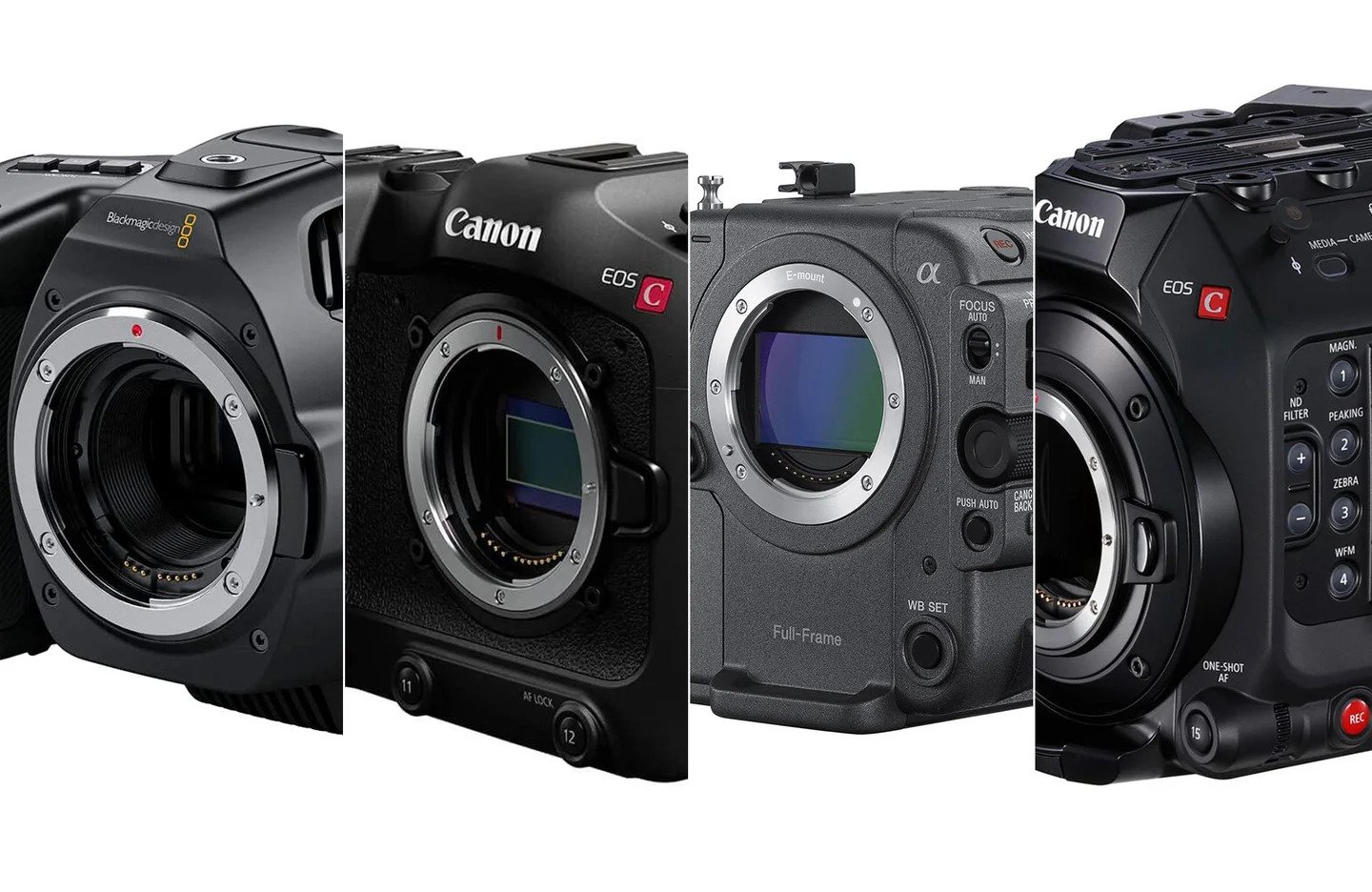
Best Cinema Cameras for 2022
-
 Loading...
 - Alban Dupont
- 30 Jun 2022
- 135 Views
- 0 Like
- 0 Comment
Cinema cameras deliver high-quality footage and provide advanced features not commonly found on the kind of camcorder you’d use to shoot your family reunion. (Unless you’re Stanley Kubrick, perhaps.) Generally, digital cinema cameras feature interchangeable lens mounts, Super35 or full-frame sensors, resolutions that start at 4K, high dynamic range, an in-camera log gamma setting, and decent low-light performance. They also shoot in relatively uncompressed file formats (including Apple ProRes HQ, MXF, and different flavors of raw), and can do so at higher frame rates for smooth slow-motion footage. Other common features that might not be exclusive to cinema cameras include balanced audio inputs, ND filters, and HDMI or SDI video outs. All this is in the service of capturing footage that looks fantastic on TV or the big screen.
But these cameras aren’t for everyone. They’re expensive, for one thing—with a couple exceptions, over-the-counter cinema cameras cost anywhere from $5,000 to $12,000 dollars for just the bodies. More than that, the cameras require a certain amount of experience to use correctly. These cameras reward people who understand the fundamentals of cameras and shooting. Which isn’t to say you need to be a professional director of photography to use one. But taking the time to practice and learn and really understand how these cameras work will prevent a fair amount of frustration.
Given the level of investment required, buying a cinema camera can be a daunting task. It’s important to do your research, and to that end, we’ve put together a list of what we feel are the best cinema cameras to help you on your way to your first Oscar nomination.
Things to Consider Before Buying a Cinema Camera
In order to navigate the world of cinema cameras, it’s important to understand some key concepts, specs, and tech that goes into making them such powerful tools.
Resolution
Resolution is measured in pixel count, and it describes the amount of detail a camera’s image sensor can capture. The more detail, the sharper the image and the easier it is to blow up to a large size before quality begins to degrade. High-definition footage is 1920 pixels wide by 1080 pixels high, and is usually the lowest resolution you’ll find in a cinema camera. 4K is twice the resolution of HD, and comes in two flavors: 4K DCI (4096 x 2160) and 4K UHD (3840 x 2160). Most cinema cameras can shoot in both, with 4K UHD maintaining the 16:9 aspect ratios commonly found on 4K TVs. All cinema cameras can shoot in 4K. From there, you might also find cameras shooting in 6K, 8K, or even 12K. Having a higher resolution doesn’t necessarily mean the camera is better, only that it can pack more detail into an image. But the quality of that image depends on so many other factors. Resolution is important, but don’t consider it in a vacuum.
Sensor Size
Cinema cameras usually use full-frame or cropped Super35 sensor sizes. Sometimes you’ll also find smaller Super16 sensors on cameras that use micro4/3 lens mounts, but these are less common. Super35 sensors are most common, and look fantastic, but as the price on full-framed sensors continues to drop, more and more cameras are taking advantage of their ability to capture more light and deliver tighter depth-of-field.
Raw video
Raw video is video that’s captured directly from the sensor without any sort of processing by the camera. There are no color or contrast curves applied to the footage, and usually no (or very little) compression. This provides the best image possible, but it requires a lot of post-production work to bring out all that quality. On the flip side, things like white balance and exposure can be easily manipulated in post to fix problems in the footage. Many of the more expensive cameras can shoot raw internally, and even more can send a raw signal out of the camera to be recorded by external devices. The biggest downside to shooting raw is that the files are sometimes larger than those of other formats, and they require adding a few extra steps to the post-production workflow.
Dynamic Range
Dynamic range is the contrast ratio between the darkest and brightest tones that a camera can capture in a single exposure. In other words, in a single shot, how dark can something get before sinking into inky blackness, and how light can something else be before it blows out and turns white with no details. It’s measured in stops. Think of it this way: The human eye has a dynamic range of about 21 stops. When you step into a room on a sunny day, you can see the trees outside the window, the couch and chair in the middle of the room, and the dog resting in the shadows under a desk all at the same time. Your eye doesn’t need to expose for one end of the scene or the other. Image sensors, though, aren’t as good as the human eye, and you’ll need to set exposure to “see” the tree outside or the dog in the shadows—but you won’t be able to see both without manipulating the lighting.
The sensors found on inexpensive camcorders have dynamic ranges of about 6 or 7 stops, which conforms to the rec.709 TV standard. iPhones actually do a little better, coming in around 9 stops. Cinema cameras, on the other hand, have dynamic ranges between 13 and 16 stops, which is remarkably close to that of the human eye. (Film also had a similar dynamic range, for the old-school among you.)
Having a higher dynamic range is never a bad thing, but just like resolution, it’s not the only factor contributing to image quality. A camera with a 13-stop dynamic range can still produce footage that’s as nice as one with a range of 16 stops—but the filmmaker will need to be more deliberate about exposure and lighting.
Log gamma settings
Log gamma profiles are shooting settings found on cinema cameras that allow them to capture the widest dynamic range. If you’re looking for the best image quality, this is what you’ll set your camera to when you shoot. Be warned: Log profiles look washed out when viewed on a camera’s monitor unless LUTs are applied to the monitor. (LUTs, or Look-Up Tables, are like presets that take log footage and give it a certain look when viewed through monitors. These don’t affect the footage directly, just how we see it, and can be used to give a sense of what the shots will look like after they’ve been color graded.) Log settings are proprietary from camera manufacturer to camera manufacturer—Sony has SLog3, Canon has CLog, Blackmagic calls their log setting “cinema mode,” and so on. Be sure to read your camera’s manual to get the shooting settings right!
Frame-rate
Cinema cameras shoot in many different frame-rates, from the standard 29.97 and 23.98, to much higher ones that deliver lush slow-motion footage. The maximum frame-rate is often dependent on the camera’s resolution, but 4K at 60 or 120 fps isn’t uncommon these days.
Lenses
Cinema cameras use interchangeable lenses using a variety of mounts. Many accommodate PL or Canon’s EF mounts, Sony’s cameras use their E mount system, and some cameras use the micro 4/3 system. Adaptors can often help you use glass with one type of mount on a camera with another—check and see what’s available before assuming any glass you might already own works with a particular camera. Most cinema cameras sell without lenses, so don’t forget to budget for them. Read More...