Bitcoin Is Empowering Marginalized Communities In Peru
-
 Loading...
 - Louie Powell
- 24 Mar 2022
- 370 Views
- 0 Like
- 0 Comment
What started as a simple, one-time $3,000 effort to buy shoes and socks for Peruvian children facing high mortality rates quickly grew into a full-scale effort focused on enabling financial empowerment through Bitcoin.
After a visit to Bitcoin Beach, the non-profit initiative that strives to bring financial inclusion to the coastal city of El Zonte in El Salvador through bitcoin circular economies, Rich Swisher, co-founder and president of non-profit global empowerment group MOTIV, saw the many opportunities that a sovereign and decentralized monetary network had to empower those who have been left out of the traditional banking system.
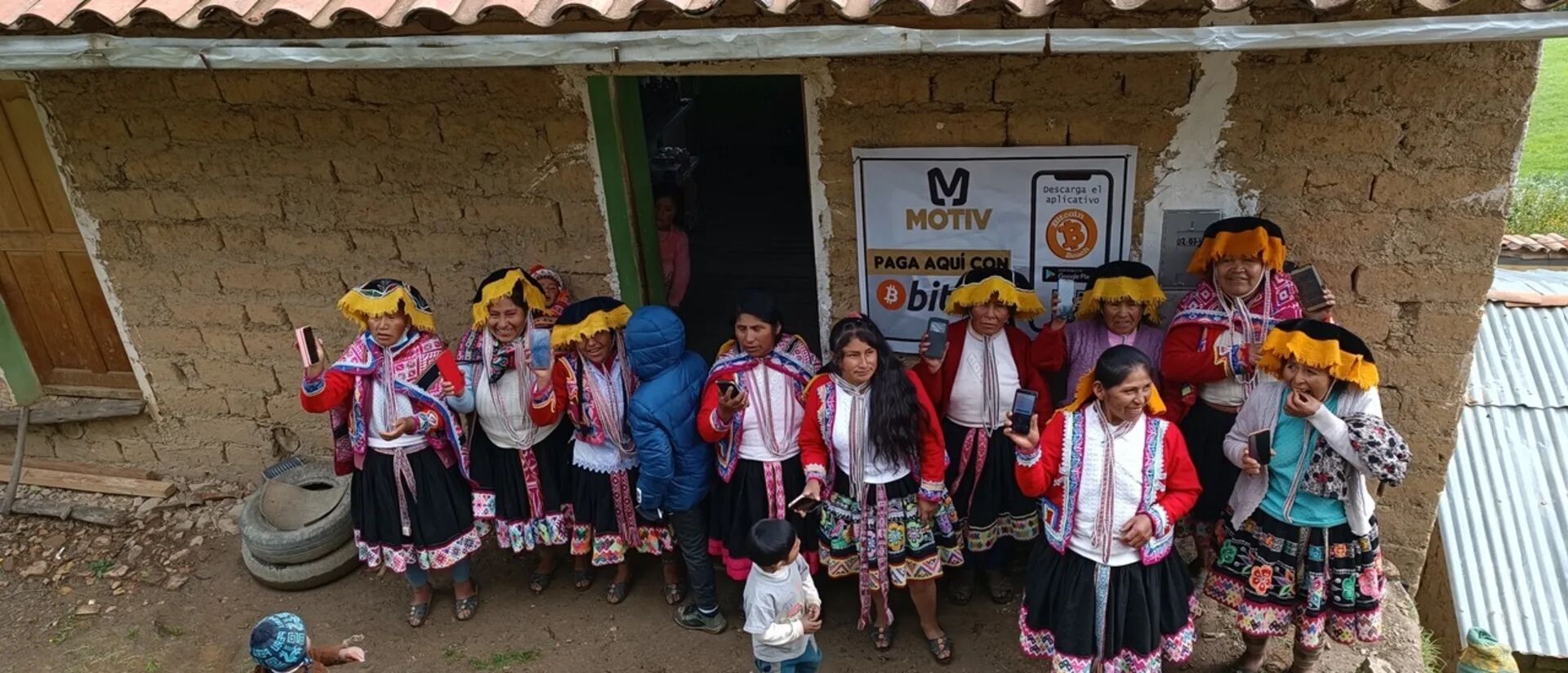
Now, through a series of programs ranging from medical care to entrepreneurship classes, MOTIV is leveraging Bitcoin to bring inclusion and hope to disadvantaged communities through 15 hubs in Peru.
“There is an outstanding alignment between Bitcoin and humanitarianism,” Swisher told Bitcoin Magazine. “Being able to have unobstructed access to a financial system that is not seizable and not able to be shut off by changing governments is key for people to build hope.”
BAREFOOT, FREEZING CHILDREN
Swisher planted the seeds for MOTIV’s operations in Peru after he and Vali Popescu, MOTIV co-founder and director of field operations, discovered that many children in a village there were dying because they didn’t have shoes — such a simple ornament that many of us take for granted.
Swisher explained that this typical Peruvian village is down at the bottom of a very steep valley with mountains all around it. There’s a water source, usually a stream or river flowing through, and people live in a huddled up area and farm the hillside where they often grow maize and grass to feed Guinea pigs — their main source of meat.
“They have to go out and fetch water and it’s really cold,” Swisher told Bitcoin Magazine, adding that “with the feet freezing and thawing and freezing and thawing,” children who don’t end up dying develop circulation issues and other medical problems.
Moreover, Swisher explained that the lack of footwear also prevents children from walking to classes, as going to school can involve a 10-mile commute every single day.
The duo then ran some calculations and saw that with $3,000 they would be able to give each child there a pair of hiking boots, seven pairs of socks and two visits a year to a foot medical specialist. After the initial commitment, they began researching ways to increase their presence in the region and further develop the programs, which were by then starting to help more people. However, it wasn’t until MOTIV found Bitcoin through Alex Fedorak, the non-profit’s director of corporate communications, that it would start a new chapter.
The peer-to-peer (P2P) currency quickly began enabling new use cases, but a visit to Bitcoin Beach would take things one step further.
“I went down to El Salvador, spent a week with [initiative founder Mike Peterson] and that’s really where I got a lot of my ideas,” Swisher said. “I needed to go down there and see what he had going on.”
As Swisher returned from El Salvador, he began implementing initiatives to create community hubs and develop circular bitcoin economies, where people leverage BTC for day-to-day transactions rather than simply buying and holding for long-term price appreciation — opposing the status quo in developed economies.
“We don’t want them to just be HODLers,” Swisher said. “We want this economy to spin off, and they need to use the money that they make.” Read More...