Bolivia’s economic model called into question
-
 Loading...
 - Claire James
- 31 May 2023
- 89 Views
- 0 Like
- 0 Comment
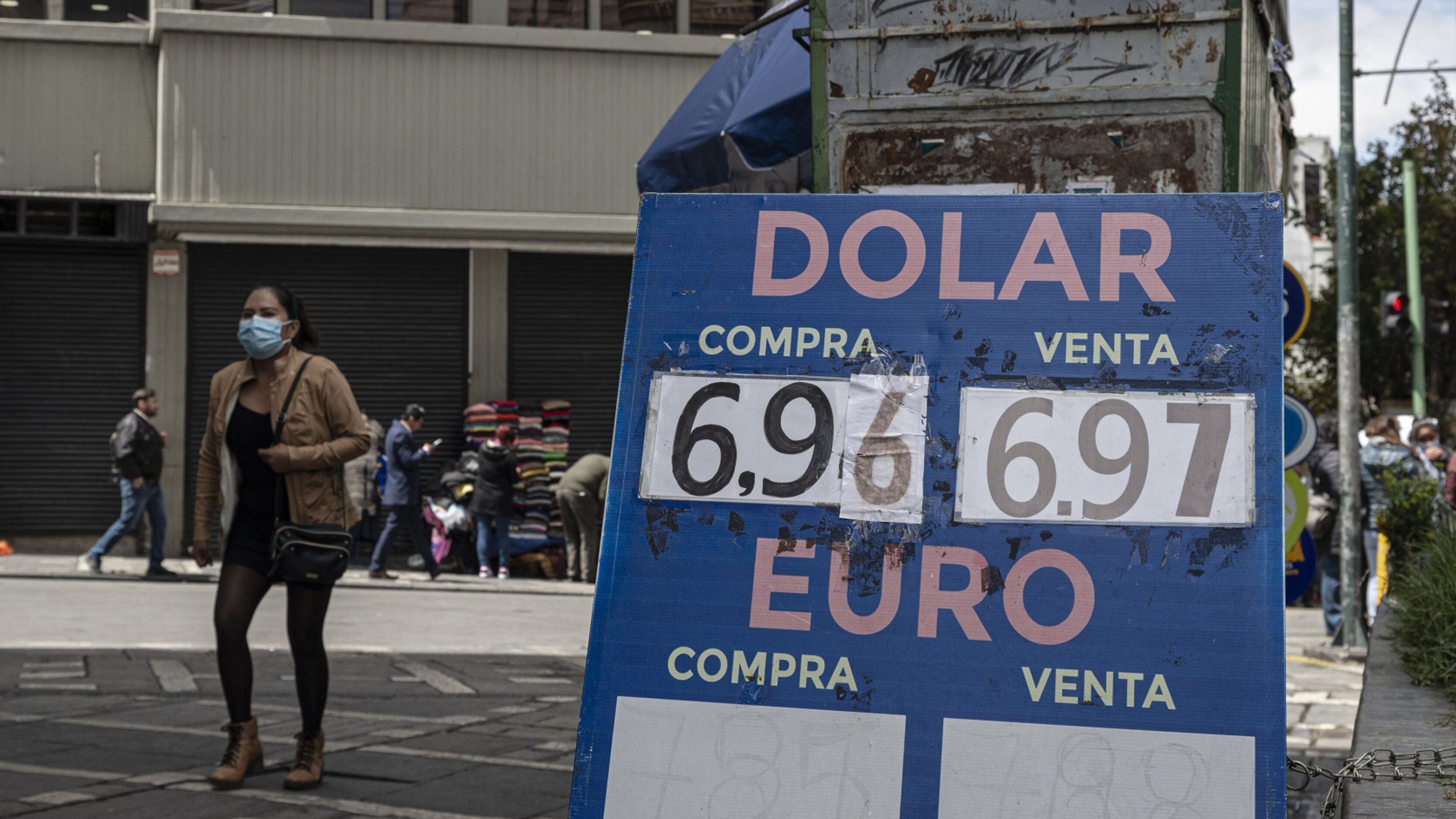
In March, long queues formed outside the Banco Central de Bolivia (BCB) following its announcement of initiating a "direct sale" of US dollars in order to alleviate growing concerns over dollar shortages. Bolivia's foreign currency crisis can be attributed to both short-term issues, such as global interest rate hikes and increased fuel prices due to the conflict in Ukraine, as well as long-term problems like the decline in hydrocarbon exports. As of February 2023, Bolivia's international reserves had plummeted to $3.5 billion, reaching one of the lowest levels since 2014, when the reserves amounted to $15.1 billion.
Carolina Caballero, a sovereign analyst at S&P Global Ratings, explains, "The demand for dollars has risen due to reduced public confidence in the ability to maintain the exchange rate. The central bank responded by strengthening its commitment to supporting the exchange rate." Bolivia has maintained a fixed exchange rate of 6.96 bolivianos to the dollar since 2011, a peg that President Luis Arce has pledged to uphold. However, independent economist Alfredo Seoane Flores states, "The fixed exchange rate was a good idea during prosperous times, but now the population has grown accustomed to it, and any indication of currency fluctuations sparks panic."
Although the issues began to surface last year, the situation reached its peak on February 8 when the BCB ceased publishing statistics on its foreign currency reserves, purportedly to curb speculation. The scarcity of dollars has had a significant impact on both banks and the general population, resulting in a rush to withdraw dollars and subsequently convert them into bolivianos. Mr. Seoane Flores criticizes the government's approach, stating, "When the government fails to acknowledge the problems, it only exacerbates the situation."
S&P Global Ratings predicts that the economy is expected to grow by 3% this year, following a rebound of 6.1% in 2021 and a contraction of 8.7% in 2020. However, the currency crisis poses a threat to the stability of an import-dependent country's economy. Importers are at risk of losing contracts as they struggle to secure sufficient foreign exchange for payments or obtain credit from their business partners. Over time, as imports decrease and become more expensive, price levels are likely to rise, dampening national output. Additionally, the restriction on monetary supply could potentially lead to a credit crunch.
Short-term solutions have been implemented, such as the approval of the 'Law for the Purchase of Gold to Strengthen the International Reserves' by the Bolivian senate on May 5. This law enables the BCB to directly purchase gold from miners at global prices, aiming to reduce smuggling. However, Carlos Gustavo Machicado, head of the economics department at the Catholic University of Bolivia, believes that while the gold law may provide temporary relief, it will not suffice if the demand for dollars remains high and continues to increase due to shifting expectations.
Observers claim that the root of the problem lies in the state's inability to control public spending. To address this, it is necessary to reduce the public deficit and find ways to generate foreign currency. Mr. Seoane Flores compares the balance of payments to a tub full of holes that allow dollars to flow out, emphasizing the need to redirect subsidies to the most vulnerable segments of society and reduce support for inefficient state-owned enterprises.
Mr. Machicado suggests that the government seems reluctant to seek assistance from institutions like the International Monetary Fund (IMF) or the Latin American Reserve Fund, as they would likely request fiscal adjustments. He also points out that the BCB lacks independence and is subject to fiscal policy, which undermines its credibility. The central bank's decision to withhold weekly statistics since February has further eroded public confidence, making its claims of guaranteed deposits and the absence of systemic risks less credible.
The current currency crisis is a result of the long-standing fiscal deterioration that has accumulated over the years. Ms. Caballero notes that the downgrades in ratings over the past three years have been attributed to the deterioration of the country's external and fiscal profiles. According to the UN Economic Commission for Latin America and the Caribbean, total debt increased from 27.7% in 2014 to 68% in the previous year.
Many analysts point to 2014 as a pivotal moment for Bolivia, as the country faced a decline in the discovery, production, and export of new gas reserves, which had been a major driver of its growth. The drop in natural gas prices in 2015 resulted in a one-third reduction in Bolivia's export revenue. Instead of implementing economic policy changes that would reflect the decline in gas exports, successive governments attempted to compensate through an expansionary public investment program, thereby depleting the reserves.
Before 2014, Bolivia had maintained high reserves due to a significant influx of dollars, enabling the government to reverse the dollarization of the economy. However, following Evo Morales' rise to power in 2006 and the nationalization of the hydrocarbons sector, the state's resources expanded massively, fostering economic growth. Favorable external conditions also played a role. In December 2005, Bolivia, along with other countries, received 100% debt relief as a part of the Multilateral Debt Relief Initiative by the IMF. Nonetheless, underlying problems persisted.
Mr. Seoane Flores explains that while public investment increased during this period, it did not generate long-term returns due to inefficiencies in its deployment. The number of state-owned enterprises increased from 16 to over 50, with instances like constructing a sugar company in an area without sugar. While public investment flourished, private investment did not expand proportionately, and the sectors that benefited the most were imports and credit consumption.
According to independent economist Miguel Clares, the "New Economic, Social, Communitary, Productive Model" implemented during President Morales' tenure was highly beneficial for the country, leading to significant economic growth, social transformation, and economic diversification. The stable exchange rate shielded Bolivia from imported inflation over the years and helped it overcome a severe inflation rate of over 60,000% in July 1985. Bolivia now stands as one of the few Latin American countries that have successfully controlled inflation, with a rate of 0.9% in 2021.
This limited price increase can be attributed to various policy measures. The government prioritizes supplying the domestic market before exporting, implements measures to prevent price speculation, and maintains a zero tariff on capital goods imports. Mr. Clares adds, "The neoliberal economic system before 2005 was based on the mantra 'export or die,' as one president used to say."
However, some argue that the current model may not be sustainable, both financially and environmentally. Gold mining, for example, has led to destructive deforestation and pollution of rivers, air, and land with mercury. Mr. Seoane Flores suggests moving away from resource extraction and diversifying the economy, but cautions against extreme solutions like full privatization or a state-controlled economy.