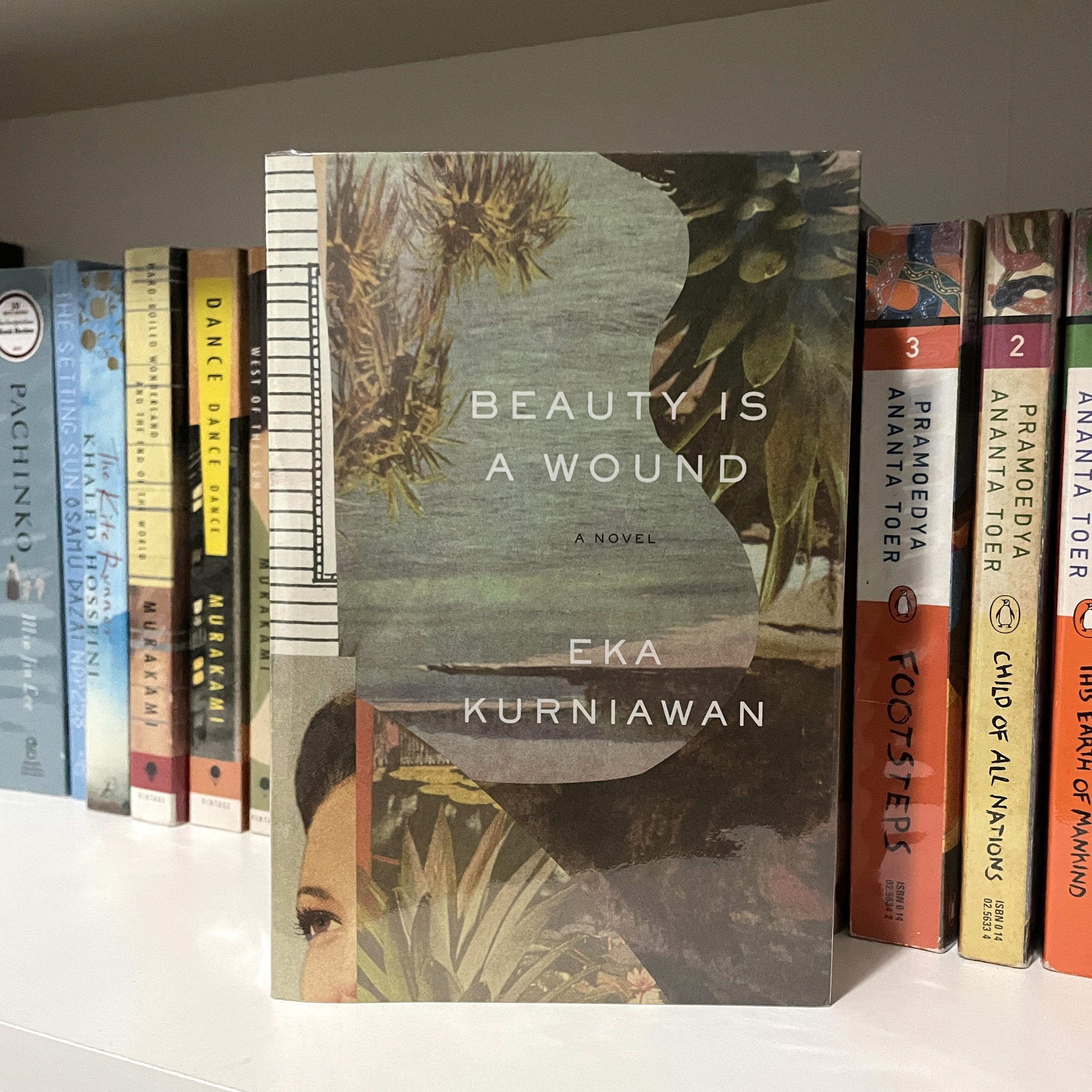
Book Review: Cantik Itu Luka (Beauty is a Wound) by Eka Kurniawan

Eka Kurniawan's Cantik Itu Luka (Beauty is a Wound) is a masterpiece of contemporary Indonesian literature that defies easy categorization. Combining elements of magical realism, historical fiction, and social commentary, the novel is a rich tapestry of Indonesia's tumultuous past, woven with threads of myth, folklore, and dark humor.
The novel begins with the resurrection of Dewi Ayu, a beautiful prostitute who rises from the grave after being dead for 21 years. Dewi Ayu's life story, along with that of her descendants, forms the core of the narrative, which spans several decades and touches on significant events in Indonesian history, including Dutch colonization, Japanese occupation, and the post-independence era. The title, Beauty is a Wound, refers to Dewi Ayu's youngest daughter, Beauty, who is cursed with unparalleled ugliness, in stark contrast to her mother's renowned beauty.
Kurniawan's novel is marked by its exploration of themes such as beauty, violence, colonialism, and the oppression of women. The narrative is deeply rooted in the magical realist tradition, often compared to the works of Gabriel García Márquez. Kurniawan uses surreal and fantastical elements to reflect the complexities of Indonesian society, with its blend of indigenous beliefs, colonial legacies, and modern struggles.
The novel's style is both lyrical and grotesque, with vivid descriptions that can be both beautiful and horrifying. Kurniawan does not shy away from depicting the brutality of history, including the violence of colonialism, war, and personal relationships. This unflinching portrayal of violence, especially sexual violence, has sparked both praise and controversy.
The characters in Cantik Itu Luka are larger-than-life, often embodying allegorical roles. Dewi Ayu herself is a symbol of the enduring spirit of Indonesia, resilient despite the repeated traumas inflicted upon her. Her daughters, each with their own tragic stories, represent different aspects of Indonesian society and history. The novel's characters are not always sympathetic, but they are compelling in their complexity.
Cantik Itu Luka has been widely acclaimed both in Indonesia and internationally. Critics have praised Kurniawan's narrative ambition, his skillful blending of genres, and his ability to tackle difficult themes with both seriousness and wit. The novel has been compared to the works of literary giants like García Márquez and Salman Rushdie for its blend of history and mythology.
However, some readers may find the novel's explicit content challenging, particularly its graphic depictions of violence. Kurniawan's approach to storytelling is not for the faint-hearted, as he confronts the darkest aspects of human nature and society.
Eka Kurniawan's Cantik Itu Luka is a monumental work that offers a profound and unsettling exploration of beauty, suffering, and the human condition. It is a novel that demands attention for its bold narrative style, its engagement with Indonesia's complex history, and its unflinching portrayal of the struggles faced by its characters. For readers interested in exploring Indonesian literature or magical realism, Cantik Itu Luka is an essential read, offering a glimpse into a world that is at once fantastical and deeply rooted in reality.