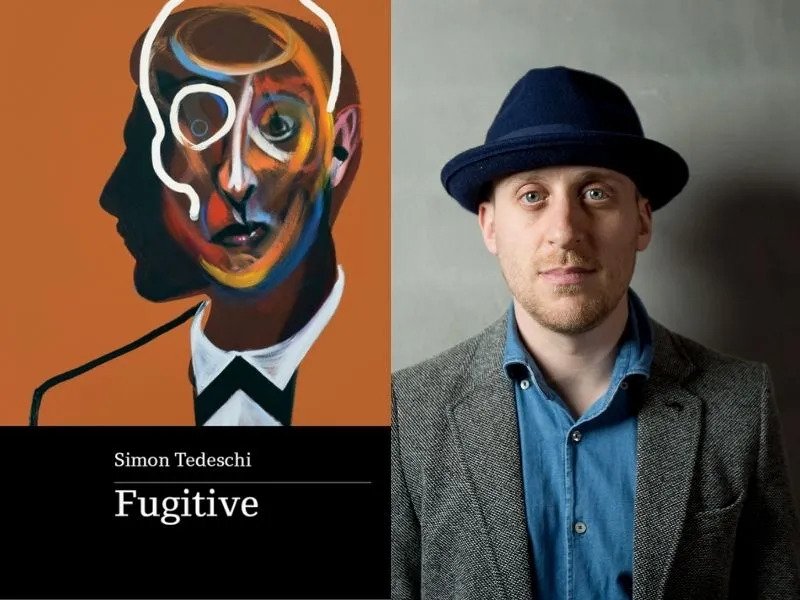
Book review: Fugitive, Simon Tedeschi
-
 Loading...
 - Valentina Bianco
- 25 May 2022
- 284 Views
- 0 Like
- 0 Comment
Simon Tedeschi was a child prodigy – not as a writer (come to think of it, literary child prodgies are a rare breed) but as an enormously accomplished classical pianist. Given that background, it seems a little unfair that he should be such a good writer but nature does not distribute her gifts equitably. Some readers may come to Fugitive, his first book, off the back of his essay ‘This woman my grandmother’ which recently won the 2022 Calibre Essay Prize and was published in the Australian Book Review. That essay will give readers an idea of the quality of Tedeschi’s lithe and lyrical prose but will not prepare them for the book’s formal inventiveness. The book is split up, or perhaps more accurately is punctuated by, Italian phrases (a reference to tempo markings in sheet music) but does not have anything so obvious as chapters. Rather Fugitive is a series of meditations on topics such as love, music and death.
That being the case, it is almost impossible to explain pithily what the book is about. The blurb on the back cover valiantly draws a connection between Sergei Prokofiev’s Mimolyotnosti, Tedeschi’s Jewish forebears fleeing Europe for Sydney and the pianist’s own life but this is only one of many threads which could be drawn through the book’s themes. What relationship is there, for example, between a history as a child prodigy and a propensity to clench one’s jaw?
One thing that interested me is the writer-musician’s attitude towards the artistic potential of words and music. ‘A piece of music can hug ten thousand people at once,’ he writes. ‘But sometimes I think a poem, a really good poem, can hug each person – individually – ten thousand times’. Yet does music not speak to something more elemental than can be expressed through language? Can it not evoke emotions that are more complex than a word, at least until the emotion shrinks to meet its description?