Book Review: Moustafa Al-Nahhas revisited
-
 Loading...
 - Giorgia Parisi
- 20 Jan 2023
- 66 Views
- 0 Like
- 0 Comment
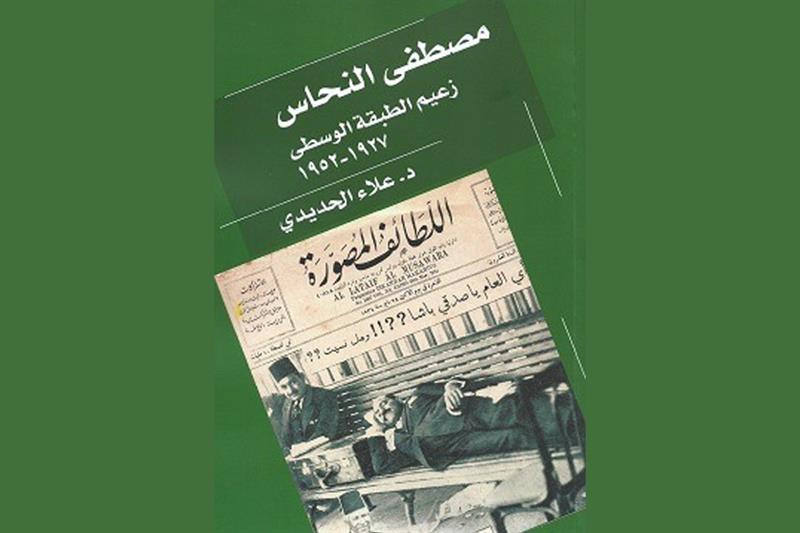
A recent book on the last leader of Al-Wafd prior to the 1952 Free Officers Revolution gives credit to the middle class in supporting the call for independence as embraced by Moustafa Al-Nahhas.
Moustafa Al-Nahhas is arguably the forgotten leader of Egypt’s most significant pre-1952 political party, Al-Wafd. In Egyptian drama and history curricula for national schools he is all but portrayed as the inevitable placeholder for Saad Zaghloul, the ultimate leader of Al-Wafd. He is not even put at the same level of significance as Makram Ebeid, Saad Zaghloul’s closest-ally-turned-adversary.
However, in his 255-page book, Alaa Al-Hadidi, a former diplomat and political commentator, offers Al-Nahhas in a different light. He shows a clever politician who is perfectly capable of playing the political game all the way through with clear and often realistic – a bit too realistic at times – objectives.
In the introduction to his nine-chapter book, each chapter of which comes with an incredible list of annexed references and footnotes, Al-Hadidi admits that his purpose is to revisit – or rather to provide due credit – to this political leader. According to the narrative offered by Al-Hadidi, Al-Nahhas was actually the leader of the national Egyptian movement in its pursuit of independence for an entire quarter century (1927-1952), but somehow has been dropped from the collective memory of the nation and its historians.
The profile that Al-Hadidi draws of Al-Nahhas in the book is far from personal. It is rather a profile of a man of a national political movement. He is therefore often presented in the contexts of political engagement with either the Palace (Al-Sarray) or the representatives of the British Occupation in Egypt. In this sense, Al-Hadidi is actually recalling the path of the Egyptian national movement in the second quarter of the 20th century and in so doing he is simply showing Al-Nahhas as the leader – a true leader and not just a replacement of the legendary Saad Zaghloul. In other words, Al-Hadidi wrote a book showing the next phase in Egypt’s political development following the 1919 Revolution. Read More…