Breakthrough could lead to better antipsychotic drugs
-
 Loading...
 - Lucy Mccann
- 25 Jan 2021
- 1311 Views
- 0 Like
- 0 Comment
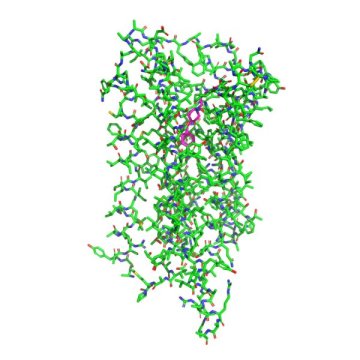
Although antipsychotic drugs are among the most widely prescribed medications, individuals with schizophrenia, bipolar disorder and autism-spectrum disorders often experience severe side effects because the drugs interact with dozens of other brain receptors. Now, scientists at the UNC School of Medicine and UC San Francisco (UCSF) have solved the first high-resolution crystal structure of the dopamine 2 receptor (DRD2) bound to the antipsychotic drug risperidone, yielding a long-awaited tool for drug developers, psychiatrists, and neuroscientists.
The research, published in Nature, will allow researchers to selectively activate DRD2 thus potentially limiting a host of serious antipsychotic drug side effects such as weight gain, anxiety, dizziness, severe digestive problems, agitation, and many others.
"If we want to create better medications, the first step is to see what the D2 receptor looks like in high-resolution detail when it's bound tightly to a drug," said senior author Bryan L. Roth, MD, PhD, the Michael Hooker Distinguished Professor of Protein Therapeutics and Translational Proteomics at the UNC School of Medicine. "We now have the structure, and we're exploring it to find new compounds we hope can help the millions of people in need of better treatments."
About 30 percent of medications on the market activate G-protein coupled receptors on cell surfaces and trigger chemical signals inside cells to yield their therapeutic effects. For antipsychotic medications, one effect is alleviating psychotic symptoms associated with schizophrenia, bipolar disorder and many other psychiatric diseases. Unfortunately, because scientists haven't understood the structural differences between the many different kinds of receptors in the brain, most drugs cannot be designed to target only one type of receptor; they interact with not only DRD2, but a myriad of other dopamine, serotonin, histamine, and alpha adrenergic receptors, leading to serious side effects.
DRD2 has undergone extensive study for 30 years, but until now researchers lacked a high-resolution structure of DRD2 attached to a compound. Risperidone is a commonly prescribed antipsychotic medication which is FDA approved for use for schizophrenia, bipolar disorder, and autism spectrum disorder. Risperidone is also one of the very few 'atypical' antipsychotic drugs approved for use in children.
"With this high-resolution structure in hand, we anticipate the discovery of compounds that interact with DRD2 in specific ways important for greater therapeutic actions and fewer side-effects," Roth said.
Typically scientists have solved the chemical structure of proteins using a technique called X-Ray crystallography. They use experimental approaches to induce the protein to condense into a tightly packed crystal lattice, then shoot x-rays at the crystal, and finally calculate the protein's structure from the resulting diffraction patterns. However, getting the DRD2 protein to crystalize with a drug bound to it had been impossible for decades because receptors are notoriously fickle proteins -- small, fragile, and typically in motion as they bind to compounds.
To transcend the technical challenges, Roth and UNC colleagues, including postdoctoral fellows Sheng Wang, PhD, and Daniel Wacker, PhD, conducted a series of painstaking studies over several years -- outlined in the Nature paper -- to coax DRD2 to crystalize while bound tightly to risperidone.
Once they had the high-resolution image, they could see that risperidone binds to DRD2 in an entirely unexpected way. Further computational modeling performed by UCSF researchers Brian Shoichet, PhD, and Anat Levit, PhD, revealed that risperidone's binding mode was unpredictable -- there was a previously unseen pocket on the receptor which Roth and colleagues think could be targeted to create more selective medications.
"Now that we can see the structural differences between similar receptors, such as the dopamine D4 receptor and DRD2, we can envision new methods for creating compounds that only bind to DRD2 without interacting with dozens of other brain receptors." said Wacker, co-corresponding author of the study. "This is precisely the sort of information we need in order to create safer and more effective therapeutics."
Adverse effects of antipsychotic drugs include extrapyramidal symptoms, such as Parkinsonian involuntary muscle movement. Wang said, "Now that we've solved the structure of risperidone bound to DRD2, we are getting an idea how these side effects could be avoided."
Roth added, "Before coming to UNC, I was a psychiatrist specializing in treating schizophrenia. On a daily basis it was clear to me that medications were only modestly effective for large numbers of patients. Our lack of knowledge into how antipsychotic drugs bind to their receptors has held back progress towards creating more effective medications. Solving the high-resolution crystal structure of DRD2 bound to the commonly prescribed antipsychotic drug risperidone is the first step towards the creation of safer and more effective medications for schizophrenia and related disorders."
The National Institutes of Health funded this research. UNC School of Medicine postdoc Tao Che, PhD, was also a study author.