Caffeine, war and Freud: A history of Vienna's iconic coffee houses

The city of Vienna is renowned for its coffee culture and historic cafes, but has it always been that way?
The Local took a look at where coffee culture in Austria’s capital comes from and what it means today.
The history of coffee in Vienna
Coffee wasn’t always such a big deal in Vienna. In fact, coffee houses didn’t even really exist in the city until the late 1600s following the Battle of Vienna.
In 1683, Austria’s capital was besieged for the second time by forces from the Ottoman Empire. The siege lasted for two months but eventually the Turkish invaders retreated, leaving behind bags of coffee.
It is believed this is when Viennese people began making coffee and local legend has it that Georg Franz Kolschitzky was the first person to obtain a licence to serve coffee in honour of his heroic actions during the siege.
But despite Kolschitzky going down in Viennese coffee history (there is a street in the 4th district named after him), it was actually Johannes Diodato who opened the city’s first coffee shop.
Diodato served at the Viennese Imperial Court and was known as a man “full of secrets” (he was apparently an Armenian spy). His coffee house had such an influence on the city that Johannes-Diodato-Park was named after him, and many other cafes opened to create the coffee culture that is still present in Vienna today.
The meaning of coffee culture in Vienna
There are coffee houses in Vienna that are over 300 years old – a sign of just how deeply embedded the culture is in the capital.
But coffee culture in Vienna is more than just getting a daily dose of caffeine in the morning. It’s more of a way of life, something that UNESCO identified as an intangible cultural heritage for Austria.
For example, in other countries it’s common for coffee shop staff to be conscious of quickly turning over tables to maximise profit – not in Vienna though.
Viennese coffee houses are known as places to relax and spend some time over a cup or coffee (or two). There is often no rush to drink up and staff typically leave customers to their own devices until they ask for another drink.
Then there are newspapers to read and other regular customers to chat with and catch up on the local gossip.
As a result, coffee houses have long been meeting places for artists, intellectuals and politicians in the city. Sigmund Freud, Ludwig van Beethoven, Gustav Klimt and Leon Trotsky are just a few famous names to have graced coffee houses in Vienna.
There is even the term Kaffeehausliteratur (coffee house literature) to describe the many pieces of writing that have been written in Viennese coffee houses.
Today, that artistic influence lives on with author readings or musical performances, as well as a steady stream of coffee-drinking Viennese residents indulging in the atmosphere.
What to expect from a Viennese coffee house
Every coffee house has its own style, but there are several defining features of a classic Viennese coffee shop.
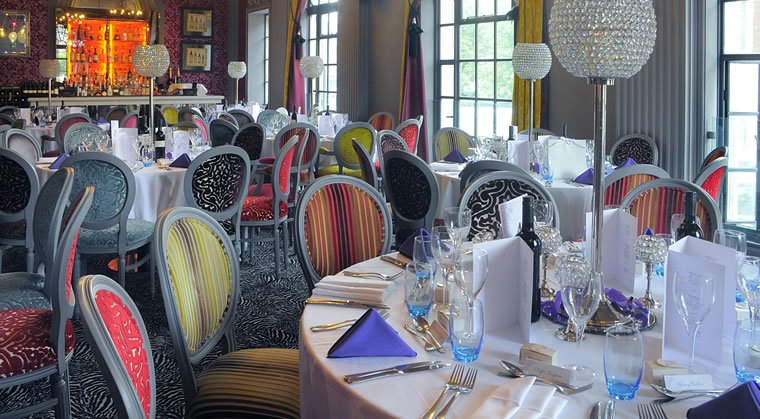
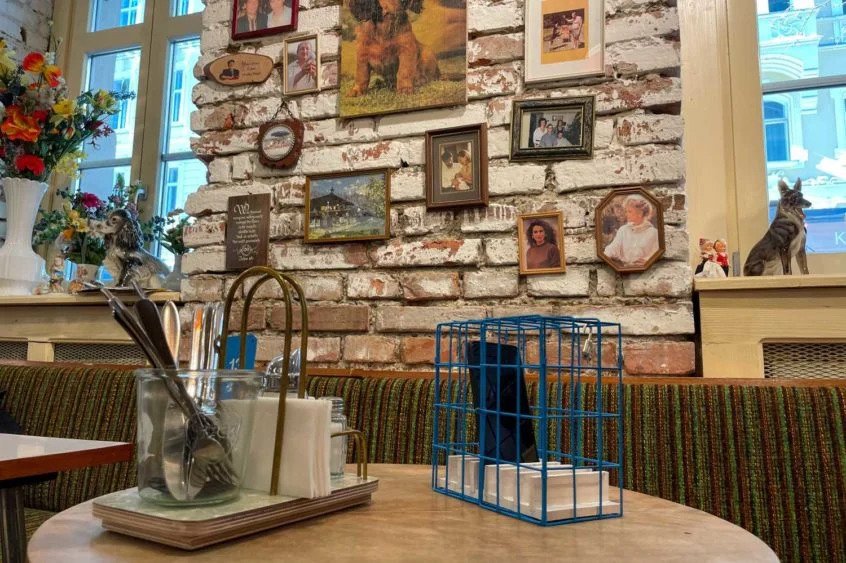
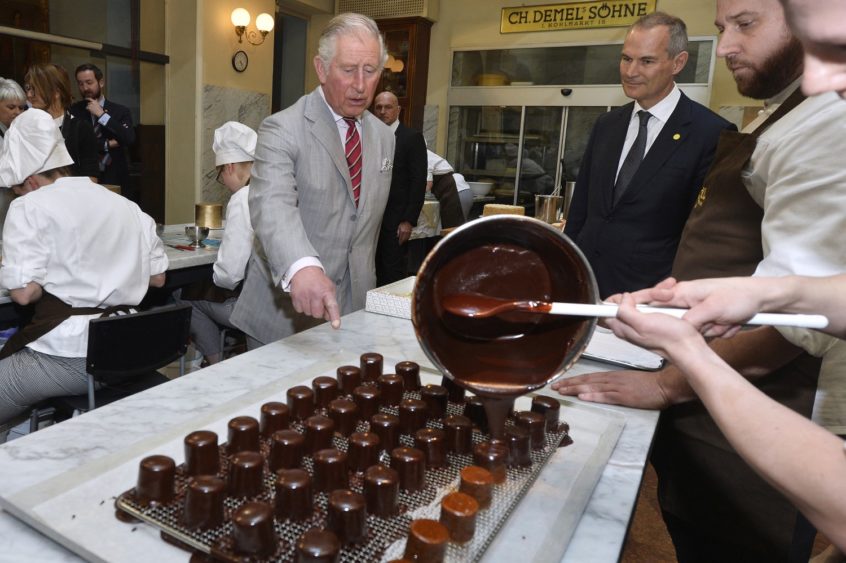
Most traditional cafes can be found in Vienna’s historic buildings, which means they have high ceilings, wooden floorboards, large windows and walls adorned with artwork.
Table tops are usually made from marble and sofas tend to be upholstered in classic Viennese designs.
Staff are elegantly dressed with waiters in a tuxedo and waitresses in a white shirt, although there is no set dress code for customers.
A word of advice though – don’t always expect courteous service.
Viennese waiting staff are famous for their grumpiness, although this is changing as modern times demand a more open and friendly style of service.
However, do expect to find a few Vienna-specific items on the menu, such as a Wiener Melange (similar to a cappuccino but with milder coffee) or a Verlängerter (espresso with hot water).
For a full breakdown of the different types of coffee served in a Viennese coffee house, read our guide to drinking coffee like an Austrian.
Famous Viennese coffee houses (and why you should visit)
There is no shortage of historic coffee houses in Vienna, but here are five to get started.
Café Central: known as the real centre of Vienna, Café Central has a 140-year history and famously welcomed Freud and Trotsky in the past. It’s popular with both locals and tourists so expect high demand for tables. You can find Café Central at Herrengasse 14, 1010 Wien.
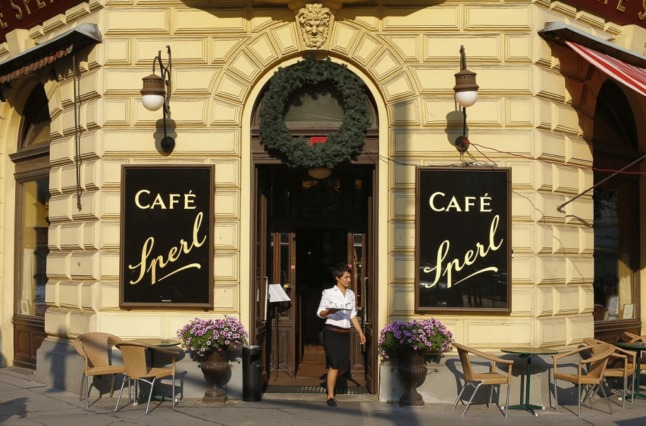
Café Sperl: a traditional Viennese cafe serving coffee, homemade cakes and pastries. Keep an eye out for live music performances or enjoy the outdoor dining area in the summertime. Located on Gumpendorfer Strasse 11, 1060 Wien.
Café Hawelka: described as having an “old time style”, Café Hawelka has been open since 1954 and run by three generations of the same family. Famous Austrian guests include actor Oskar Werner, architect Friedensreich Hundertwasser and artist Ernst Fuchs. Café Hawelka is on Dorotheergasse 6, 1010 Wien.
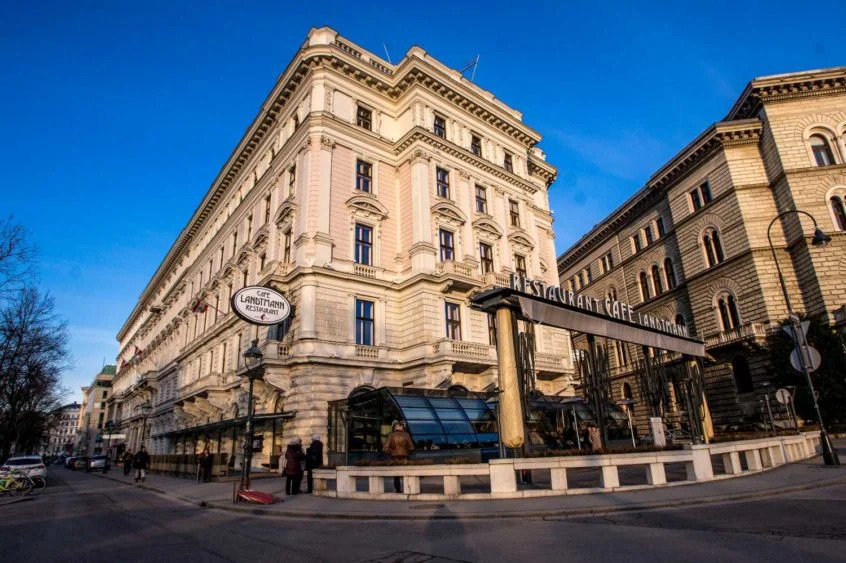
Café Landtmann: customers love the shaded terrace in the summer and the history of famous guests, from Freud to Hillary Clinton and Paul McCartney. Café Landtmann is also known for its pastries and elegant decor. Located at Universitätsring 4, 1010 Wien. Read More...