Canon EOS R10 Review: Powerful Performance at an Affordable Price
-
 Loading...
 - Alaia Delgado
- 28 Jul 2022
- 95 Views
- 0 Like
- 0 Comment
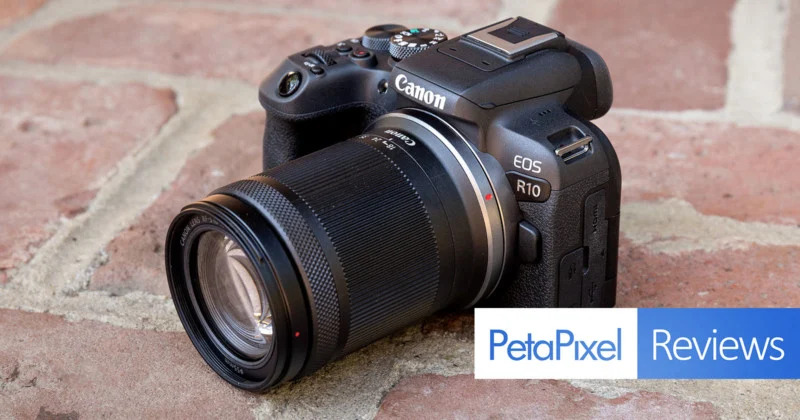
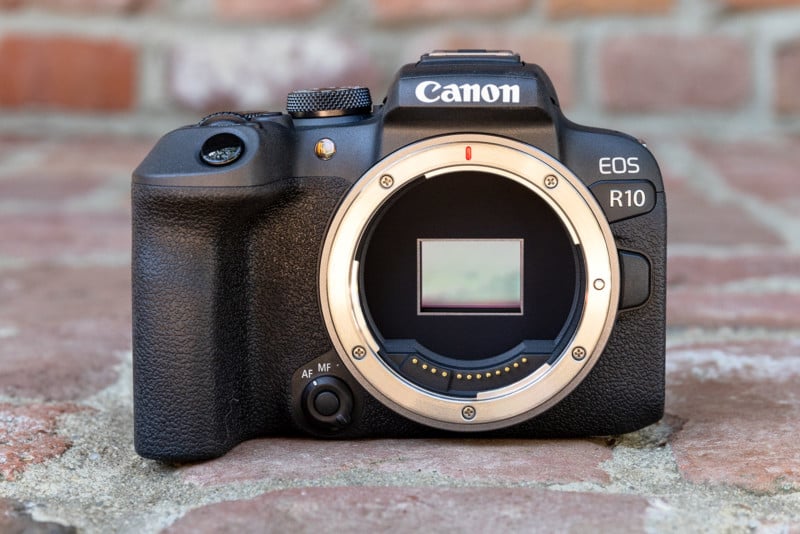
The Canon EOS R10 is tiny but mighty, sporting an advanced autofocus system, the ability to shoot 15 frames per second with its mechanical shutter, and a full-body APS-C experience.
Canon released both the EOS R10 and EOS R7 at the same time in May. The EOS R7 rightly had expectations to meet as it’s the higher-end model, and people have really enjoyed the 80D, 90D, and 7D series cameras it basically replaces. The other camera, the EOS R10, replaces the lower-end Rebel DSLRs, and while it’s always great to see incremental improvements in this realm, I don’t think anyone expected Canon to go in this hard.
Build Quality
The Canon EOS R10 takes on a compact form factor while still clearly is meant to be comfortable in the hand. It is 4.82 inches wide (122.5 millimeters) by 3.46 inches tall (87.8 millimeters) and 3.28 inches in depth at the grip (83.4 millimeters). Having a good grip makes a big difference as it greatly influences the tactile experience of using a camera, and considering the overall size here, Canon did a wonderful job.
The shape and depth are great, but for my hands, I wish it were a little bit taller and that there was more space between grip and lens for clearance. One accessory that would solve both issues is a grip extension like the one for the EOS RP. This would add the height needed, and I’d be able to better angle my fingers so that a larger physical gap would not be necessary.
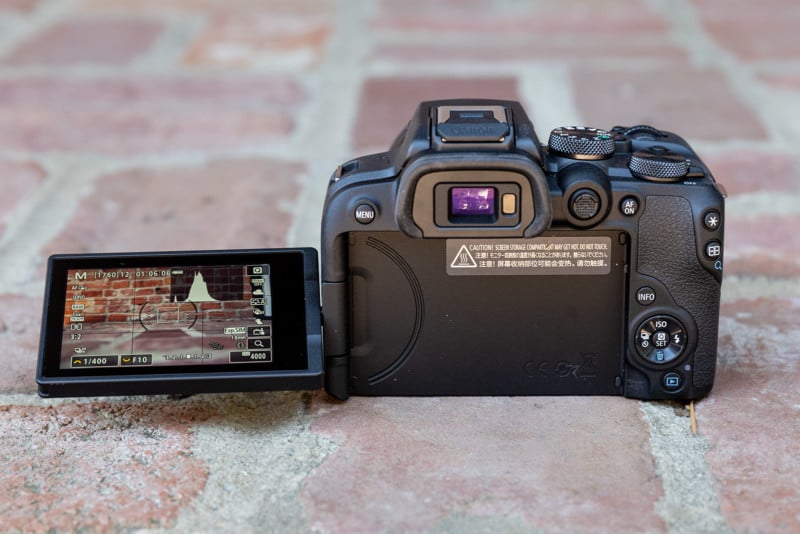
With the battery and memory card in the camera, the EOS R10 weighs about 15 ounces (429 grams). It’s very light in the hands, which can sometimes lead to the feeling of cheap quality. However, I have to go back to the feel of the grip plus the textured rubber material used throughout the body that makes it not feel low grade. Someone at Canon certainly understands user experience priorities when there are only limited things that are achievable at the $980 price.
The layout features a nice slanted shutter button typical of Canon cameras, a front and rear dial for controlling a couple of different methods of exposure, multi-controller joystick control for moving focus points quickly, and a user-programmable four-way D-pad. There’s a dedicated AF/MF switch on the front with another programmable button.
Both the LP-E17 battery and single UHS-II SD memory card slot are housed through a door at the bottom of the camera. Unlike every other EOS R-series camera, the battery door feels relatively cheap and doesn’t have a spring hinge that keeps the door open when unlocked and instead just flaps around. There is no attempt made whatsoever to weatherproof this entry either, so I needed to be careful about where I set the camera down.
One thing missing from this design is a third wheel for completing all three aspects of direct exposure control: shutter speed, aperture, and ISO. Instead of a third dial, we do get a D-pad that offers more customization options, so at least there is a somewhat of a trade-off.
I say somewhat because button customization with any Canon camera is frustrating with artificially limited options, but it’s even worse with the EOS R10. For example, one of the most essential button customizations is what Canon cameras refer to as “register/recall shooting function.” This is where I can hold a button, and several camera settings of my choice instantly switch to something else I pre-programmed.
Using a slow shutter speed for a still subject, but suddenly there’s fast action? This custom button will nab that fleeting moment by switching to a fast shutter speed and perhaps auto ISO rather than full manual. You’ll find it on the $500 more expensive EOS R7, but not here. It’s not like the potential buyers of this camera would even learn that difference through any of Canon’s marketing, so what in the world is the point in arbitrarily punishing owners with greater limitations on customizations?. Read More...