CAR's Bitcoin gambit
-
 Loading...
 - Hannie Prinsen
- 30 May 2022
- 273 Views
- 0 Like
- 0 Comment
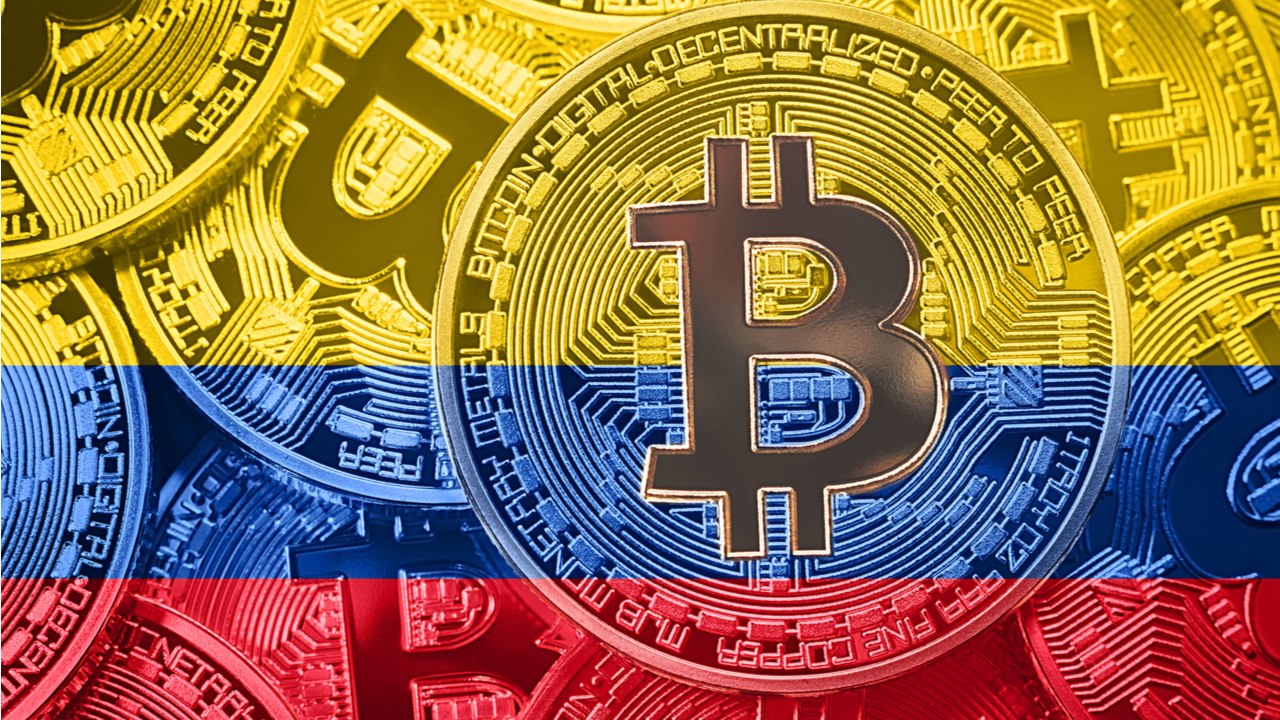
The adoption of Bitcoin as an official currency by Central African Republic (CAR) has been greeted with scepticism as to its economic merits and suspicion over the government’s motives, but also with some excitement at the establishment of a new frontier.
The announcement at the end of April made CAR the second country in the world to accept Bitcoin as an official currency, after El Salvador in September 2021.
CAR’s primary currency remains the Central African CFA Franc, which it shares with Cameroon, Chad, Equatorial Guinea, Gabon and Republic of the Congo, and is generally regarded as stable because it is pegged to the Euro.
Adopting Bitcoin is “eye catching, though economically questionable”, according to Weyinmi Popo, a corporate finance partner with Akin Gump Strauss Hauer & Feld in London, noting that the statements from CAR’s government focused more on being the first African country to adopt the cryptocurrency, rather than any economic merits.
Attracting investment “has clearly been a challenge for a landlocked country that has been wracked by civil war”, Popo continues, “however, it is unclear how adopting Bitcoin would help with attracting investment”. Despite the publicity, “it is unlikely in and of itself to make the country more appealing as an investment destination or to do business in. Investors are more focused on political stability and rule of law which remain a challenge given the civil war”, he warns. “I am not sure this really moves the economic needle.”
Tedd George, founder and chief narrative officer of London-based African markets consultancy Kleos Advisory, says: “The prime motivations for adopting Bitcoin were probably to boost sources of liquidity, make cross-border payments easier, quicker and cheaper, and generally to drive the digitalisation of payments,” adding “the country can use all the help it can get to support economic activity”.
ACCESSIBILITY
An argument in favour of fintech and cryptocurrencies is that they can be more accessible and inclusive to users in developing economies, than traditional financial services and currencies, which rely on access to conventional finance and record keeping. Africa’s banking sector has certainly been quicker to adopt fintech than in other regions.
Blockchain technology, which underpins cryptocurrency does offer unconventional banking solutions in countries which have traditionally lacked them. That is less straightforward than it sounds though. Only 10% of CAR’s population has access to the internet, according to figures reported by the World Bank, and electricity supply and smartphone access are very limited. “Without these basics Bitcoin’s wide adoption as legal tender is unlikely to materialise,” says Popo.
Nor is it a straightforward winner for the business community. “Most businesses don’t use cryptocurrencies,” acknowledges George, especially given the familiarity and reliability of the CFA Franc.
“Moreover, Bitcoin brings with it concerns over transparency and KYC (know-your-customer), which could undermine its use at scale,” he warns, and the adoption of the technology has led to gaps in regulation, although that is not unique to Africa.
Nonetheless, there are potential positives for smaller businesses: “Bitcoin could bring huge benefits to SMEs (small-and-medium-sized enterprises) and those making cross-border remittances, enabling micro-payments for zero cost” George adds.
The inclusivity and access of cryptocurrency was questioned by Abebe Aemro Selassie, the director of the International Monetary Fund’s African department, in a 29 April press briefing, at which he asked what CAR’s decision meant “for those people that have access to the digital technologies but [also] those that don’t?”
Stability is also a concern. Popo says “the volatility of Bitcoin also poses severe challenges, as witnessed by El Salvador”, which has suffered significant losses due to the cryptocurrency’s 40% drop in value since last September.
As a result, George says, “the adoption of cryptos will initially benefit only the rich and urban elites rather than the population at large”, and in his remarks, Selassie noted: “It’s really important to not see such things as a panacea for economic challenges our countries face”.
POLITICAL BALANCE
CAR now sites alongside El Salvador at one end of the spectrum when it comes to acceptance of cryptocurrency. Most countries currently lie somewhere in the middle, either tolerating it or reserving judgement, while at the far end lie states such as India, which has banned it completely.
CAR will be hoping that it is ahead of the curve, but if the rest of the world does not follow suit, could find itself further isolated.
Selassie did see a role for Bitcoin “as part of a well-structured… move towards digitalisation”, together with central bank regional currencies, as part of “a robust payment system [and] settlement system in our countries”.
However, he warned against “adopting willy-nilly”, calling for a strong and transparent framework for financial flows, governance and payments.
Some have noted that choosing Bitcoin, in theory at least, loosens ties to former colonial power France, which controls the CFA Franc and opposes Russia’s invasion of Ukraine, and moves CAR closer to its long-term ally Russia. Read More...