China Central Bank Leaves Medium-Term Rate Unchanged as Expected

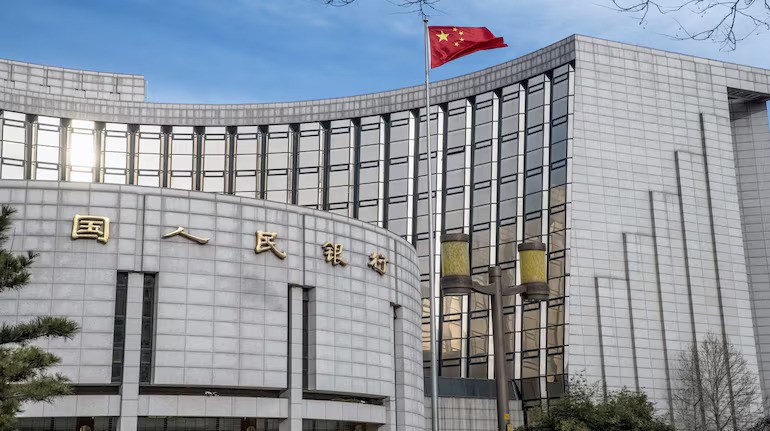
China's central bank, the People's Bank of China (PBOC), has left the medium-term lending facility (MLF) rate unchanged, as anticipated, during the rollover of maturing medium-term loans on Monday.
Why It's Important
The decision to keep the MLF rate steady aligns with market expectations. Narrowing interest margins for lenders and a weak Chinese currency have limited Beijing's ability to implement monetary easing measures to support the struggling economy. Additionally, the central bank aims to prevent excess money from idling in the financial system.
By the Numbers
- The PBOC maintained the rate at 2.50% for 100 billion yuan ($13.8 billion) in one-year MLF loans to some financial institutions.
- With 103 billion yuan in MLF loans set to expire this month, this operation resulted in a net withdrawal of 3 billion yuan from the banking system.
- The central bank also injected 129 billion yuan through seven-day reverse repos, keeping the borrowing costs unchanged at 1.80%.
Context
China's yuan has depreciated by 2.3% against a strengthening U.S. dollar this year, pressured by relatively low yields compared to other economies. In response, the PBOC introduced a new cash management tool expected to cap short-term market rates around the seven-day reverse repo rate. PBOC Governor Pan Gongsheng mentioned that this rate "basically fulfills the function" of the main policy rate. Traders and analysts believe the significance of the MLF rate will gradually diminish as the PBOC improves the effectiveness of its interest rate corridor.
Key Quotes
The cash injection via the reverse repo operation was intended to counteract factors such as tax payments, while the MLF loans "fully fulfilled demand from financial institutions," according to a PBOC statement. The central bank-backed Financial News reported that although there is room for interest rate adjustments, constraints exist due to net interest margins on commercial banks and the currency's value. The newspaper noted, "The yuan exchange rate is the most resilient (among other emerging market currencies), but interest rate adjustments need to consider the impact on the exchange rate."
The PBOC's cautious approach reflects the balance it seeks to maintain between supporting the economy and ensuring financial stability amid fluctuating global and domestic conditions.