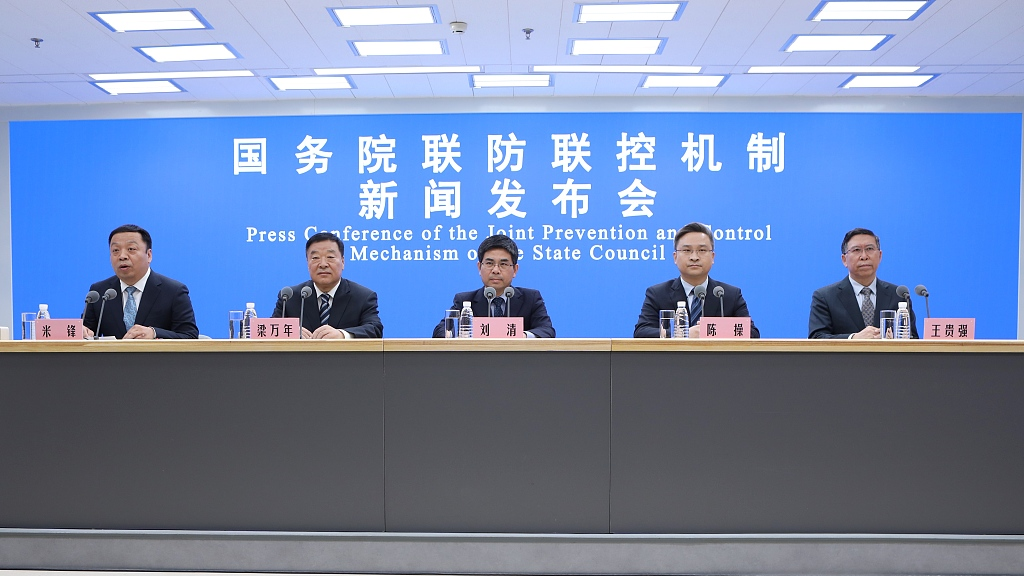
China continues to manage COVID-19 with measures against Class-B infectious diseases: NHC
-
 Loading...
 - Genghis Fu
- 10 May 2023
- 61 Views
- 0 Like
- 0 Comment
The National Health Commission (NHC) of China recently announced that the country is continuing to manage COVID-19 with measures against Class-B infectious diseases. This means that China is not only taking measures to control the spread of COVID-19, but also other infectious diseases that have the potential to cause a public health emergency. The NHC has classified infectious diseases into three categories: Class A, Class B, and Class C. Class A infectious diseases include the most serious and highly infectious diseases such as plague and cholera. Class B infectious diseases include moderately infectious diseases such as SARS and COVID-19. Class C infectious diseases include milder infectious diseases such as hepatitis and tuberculosis.
China's measures against Class-B infectious diseases include the following:
1. Early detection and reporting of cases
China has established a comprehensive and efficient disease reporting system that requires healthcare facilities to report any suspected or confirmed cases of infectious diseases to the local health authorities within 2 hours. This system helps to ensure the early detection and reporting of cases, which is crucial for controlling the spread of infectious diseases.
2. Contact tracing and quarantine
China has implemented a rigorous contact tracing and quarantine system to prevent the spread of infectious diseases. When a case is detected, the authorities trace all the contacts of the infected person and quarantine them for 14 days to ensure that they do not infect others.
3. Extensive testing
China has conducted extensive testing to identify and isolate infected individuals. The country has set up testing sites in various locations, including airports and train stations, to screen people for COVID-19 and other infectious diseases.
4. Vaccination campaigns
China has launched an extensive vaccination campaign to protect the population against COVID-19 and other infectious diseases. As of April 2023, China has administered over 5 billion doses of COVID-19 vaccine, covering over 80% of its population.
Other measures taken by China to manage COVID-19
1. Lockdowns
China was the first country to implement lockdowns to control the spread of COVID-19. The country imposed strict lockdowns in Wuhan, the epicenter of the outbreak, and other cities to prevent people from leaving their homes and spreading the virus.
2. Face mask mandates
China implemented face mask mandates early on in the pandemic to prevent the spread of the virus. The country encouraged the use of masks in public spaces, on public transportation, and in healthcare settings.
3. Social distancing measures
China implemented social distancing measures to prevent large gatherings and reduce the risk of transmission. The country limited the number of people allowed in public spaces, such as restaurants and shops, and encouraged people to work from home.
4. Border control measures
China implemented strict border control measures to prevent the importation of COVID-19 cases from other countries. The country suspended international travel and imposed quarantine measures on incoming travelers.
FAQs
Q1. Is China still managing COVID-19 with measures against Class-B infectious diseases?
A1. Yes, the National Health Commission (NHC) of China recently announced that the country is continuing to manage COVID-19 with measures against Class-B infectious diseases.
Q2. What are the measures taken by China to manage COVID-19?
A2. China has implemented various measures to manage COVID-19, including extensive testing, contact tracing, quarantine, vaccination campaigns, lockdowns, face mask mandates, social distancing measures, and border control measures.
Q3. How effective have China's measures been in managing COVID-19?
A3. China's measures have been effective in controlling the spread of COVID-19. The country has reported fewer cases and deaths compared to other countries, and its vaccination campaign has covered over 80% of its population.
Q4. What is the disease reporting system in China?
A4. China has established a comprehensive and efficient disease reporting system that requires healthcare facilities to report any suspected or confirmed cases of infectious diseases to the local health authorities within 2 hours.
Q5. How many doses of COVID-19 vaccine has China administered?
A5. As of April 2023, China has administered over 5 billion doses of COVID-19 vaccine, covering over 80% of its population.
Q6. What are Class A, B, and C infectious diseases?
A6. The National Health Commission (NHC) of China has classified infectious diseases into three categories: Class A, Class B, and Class C. Class A infectious diseases include the most serious and highly infectious diseases such as plague and cholera. Class B infectious diseases include moderately infectious diseases such as SARS and COVID-19. Class C infectious diseases include milder infectious diseases such as hepatitis and tuberculosis.