China Intensifies Taiwan Social Media Influence Operations
-
 Loading...
 - Boram Choi
- 13 Oct 2022
- 71 Views
- 0 Like
- 0 Comment
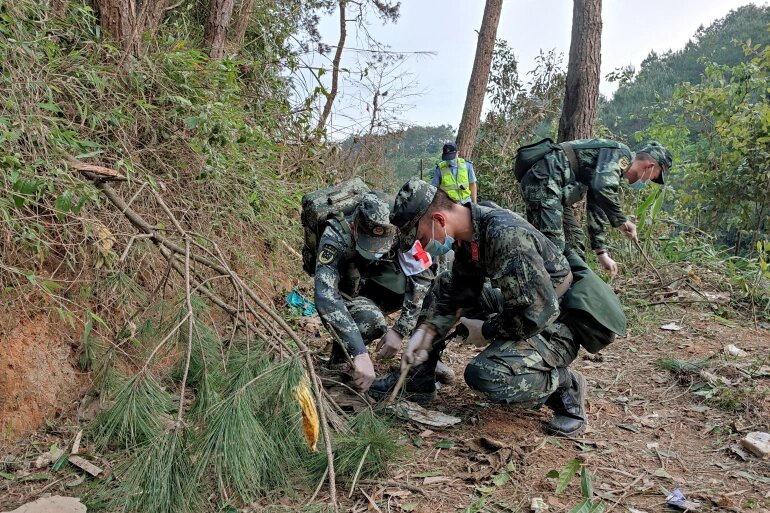
“The People’s Liberation Army has taken control of Kinmen! With the conditions of the exchange exposed, the United States is furious!” say the Chinese characters on the thumbnail image of a YouTube video uploaded on August 28, which received 73,000 views in two days. The image appears to show Chinese soldiers riding in tanks.
Click through to watch the video and it becomes clear you were baited. The 10-minute clip is not about a military operation. Rather it suggests that the outlying island of Kinmen, a close neighbor of the PRC’s Fujian Province, relies on China’s generosity to alleviate its perpetual water shortages. In reality, each ton of water costs the Taiwan government NT$9.86 (US$0.32), per a 2015 agreement with China. Taiwan spent NT$1.35 billion to build the 16-kilometer-long pipeline connecting the Tianbu Reservoir in Kinmen to Fujian’s Jinjiang City. Taiwan’s Mainland Affairs Council (MAC) has repeatedly pushed back against Beijing’s efforts to portray the water as a gift.
In the comments section, one user writes in traditional Chinese (used in Taiwan): “The title and content are two different things, which is a bit over-the-top.” Then, however, they add that “thanks to the mainland, people in Kinmen do not have to worry about freshwater shortages. If unification occurs, I believe the residents of Kinmen will be happy.”
The video combines disinformation about military action with snippets of distorted information about Kinmen’s water arrangement with China to depict Beijing as more concerned than Taiwan’s central government about the archipelago’s needs. The clip well exemplifies the Chinese Communist Party’s (CCP) evolving influence operations in Taiwan, which increasingly lean on social media channels that are popular here but blocked in China. Social media platforms are subject to less regulation than traditional media, making them easier to blast with malicious content.

The People’s Liberation Army has taken control of Kinmen! With the conditions of the exchange exposed, the United States is furious!” read the captions of a video aimed at misguiding Taiwanese viewers.
To be sure, the video is not sophisticated. “The reality is there is little evidence that Taiwan’s well-educated and internet savvy population is susceptible to disinformation from China,” says Ross Darrell Feingold, a Taipei-based political risk analyst and lawyer. “Even sources that purport to be from Taiwan can often be identified as actually from China due to differences in vocabulary.” Read More…